
NYC to Washington, DC by Car: Plan on 5–6 Hours
Plan the roughly 230-mile NYC–Washington, DC drive with realistic driving and stop time, the main highway route, toll preparation and traffic checks.
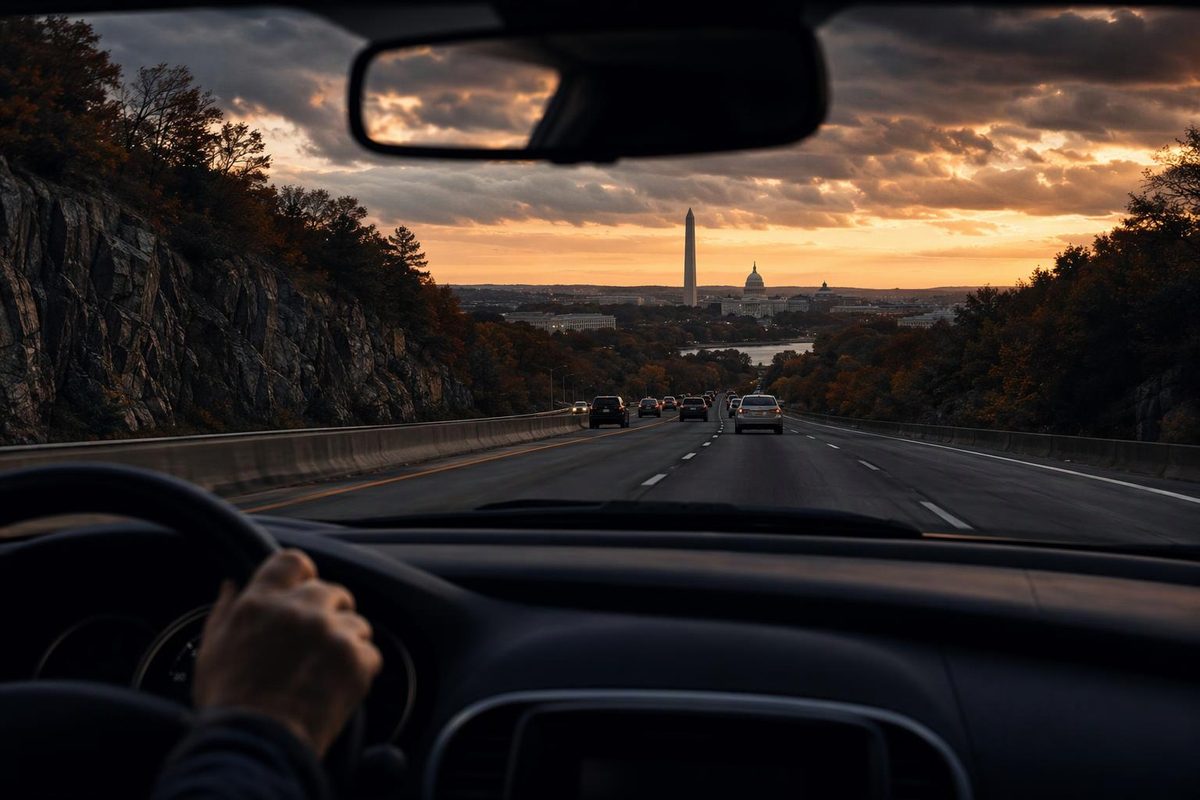
Allow about 4–5 hours of driving in lighter traffic, or roughly 5–6 hours on the road with a short break and some delay margin. Budget parking and walking time separately. Heavy congestion, crashes or bad weather can push the journey beyond that allowance. For a fixed appointment, use a departure-time estimate between your exact addresses—not a generic city-to-city time.
The drive is roughly 230 miles. Travelmath calculates 229 miles and 3 hours 50 minutes; Rome2Rio estimates about 4 hours 17 minutes. Those are useful baselines, not door-to-door promises. Your NYC borough, crossing into New Jersey and DC destination change the result.
Driving time versus arrival time
Use these as planning allowances rather than measured traffic averages:
| Part of the trip | Time to budget |
|---|---|
| Driving, with relatively favorable traffic | About 4–5 hours |
| One fuel, restroom or food break | Add 20–30 minutes |
| Delay margin for a flexible trip | Add 30–60 minutes |
| Parking, unloading and walking to your destination | Budget separately |
Those driving, break and delay allowances add up to 4 hours 50 minutes–6 hours 30 minutes, before parking. If navigation already predicts five hours of driving, don’t expect a five-hour trip after adding lunch and parking.
For a hotel arrival, a 5–6-hour window is a useful starting point. For a timed ticket, meeting or event, work backward from when you need to be inside the venue, including parking and walking time.
The main route
The usual highway corridor is:
NYC → New Jersey Turnpike south → I-295 across the Delaware Memorial Bridge → I-95 through Delaware and toward Baltimore → your DC approach.
Published driving directions follow this corridor, then use I-895 and the Baltimore–Washington Parkway. Another Baltimore crossing is the Fort McHenry Tunnel on I-95. Let current traffic and your destination determine the final approach; don’t treat “stay on I-95” as complete directions into central Washington.
Keep Philadelphia or Baltimore sightseeing out of the basic timing allowance. A downtown visit needs its own detour, parking and visit time.
Choose departure time by the whole drive
Compare departure-time forecasts for your actual travel date. Look at both the NYC exit and the projected Baltimore/DC arrival: leaving New York outside its commute period doesn’t necessarily avoid congestion farther south.
An early departure is worth comparing with a midmorning departure, but overnight driving isn’t automatically faster. Check the New Jersey Turnpike Authority’s traffic alerts for scheduled work and service-area disruptions, including overnight closures. Check Maryland 511 for incidents, closures and weather-related road conditions. Recheck while safely stopped if conditions change.
Breaks and toll preparation
For a straightforward transfer, budget one 20–30-minute break rather than a city detour. Turnpike service areas offer food and fuel; check current alerts before relying on a particular stop.
Keep tolls separate from fuel costs. Use the NJTA toll calculator with your actual entry and exit points and vehicle class. The Delaware Memorial Bridge collects tolls southbound only, so outbound and return toll totals need not match. If renting, confirm the company’s toll-payment arrangement and administrative fees before setting off.