
When Can a Child Safely Stop Using a Booster in Utah?
Children younger than 8 need an appropriate car seat or booster in Utah. Leaving a booster safely depends on lap-and-shoulder belt fit in the specific vehicle.
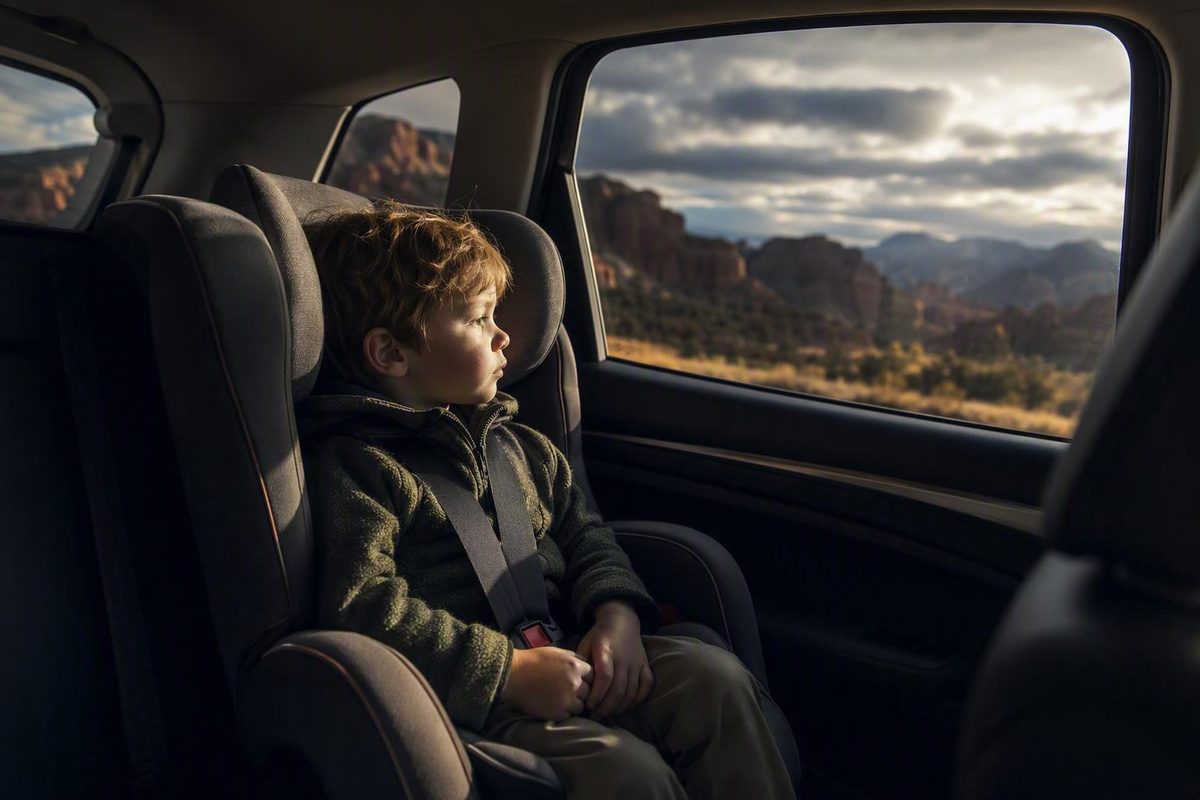
Utah booster-seat rule: the short answer
Quick answer: The Utah Highway Safety Office says children younger than eight must ride in an appropriate car seat or booster seat. It also recommends continuing booster use until the child is about 4 feet 9 inches tall or the vehicle belt fits correctly. All occupants must be restrained (Utah Highway Safety Office child-restraint FAQ).
This is an appropriate-child-restraint requirement, not a direction to place every child younger than eight in a booster. If a child still fits within the height and weight limits of a forward-facing harness, Utah’s official safety guidance says to keep using that restraint until it is outgrown.
Reaching age eight under the agency’s summary does not prove that an adult seat belt fits safely. A child permitted to use an adult belt must still wear it, and the lap-and-shoulder belt should fit correctly in the specific vehicle seat.
The reported height exception requires additional caution. Safe Kids Worldwide’s secondary Utah law tracker reports that the child-restraint requirement applies to children age seven or younger who are under 57 inches, equivalent to 4 feet 9 inches (Safe Kids Worldwide Utah law tracker). However, the supplied official Utah summaries do not quote that exception from the current statutory text. This article therefore treats 4 feet 9 inches as clearly supported safety guidance, not as a verified statutory exception.
Before driving:
- Check whether the child remains within the forward-facing seat’s harness limits.
- After that harness is outgrown, use a compatible belt-positioning booster.
- Confirm that the assigned seat has both a lap belt and a shoulder belt.
- Before considering an adult belt alone, perform the complete belt-fit test in that exact seat.
- If the child fails any part of the test, continue using an appropriate booster.
- If the reported 57-inch exception or another exception affects legal compliance, verify the current Utah Code through an official Utah source.
Publication review date: August 23, 2026. This is an explanation of the Utah Highway Safety Office’s published guidance and supported child-passenger-safety practices. It is not a definitive account of every statutory provision or exception because the current governing Code text was not included in the reviewed evidence. Child-restraint laws and agency guidance can change, so recheck official requirements before a later trip.
Utah law versus child-passenger safety guidance
Three separate questions determine the correct setup:
- What does Utah’s official agency guidance say?
- What safety practice is appropriate for the child?
- What do the restraint and vehicle manufacturers permit?
These categories overlap, but they are not interchangeable.
| Utah official guidance | Safety best practice | Manufacturer-specific instructions |
|---|---|---|
| Children younger than eight must use an appropriate car seat or booster seat. | Keep the child in a forward-facing harness until the seat’s stated limits are reached. | Follow the forward-facing seat’s labeled height and weight limits. |
| All vehicle occupants must be restrained. | After the harness is outgrown, use a booster until the adult belt fits correctly. | Use only belt configurations and seating positions allowed by the booster instructions. |
| An improperly restrained occupant can result in a reported $45 citation (official Click It Utah summary). | Use about 4 feet 9 inches as a practical benchmark, but base the transition on actual belt fit. | Consult the vehicle owner’s manual for seating-position, belt-routing, and head-restraint instructions. |
| The Highway Safety Office says Utah law does not specify where a child must ride. | Children under 13 should ride in a rear seat when possible. | Follow product restrictions even when a general age guideline suggests that the child might be ready to move on. |
The under-eight language should remain attributed to Utah’s official agency summary. Without the current statutory text and its definitions, cross-references, and exceptions, this article does not independently determine the complete legal effect of the child’s eighth birthday.
Safety recommendations address a different question: whether the restraint or belt fits the child properly. Turning eight does not change the child’s torso length, leg length, or the geometry of a particular vehicle belt. Two children of the same age may need different restraints, and the same child may fit differently in a sedan, pickup, SUV, or rental vehicle.
The National Highway Traffic Safety Administration recommends keeping children in each restraint stage until they reach its manufacturer limits, followed by booster use until the vehicle belt fits properly. It also recommends rear-seat travel through age 12 and instructs caregivers to follow both the restraint instructions and the vehicle owner’s manual (NHTSA car-seat and booster guidance).
Do not treat age four, 40 pounds, or a generic 40-to-100-pound range as Utah legal thresholds. Such figures may appear in general booster guidance, but they do not replace the limits printed on a particular forward-facing seat or booster.
The reviewed Utah agency pages also point readers toward different Code provisions without reproducing enough statutory language to identify one section as the sole authority for every situation. Accordingly, this guide does not resolve the reported 57-inch exception, who may be cited in every circumstance, or any statutory exception not expressly covered by the official summaries.
When to move from a forward-facing harness to a booster
The usual restraint sequence is:
- Forward-facing car seat with a harness
- Belt-positioning booster with the vehicle’s lap-and-shoulder belt
- Adult lap-and-shoulder belt without a booster
A child is ready to begin using a booster only after outgrowing the forward-facing seat by height or weight. The seat’s label and instructions—not a commonly quoted birthday or weight—control when that particular harness has been outgrown (official Utah booster guidance).
A forward-facing seat and a booster perform different jobs. The forward-facing seat restrains the child with its own harness. A booster does not substitute a new harness for the vehicle belt; it raises and positions the child so the vehicle’s lap-and-shoulder belt crosses the appropriate areas of the body.
Before making the transition, check:
- The forward-facing seat’s maximum harnessed height and weight
- The booster’s minimum and maximum limits
- Whether the booster fits the child and the vehicle seat
- Whether the assigned position has a lap-and-shoulder belt
- Whether the child has the head support required by the booster
- Whether the child can sit correctly throughout the trip
- Any relevant restrictions in the vehicle owner’s manual
For example, a six-year-old who has exceeded the forward-facing harness limits may be ready for a belt-positioning booster if the selected product fits the child and vehicle and can be used with a lap-and-shoulder belt. The sixth birthday does not establish readiness; outgrowing the harness and satisfying the booster instructions do.
Conversely, a child who remains within the forward-facing seat’s harness limits does not need to move to a booster merely because another child of the same age has transitioned. General age and weight guidance cannot override product-specific instructions.
Do not skip directly from a forward-facing harness to an adult belt based only on a birthday. Once the harness is outgrown, the child should use a booster until the adult belt passes the complete fit test without the booster.
The seat-belt fit test for leaving a booster
Perform the fit test in the exact vehicle seat the child will use.
1. Back and bottom stay against the seat
Have the child sit with their back and bottom against the vehicle seat. The child should not need to slide forward to become comfortable.
2. Knees bend naturally at the seat edge
While the child remains fully back, check whether their knees bend naturally at the edge of the vehicle seat. The child should not have to scoot forward just to bend their knees.
Vehicle floors and seat cushions differ, so foot position alone should not replace the full test. The important question is whether the child can remain fully back and comfortable.
3. Lap belt lies low and snug
The lap belt should lie low and snug across the hips or upper thighs—not across the stomach.
A lap belt that rises onto the abdomen is a failed fit, regardless of whether the child has turned eight or is close to 4 feet 9 inches tall.
4. Shoulder belt crosses the chest and shoulder
The shoulder belt should cross the middle of the chest and shoulder. It should not cut across the neck or face or fall off the shoulder.
These posture, knee, lap-belt, and shoulder-belt checks are also included in the Utah Safety Council’s child seat-belt fit guidance (Utah Safety Council child-seat basics).
5. Correct position lasts for the entire ride
If the child repeatedly slouches, leans, or moves the shoulder belt, the adult belt alone is not a practical fit.
Never place the shoulder belt behind the child’s back or under an arm to make it feel more comfortable. Those workarounds do not correct poor belt fit. If the belt crosses the neck, face, or abdomen, continue using an appropriate booster.
A child who fails any part of the test should remain in a booster as a safety best practice, even after turning eight. Retest periodically instead of removing the booster based on age alone.
Seat depth, belt-anchor location, seat contour, and head support vary among vehicles and even among rows in the same vehicle. A child may pass the test in one rear seat but need a booster in another.
High-back and backless boosters: choosing a compatible seat
Both high-back and backless boosters position the vehicle’s lap-and-shoulder belt. Neither design is automatically appropriate in every vehicle.
Choose between them based on:
- The child’s size and ability to sit correctly
- The vehicle seat’s shape and height
- Available support behind the child’s head
- The belt path across the child
- The booster’s label and instructions
- Restrictions in the vehicle owner’s manual
A high-back booster may be suitable when the vehicle has a low seat back or lacks adequate head support. Official Utah guidance also describes high-back models as an option for younger booster riders.
Backless boosters must be used in a seat with a head restraint Booster – Click It Utah. Do not assume that a backless model is compatible merely because it fits on the cushion.
Utah’s booster checklist instructs caregivers to check manufacturer limits, use a lap-and-shoulder belt, follow the product instructions, and buckle an empty booster so it cannot move freely in a crash.
Avoid relying on a generic booster weight range. Similar-looking products can have different limits and head-support or belt-routing requirements. The label and manual for the specific booster determine who may use it and how.
Most importantly, a belt-positioning booster requires both a lap belt and a shoulder belt. It must not be used with a lap-only belt. If the intended seat has only a lap belt, use another compatible seating position or a different child restraint expressly permitted by its instructions.
For a carpool or rental vehicle, check the assigned seat before departure:
- Does it have a lap-and-shoulder belt?
- Is there adequate support behind the child’s head?
- Can the booster sit flat as its instructions require?
- Does the belt follow the required path and move through its guides?
- Can the child remain properly positioned?
When the booster is unoccupied, buckle it or secure it by another method allowed in its instructions so it does not move freely during a crash.
Rear-seat guidance and common Utah misconceptions
Utah’s Highway Safety Office says state law does not specify where a child must ride. Safety organizations recommend rear-seat travel for children under 13, but that recommendation should not be described as a Utah rear-seat mandate. Safe Kids Worldwide likewise lists no Utah rear-seat legal requirement while recommending that children under 13 ride in a back seat (Safe Kids Worldwide Utah guidance).
Myth: Every child can stop using a booster immediately upon turning eight. Fact: Utah’s official summary applies its child-restraint wording to children younger than eight, but age does not establish safe adult-belt fit. A smaller eight-year-old may still need a booster.
Myth: Every child younger than eight belongs in a booster. Fact: The restraint must be appropriate for the child. A child who still fits a forward-facing harness should remain in it until the manufacturer’s limits are reached.
Myth: Utah’s supplied official guidance conclusively establishes 4 feet 9 inches as the legal cutoff. Fact: Official Utah guidance supports that height as a safety benchmark. A secondary tracker reports a 57-inch legal exception, but the current statutory text must be checked before treating it as settled law.
Myth: A shoulder belt that rubs the neck can be placed behind the child or under an arm. Fact: Incorrect routing does not solve poor belt fit and may indicate that the child still needs a booster.
Myth: Utah legally requires every child under 13 to sit in the back. Fact: Rear-seat travel is a safety recommendation for this age group, not a Utah mandate established by the reviewed official summary.
A related warning applies to families transporting children at different restraint stages: official Utah guidance says a rear-facing car seat must not be placed in front of an active passenger airbag. Consult both the child-seat instructions and vehicle manual before any front-seat installation.
Applying the rule in family vehicles, carpools, and rentals
A booster decision does not transfer automatically between vehicles. Repeat the belt-fit test in each car and each seating position the child may use.
Use this pre-trip decision path:
- Check the current restraint. Confirm whether the child remains within the forward-facing harness limits.
- Choose the next stage only when necessary. If the harness is outgrown and the adult belt does not fit, use a booster.
- Inspect the assigned position. Confirm that it has both a lap belt and a shoulder belt.
- Check head support. Make sure the vehicle seat or head restraint meets the booster’s instructions.
- Position the booster. Place it in the orientation permitted by its manual.
- Route the belt. Use every guide required by the manufacturer.
- Evaluate the child’s posture and belt fit. The lap belt should remain low, and the shoulder belt should cross the chest and shoulder.
- Read the vehicle manual. Check for restrictions involving child restraints, belts, head restraints, or seating positions.
Consider a smaller eight-year-old riding in a grandparent’s SUV. Although the child is no longer younger than eight under the wording of Utah’s official summary, the lap belt may rise onto the abdomen and the shoulder belt may cross the neck. That child should continue using a compatible booster as a safety best practice.
For a tall seven-year-old measuring 57 inches, the secondary tracker described earlier reports a height exception. Because that point was not verified from the current Utah Code in the reviewed material, a caregiver should confirm the official statutory language before relying on it. Regardless of legal eligibility, the child must be restrained and should use a booster if the adult belt fails the fit test.
For road trips, carpools, and rental cars, carry the child’s compatible booster whenever fit is uncertain. Do not assume another driver or rental company will have a suitable model. Check the booster in the actual vehicle before departure.
The supplied evidence does not establish Utah-specific exceptions for taxis, rideshares, buses, recreational vehicles, medical situations, or emergencies. Do not infer that an exception exists. When one of those circumstances affects compliance, obtain current information from an appropriate official Utah source.
Citation, official verification, and free inspection help
Utah’s official Click It Utah site says an improperly restrained occupant can result in a $45 citation (official Utah occupant-protection summary). The available evidence does not establish that $45 is the complete final amount in every case, so it should not be described as a guaranteed total after any other possible consequences.
For definitive legal details, consult the current Utah Code together with its definitions, exceptions, and cross-references. The reviewed official agency materials refer readers to different Code provisions and do not reproduce enough statutory text to identify one provision as the sole controlling authority.
This limitation is especially important when the reported 57-inch exception would change the answer. It also means this guide does not establish who is legally responsible in every situation or verify medical, emergency, taxi, rideshare, bus, recreational-vehicle, or other statutory exceptions.
Caregivers who want hands-on help can use Utah’s official statewide car-seat inspection-station directory. Certified technicians provide inspection assistance and can help caregivers understand correct restraint use.
The Utah Highway Safety Office lists free inspections by appointment and provides 801-965-4400 for inspection assistance (official inspection and contact information).
Before departure, check that:
- [ ] The child is in the correct restraint stage.
- [ ] The restraint’s height and weight limits have been checked.
- [ ] The vehicle manual permits the intended setup.
- [ ] A lap-and-shoulder belt is available for booster use.
- [ ] The booster sits and routes the belt as directed.
- [ ] The lap belt rests low across the hips or upper thighs.
- [ ] The shoulder belt crosses the chest and shoulder.
- [ ] The child has the head support required by the booster.
- [ ] The child can maintain correct posture for the whole trip.
- [ ] An empty booster is buckled or otherwise secured as instructed.
- [ ] Current official Utah requirements have been rechecked.
Does a seven-year-old who is 57 inches tall still need a booster in Utah?
A secondary Utah law tracker reports that the child-restraint requirement applies to children age seven or younger who are under 57 inches. However, the current statutory text establishing that reported exception was not included in the reviewed official material.
For that reason, this guide cannot give a definitive legal answer based on primary statutory authority. Verify the current Utah Code before relying on height as an exception. Separately, the child should continue using a booster if the adult lap-and-shoulder belt does not fit correctly.
Can a child stop using a booster as soon as they turn eight?
Not necessarily. Utah’s official summary describes its appropriate-child-restraint requirement as applying to children younger than eight, but the child’s birthday does not guarantee correct belt fit.
The child should be able to sit fully back, bend their knees naturally at the seat edge, keep the lap belt low across the hips or upper thighs, and keep the shoulder belt across the chest and shoulder for the entire ride. If any part of the test fails, continue using an appropriate booster.
Can a booster seat be used with a lap-only seat belt?
No. A belt-positioning booster requires a lap-and-shoulder belt and must not be used with a lap-only belt.
Use another seating position with both belt portions or a different child restraint expressly permitted for the available position. Follow the restraint instructions and vehicle owner’s manual rather than improvising the belt routing.
Does Utah require children under 13 to ride in the back seat?
The Utah Highway Safety Office says state law does not specify where a child must ride. Back-seat travel for children under 13 is a safety recommendation, not a Utah legal requirement established by the reviewed official guidance.
When practical, use a compatible rear seating position and the appropriate restraint. Consult the vehicle manual for airbag and child-restraint restrictions.
Where can I get a free car-seat or booster-seat inspection in Utah?
Utah maintains an official statewide network of car-seat inspection stations. Appointments may be required, and the Highway Safety Office lists 801-965-4400 for assistance.
Bring the child, restraint, restraint instructions, and vehicle owner’s manual so the complete setup can be considered during the appointment.
The two-part takeaway is straightforward: Utah’s Highway Safety Office says children younger than eight must use an appropriate car seat or booster, but the safer decision about leaving a booster depends on correct lap-and-shoulder belt fit in the specific vehicle. If the reported 57-inch exception or another legal exception matters, verify the current Utah Code. In every case, follow the restraint instructions and vehicle manual, and use Utah’s inspection resources when uncertain.