
Miami to Key West Is a Full-Day Drive With Stops
Plan the Miami to Key West drive with realistic timing, a US-1 route, selective stops, hurricane-season checks and Key West parking advice.
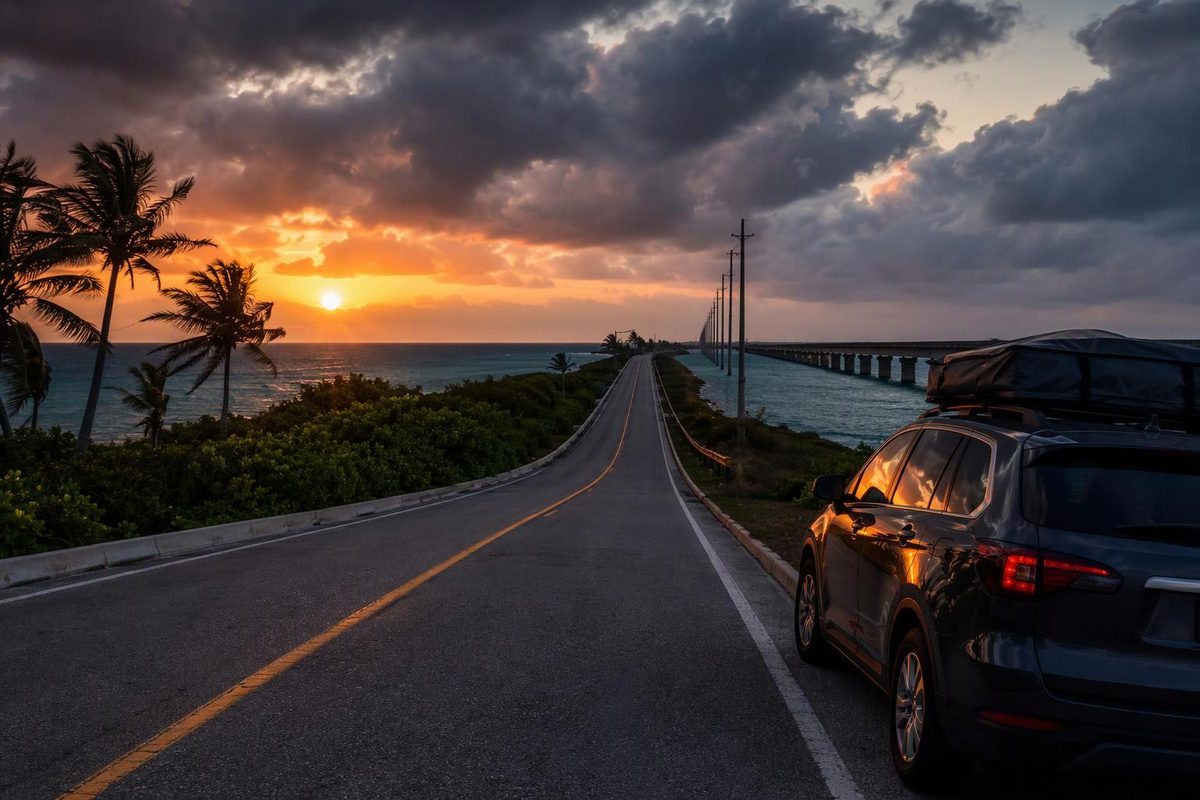
Allow 4–5 hours for the Miami to Key West drive without sightseeing, or 7–9 hours for a selective road-trip day. The journey is roughly 160 miles one way, depending on your starting point and destination. The distance is manageable; combining stops, time in Key West and a same-day return is the difficult part.
Route at a glance
| Item | Planning answer |
|---|---|
| Distance | Roughly 160 miles one way; a downtown Miami tour operator lists 163 miles |
| Route | Reach Florida City, then follow US-1 south through Key Largo, Islamorada, Marathon and the Lower Keys |
| Driving allowance | 4–5 hours in ordinary conditions, excluding sightseeing; incidents can add substantially more |
| Day with stops | 7–9 hours for the drive, lunch, a short bridge walk and a beach visit—not time exploring Key West |
| Overnight plan | One night avoids the immediate return; two nights gives you a full day in Key West |
| Fuel plan | Start full and reassess in Marathon; calculate the return journey, not just the outbound leg |
| Conditions check | Check US-1 on FL511 and local storm guidance before departure |
The timing above is a planning allowance, not a live traffic forecast. Miami Tour Company quotes approximately 3.5 hours from downtown Miami over 163 miles, depending on traffic and stops. Leaving additional margin is more useful than treating that as an arrival promise.
Which route should you take?
From Miami International Airport, the official Florida Keys travel guide directs drivers onto LeJeune Road south, SR-836 west and Florida’s Turnpike south to Florida City, then US-1 south into the Keys. Continue on US-1 to Key West. From downtown or Miami Beach, choose the mainland approach using your exact starting address and current traffic.
If using a rental car, settle the toll arrangement before leaving the counter. Florida’s Turnpike says rental companies have different payment programs and fees; do not assume toll charges are included in the rental price.
In the Keys, mile markers decrease toward MM 0 in Key West. They are useful for locating stops, but save the actual parking entrance in your navigation app rather than just a business’s general highway address.
US-1 is the through-route along the island chain. Once you are well into the Keys, a closure is not something to solve by finding a parallel freeway. Keep FL511 handy for closures, incidents, congestion and construction information.
Build the drive around three stops, not thirteen
The visit allowances below are suggestions for keeping the day workable, not fixed tour durations. Use Key Largo for a comfort break if needed, Islamorada for lunch and Marathon to reassess fuel and remaining time.
Islamorada: allow 45–60 minutes for lunch. Choose somewhere with its own legal parking and keep this a meal break. Adding a boat excursion here changes the itinerary into an activity day rather than a straightforward drive to Key West.
Old Seven Mile Bridge: allow 30–45 minutes for a short walk. At Marathon’s western end, this is the place to get out of the car for bridge views—not the shoulder of the active highway bridge. The official visitor guide describes a free, pedestrian- and bicycle-friendly 2.2-mile span and an adjacent lot with space for up to 35 vehicles. A full out-and-back is 4.4 miles, so turn around early if this is a brief stop. If the lot is full, skip it rather than improvise parking.
Bahia Honda State Park: allow 1.5–2 hours for a beach break. This is the longer stop to keep if beach time matters more than arriving early. As checked October 1, 2026, park hours and fees are 8 a.m. to sundown, with admission of $8 per vehicle carrying two to eight people, plus a 50-cent surcharge per person. Single-occupant vehicles pay $4.50.
Check the park’s notices before committing: day-use areas can temporarily close at capacity, and the park recommends early arrival on weekends and holidays. Shade is limited, so bring sun protection. If Bahia Honda is the priority, drive there first and move lunch or the bridge walk to the return journey.
Is a same-day return sensible?
It is possible, but budget 8–10 hours for the two drives using the allowances above. Add four hours in Key West and another hour for meals and parking, and you have a 13–15-hour day without substantial roadside sightseeing.
For a same-day trip, leave early, choose either a brief roadside stop or more time in Key West, and set a return departure time. Staying for sunset means driving back after dark. Do not combine that with a tired driver or an early flight the following morning.
One overnight makes the journey less compressed. Two nights lets you drive south with stops, spend a full day in Key West, then return without immediately undoing the outbound journey.
Seasons, wildlife and arrival logistics
December–April is the drier-weather choice. The National Weather Service in Key West identifies December–April as the dry season and June–October as the wet season, with May and November transitional. In warmer, wetter months, carry drinking water and leave room to shorten outdoor stops.
Atlantic hurricane season runs June 1–November 30. Follow local hurricane travel guidance, not just the forecast at your Miami hotel. If a visitor evacuation is ordered, postpone the southbound trip. Monroe County advises evacuating when told and filling the tank early because stations may run out or close.
Watch for Key deer in the Lower Keys, especially if returning late. The U.S. Fish & Wildlife Service asks drivers to use caution from Big Pine and No Name Keys west to Lower Sugarloaf Key. Follow posted limits and use proper parking if stopping to view wildlife.
Before entering Key West, decide where the car will stay. Ask your lodging about parking first. Otherwise, the city’s Old Town Parking Garage at 301 Grinnell Street is an option. As checked October 1, 2026, rates are $6 hourly or $48 daily, plus tax; special-event rates may apply. Its height limit is 7 feet 2 inches and its listed length limit is 20 feet; RVs and trailers are prohibited. Payment includes access to city bus routes for everyone in your vehicle, but not the Lower Keys Shuttle. Parking once and continuing on foot or city transit keeps arrival from becoming another driving task.