
A 4-Day Yellowstone Itinerary That Limits Backtracking
Plan four full days in Yellowstone with clustered stops, realistic driving budgets, staged overnight bases, fuel planning and seasonal limits.
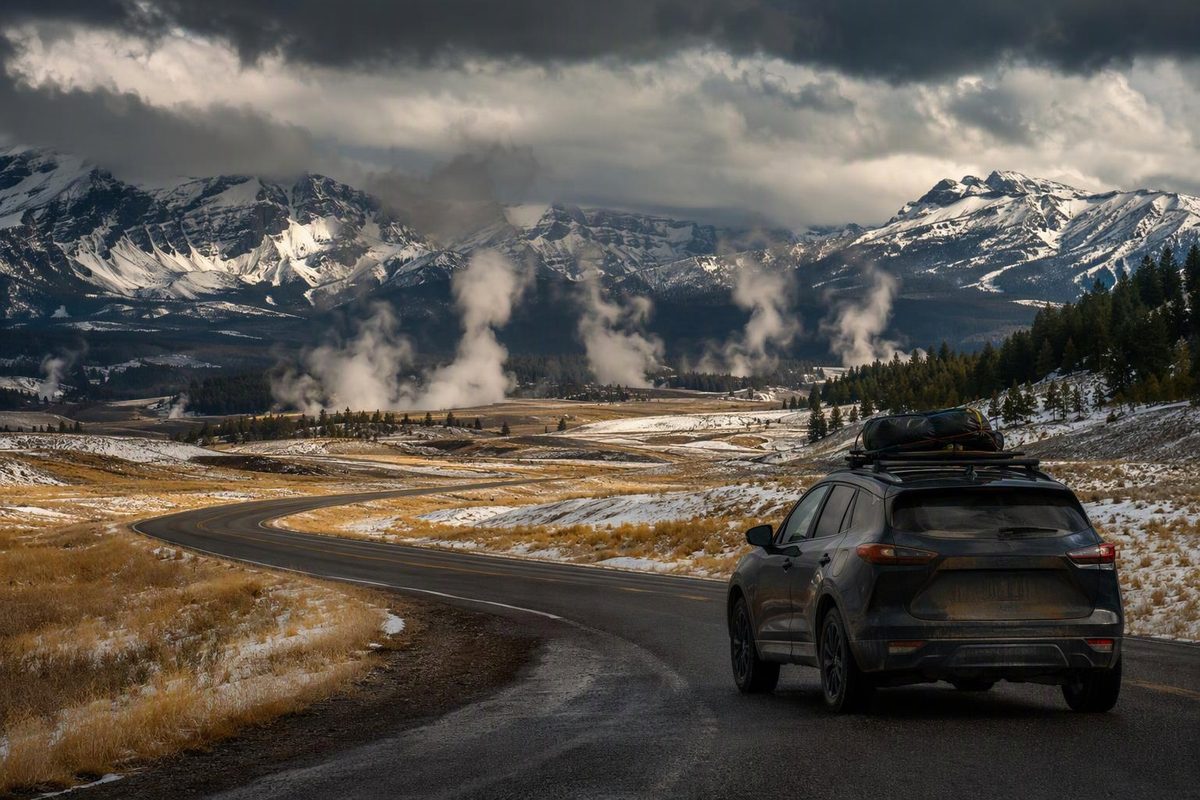
Plan on four full sightseeing days, with your arrival drive the day before. This route enters from West Yellowstone, groups the geyser basins together, then moves through the lake and canyon country to the northern range. It finishes in Gardiner rather than returning to the West Entrance.
The trade-off is changing overnight bases. In return, you avoid commuting across the park every morning. Yellowstone’s Grand Loop alone is 142 miles, before entrance roads and sightseeing detours; completing that loop is not the same as seeing the park. NPS park map
Route and timing at a glance
Planning window: June–September, subject to road, trail and lodging availability. This is a regular-vehicle itinerary, not a winter driving route.
Season check, November 1, 2026: The published 2026 regular-vehicle season for this itinerary’s interior roads ended October 31. NPS generally closes most park roads from early November to late April; the generally year-round road runs from Gardiner through Mammoth and Tower Junction to Cooke City. Check the live road-status page and seasonal schedule before booking and again before departure. Do not assume the 2026 schedule applies to a later year.
| Day | Route and main stops | Driving budget* | Full-day budget | Overnight |
|---|---|---|---|---|
| 1 | West Entrance → Madison → Midway Geyser Basin → Old Faithful | 1¼–2 hours | 7–9 hours | Old Faithful area |
| 2 | Old Faithful → West Thumb → Lake Village → Hayden Valley → Canyon | 2–3 hours | 7–9 hours | Canyon Village |
| 3 | Canyon → Norris → Mammoth → Gardiner | 1¾–2½ hours | 6–8 hours | Gardiner |
| 4 | Gardiner → Mammoth → Tower Junction → Lamar Valley → Gardiner | 3–4 hours | 7–9 hours | Gardiner, or a short onward drive |
*These are planning estimates for driving and stop-access roads. They exclude walks, meals, eruption waits, entrance queues and major wildlife or construction delays. For context, NPS lists West Entrance–Madison at 30 minutes, Madison–Old Faithful at 35–45 minutes, and Canyon–Norris–Mammoth–North Entrance at a combined 90 minutes. Official segment times
Arrive in West Yellowstone the evening before Day 1. Keep a long airport transfer or interpark drive outside these four days. If your car must return to West Yellowstone, budget that return separately; if renting, check pickup and return arrangements before booking lodging.
Day 1: Grand Prismatic and Old Faithful
Enter through the West Entrance and follow the road to Madison, then turn south toward Old Faithful.
Make Midway Geyser Basin your first substantial stop. Its boardwalk brings you alongside Grand Prismatic Spring and Excelsior Geyser Crater. For the elevated view, use the separate Fairy Falls trailhead, about one mile south of Midway—not the Midway parking lot. The Grand Prismatic Overlook walk is 1.2 miles round trip, climbs 105 feet, and has an NPS duration of 1–2 hours. Parking is very limited. Overlook trail details
If you do both the boardwalk and overlook, protect the afternoon for Old Faithful rather than adding every roadside basin. If parking is unavailable, keep moving and reassess later; do not wait in the travel lane.
At Old Faithful, check the current eruption prediction at the visitor education center. Build your Upper Geyser Basin walk around that window, with time for lunch and more boardwalk afterward. Predictions are also available at the lodges and in the NPS App; do not assume an eruption happens on a fixed hourly schedule. Old Faithful visitor guidance
Stay in the Old Faithful area so an evening walk does not require a long return drive. If those rooms are unavailable, West Yellowstone works for this night, but adds roughly 65–75 minutes of baseline driving back after Day 1 and the same again to reach Old Faithful before continuing Day 2. Add those hours to the table’s budgets.
Day 2: West Thumb, Yellowstone Lake and the canyon
Drive east over Craig Pass toward West Thumb Geyser Basin. Allow about an hour for its lakeside boardwalks, then continue north along Yellowstone Lake toward Lake Village. West Thumb combines thermal features with the lake setting, so there is no need to add a lengthy hike. NPS area guide
Use Lake Village for a meal or picnic break, then follow the road through Hayden Valley toward Canyon. Leave flexible time for wildlife watching from established pullouts. Hayden is a recognized wildlife-viewing area, but sightings and traffic delays cannot be scheduled. Hayden Valley guide
For the afternoon, choose Artist Point on the South Rim and Lookout Point on the North Rim rather than trying every canyon trail. Both provide views of the Lower Falls. Canyon viewpoints Add a rim walk only if time and conditions allow. If Hayden Valley takes longer than expected, visit Artist Point today and save the North Rim for tomorrow morning.
Sleep at Canyon Village. This keeps an unfinished canyon stop close and positions you for the westward drive to Norris.
Day 3: Norris and Mammoth
Finish any deferred canyon overlook, then drive west to Norris Geyser Basin.
Allow 1½–2 hours for a selective visit. Porcelain Basin has a roughly ¾-mile route; the longer Back Basin circuit is about 1½ miles. Choose according to your walking capacity instead of automatically doing both. Do not hold the day open waiting for a major Steamboat Geyser eruption: those eruptions are unpredictable. Norris trails and geyser guidance
Continue north to Mammoth Hot Springs for the travertine terraces and, if you want a break from thermal features, historic Fort Yellowstone. Mammoth area overview Allow about two hours, including a meal or rest stop. Then exit through the North Entrance to Gardiner.
This route deliberately uses Norris–Mammoth, not Dunraven Pass. The high-elevation Canyon–Tower road has a shorter operating season, so it is not essential to this itinerary. Seasonal road schedule
Day 4: Lamar Valley without another cross-park commute
From Gardiner, return through Mammoth and continue to Tower Junction, then turn east into Lamar Valley. Use the Lamar Buffalo Ranch area as a turnaround target, adjusting to legal parking and wildlife activity. You do not need to drive all the way to the Northeast Entrance.
An early start gives you more time in the valley: NPS recommends dawn and dusk because many animals are most active then. Balance that advantage against visibility on the approach roads. Bring binoculars, breakfast and patience rather than expecting a guaranteed wolf sighting. Wildlife-watching advice
Work between established pullouts and return by the same road. Lamar Buffalo Ranch itself has no facilities open to the general public. Lamar Valley visitor information
Keep this as a wildlife day. Adding Old Faithful or Yellowstone Lake afterward would undo the geographic grouping and create a long final drive.
Bookings, fuel and preparation
- Book the overnight sequence first. This plan depends on securing the Old Faithful and Canyon nights; if they are unavailable, revise the route before booking the rest. Yellowstone does not currently require an entrance reservation, but lodging and campground reservations are required and often fill months ahead. Confirm each property’s operating dates. Reservations · Park lodging
- Check the applicable entrance fee. As checked November 1, 2026, the standard private-vehicle pass is $35 for seven consecutive days. Non-US residents aged 16 or older also pay $100 each unless covered by a valid park annual or America the Beautiful Pass. Pass purchase eligibility depends on residency; check the options rather than assuming everyone can buy the same pass. Current fees · Nonresident rules and pass coverage
- Start with fuel and replenish before Lamar. Stations on this route include Old Faithful, Canyon, Mammoth and Tower Junction. NPS lists year-round, 24-hour credit-card fueling, but EV charging is extremely limited; plan charging separately. Fuel and services
- Save maps offline. Download Yellowstone in the NPS App before entering. Cell reception is unreliable, and NPS warns that navigation apps can route vehicles onto closed roads. Use official park maps. Offline app instructions · Navigation guidance
- Pack for short walks and delays: layers, rain protection, drinking water, food and bear spray you know how to use. Stay on thermal-area boardwalks and designated trails. Keep at least 100 yards from bears, wolves and cougars, and 25 yards from other wildlife; move away if an animal comes closer. The usual park speed limit is 45 mph unless posted otherwise. Use safe pullouts with every wheel off the road, and stay in your vehicle during wildlife jams. Park safety rules
With only three days, drop the dedicated Lamar day rather than combining it with the canyon or geyser day. With an extra day, keep the same route and add walking time or a second wildlife session—not another full-park loop.