
Choosing the Best Time to Visit Antelope Canyon
Upper's beams favor summer late mornings. Lower's softer light favors mornings or late afternoons in warm months. Winter offers lower rates.
Overview
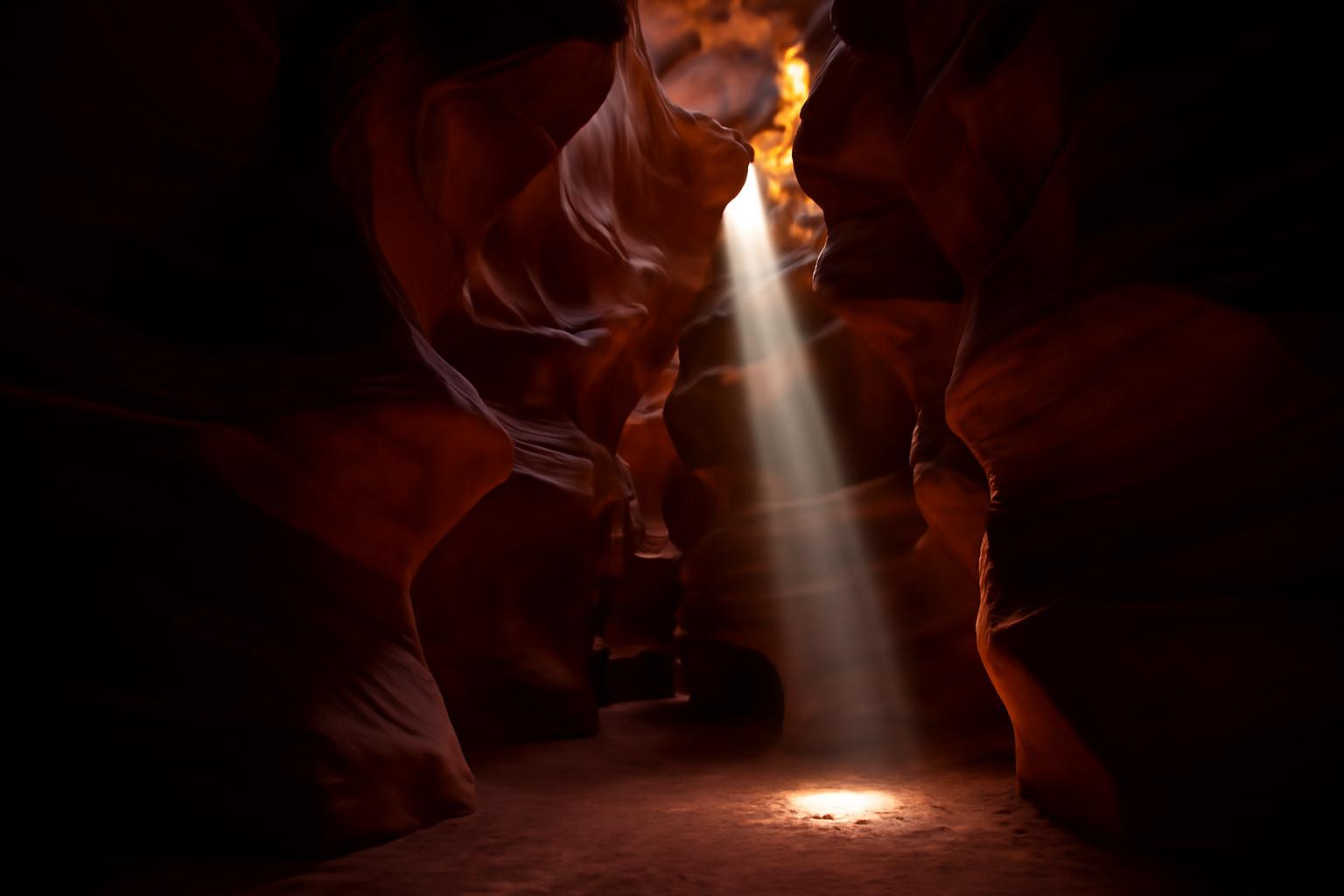
The best time to visit Antelope Canyon depends on your priority. Choose summer and a late-morning Upper Canyon tour for the strongest chance of light beams, spring or fall for milder conditions, and winter for lower off-season rates and a quieter visit. April is a strong compromise, not a universal winner.
There is a real tradeoff behind that answer. The same periods that improve your chance of seeing prominent Upper Canyon beams also bring intense heat, greater demand, and higher prime-time tour prices. Clear skies still matter, so reserving the “right” departure cannot guarantee the effect.
Your canyon section matters as much as your month. Upper Antelope Canyon is the better fit if direct beams are the main goal. Lower Antelope Canyon has softer, more diffused light and different preferred photography periods, plus stairs and ladders that make it a more physical tour.
The Best Time by Travel Priority
Start by deciding what you would regret missing. A photographer pursuing a vertical shaft of light should make different choices from a family prioritizing comfortable temperatures or a traveler trying to avoid peak demand.
| Your main priority | Best-supported period | What you gain | What you give up |
|---|---|---|---|
| Upper Antelope Canyon light beams | Summer, with opportunities extending into parts of spring and fall | The strongest supported chance of direct overhead beams during a late-morning or midday tour | Intense heat, greater demand, possible sellouts, and higher prices for prime departures |
| Comfortable touring conditions | Spring or fall | Milder temperatures than summer and generally lighter crowds | Beams may be less intense or less dependable than during summer |
| A balanced trip | April | Comfortable daytime conditions and a plausible mix of good light and stable weather | April does not outperform every other month for beams, price, or solitude |
| Lower rates | November through late February, especially January | Better off-season rates according to Visit Arizona | Colder conditions and less prominent Upper Canyon beams |
| Fewer visitors | Winter | A quieter experience than the peak season | Temperatures can be cold, and the classic beam effect is weaker |
| Lower Canyon color and softer light | Morning or later afternoon during warmer months | More diffused illumination and changing wall colors | This is not the classic Upper Canyon midday-beam experience |
The seasonal evidence supports these broad choices, not an exact ranking of every month. Antelope Canyon Info describes spring and fall as milder alternatives to summer, while Visit Arizona identifies November through late February as the off-season for better rates and fewer people.
April deserves particular attention because two tour businesses describe it as one of the best all-around months. One reports daytime temperatures around 65–80°F, while another emphasizes clear skies and stable weather. Treat that as operator guidance, not proof that April is best for every traveler. If beams are non-negotiable, summer remains the stronger choice. If price or solitude matters more, winter makes more sense.
How the Seasonal Tradeoffs Change
Spring is the most straightforward choice when comfort matters more than maximizing beam intensity. Antelope Canyon Info places spring temperatures from the mid-50s to mid-70s Fahrenheit, or roughly 10–24°C, and describes crowds as lighter than in summer. Conditions are easier for waiting, walking, and transferring between a vehicle and the canyon, but the evidence does not establish that every spring departure offers strong beams.
Summer is the beam-focused season, particularly for Upper Antelope Canyon. It is also the harshest practical choice. Temperatures in Page often exceed 100°F or 38°C, according to the same source. Summer is described as peak tourist season, and the late-morning departures associated with direct beams tend to command higher prices and sell out. No source provides a reliable monthly crowd count or a standard prime-time premium, so compare the actual departures available for your date.
Fall restores some balance. Antelope Canyon Info gives a broad fall range from the mid-60s to mid-80s Fahrenheit, or about 18–29°C, and reports lower crowds than summer. The tradeoff is weaker direct-beam potential as the season advances. Early fall may still overlap some sources’ beam windows, but you should not assume a late-fall visit will reproduce a midsummer Upper Canyon photograph.
Winter is the clearest choice for value and relative quiet. Visit Arizona points to November through late February, especially January, for better rates and fewer people. Antelope Canyon Info reports winter temperatures commonly in the 30s to 50s Fahrenheit, or 0–10°C. Prominent beams are less likely, but softer illumination and lower demand can still make winter the right decision.
Crowd guidance remains qualitative. A Lower Antelope Canyon operator calls April through October its busiest period and November through March off-peak, while also reporting that weekdays tend to be less crowded than weekends. These patterns are useful for choosing between two possible dates, but they are not a guarantee of an uncrowded tour.
Flash-Flood Risk and Possible Closures
Weather can disrupt a tour in any season. Navajo Parks and Recreation says flash-flood danger is greatest during the July-through-September summer monsoon, but it can occur at any time of year. That is general Navajo Nation trail and backcountry guidance, and it is the strongest basis here for understanding seasonal risk.
Antelope Canyon-specific planning guidance is narrower. Visit Arizona says the canyon may close on uncommon days of heavy rain or snow, with weather-related closures more likely from June through September. A Lower Antelope Canyon operator likewise advises checking for heavy rain in the forecast before leaving for a tour.
Do not read “greatest during monsoon season” as “safe outside monsoon season.” A slot canyon can be affected by weather beyond what you see at the entrance. Check the forecast shortly before departure and monitor the selected operator’s live notices.
The supplied sources do not establish one standard notification process, refund policy, or rebooking rule across operators. Verify those terms before paying, especially if your trip has no spare day. If a closure would break the rest of your schedule, choose a booking whose published terms you understand rather than assuming every company handles disruption the same way.
Upper vs. Lower: Why the Canyon Section Changes the Answer
Choose Upper Antelope Canyon when your main goal is the classic direct-beam effect or when stairs and ladders are a concern. Choose Lower when you prefer changing, diffused light and are comfortable with a more physical route.
According to Visit Arizona, Upper is at ground level and has less than a 2% incline. It is also the more popular entrance. Its wider interior and overhead openings support the direct light shafts associated with late-morning and midday tours.
Lower Antelope Canyon requires several flights of stairs and ladders. Antelope Canyon Tours describes steep metal stairs, ladder descents, twisting corridors, and a route that keeps changing as visitors move through it. That physical difference should carry more weight than a small lighting advantage if anyone in your group has difficulty with steep stairs or confined passages.
Upper Antelope Canyon Light-Beam Timing
For the best supported chance of seeing beams in Upper Antelope Canyon, target a late-morning or midday departure during the warmer part of the year. Do not lock onto one exact hour, because the cited windows conflict.
Antelope Canyon Info identifies roughly 10:00–11:30 a.m. as the best viewing period and says summer is the best season for viewing the iconic light beams. Visit Arizona recommends being inside the canyon from 10:00 a.m. to 1:00 p.m. between May and October. An Antelope Canyon ticketing FAQ gives another window, 11:00 a.m. to 1:30 p.m.
The defensible conclusion is broader than any one of those claims: late morning through midday is the main opportunity, while the usable season extends across summer and portions of spring and fall. Differences among sources may reflect tour routing, departure schedules, or how each business defines good beam conditions. The evidence does not support one operator-independent guaranteed slot.
Weather is the other limit. Both Antelope Canyon Info and the ticketing FAQ say beams depend on clear, sunny conditions. Cloud or rain can weaken or remove the visible shaft even when you reserve a prime departure. A midday booking improves the opportunity; it does not purchase a guaranteed photograph.
Prime times also tend to cost more and sell out, according to Antelope Canyon Info, particularly around 10:00 a.m. to noon. If your available dates are flexible, compare live departures before arranging the rest of the trip. If you cannot get a prime slot, decide whether softer canyon color is acceptable or whether changing the date matters more.
Lower Antelope Canyon Lighting and Physical Demands
Lower Antelope Canyon follows a different lighting pattern. During warmer months, morning or later-afternoon departures are the better-supported choices for softer illumination and changing wall colors, rather than Upper Canyon’s direct midday-beam objective.
A Lower Antelope Canyon operator recommends approximately 7:15–10:45 a.m. or 2:15–4:15 p.m. during its April-through-October peak season. The ticketing FAQ gives a similar but not identical March-through-September range of 7:30–10:30 a.m. and 2:00 p.m. through the final tour. These are operator-specific windows, so use them as directional guidance and check the schedule for the tour you are actually buying.
Antelope Canyon Info describes Lower’s light as softer and more diffused, with morning tours helping visitors avoid harsher shadows later in the day. The ticketing FAQ says all daily tour times can offer suitable lighting from October through February because the sun’s position changes in winter. That does not mean every winter time produces identical photographs. It means one operator considers the full day workable for its Lower Canyon lighting goal.
Physical access may settle the decision before timing does. Lower involves multiple stairs and ladders, including steep metal sections and narrow, twisting corridors. Confirm that everyone in your group can manage that route. Upper’s ground-level approach is the more practical choice when mobility or stairs are a concern, even if a Lower departure has appealing light.
Book the Tour and Confirm the Details
Once you have chosen a season, section, and approximate lighting window, book the guided tour before finalizing the surrounding travel plan. Visit Arizona says both Upper and Lower require a prior reservation with an authorized Navajo guide, while the ticketing FAQ states that a guide must remain present throughout the canyon tour.
Check these items on the selected operator’s live booking page:
- The exact canyon section, since Upper and Lower have different lighting and access conditions.
- The scheduled departure and expected time inside the canyon, not just the headline tour time.
- The time basis printed on the booking confirmation, especially when coordinating transportation from another region.
- Current cancellation, weather, refund, and rebooking terms.
- Physical requirements, passenger limits, and any operator-specific arrival instructions.
Reserve early when the date or light window is important. Visit Arizona warns that tours can sell out weeks in advance, while Antelope Canyon Info says some departures may sell out months ahead. Those statements show that advance booking matters, but they do not establish a universal lead time. Capacity, season, section, and departure all affect availability.
Do not assume that a higher-priced or heavily demanded slot guarantees beams. Compare current schedules and prices, accept that clear weather remains necessary, and keep the operator’s contact details available on the day of the tour. The best booking is the one that matches your actual priority while leaving you fully informed about its access demands and disruption terms.