
Camping in Anza-Borrego: Dirt Roads, Sites, and Driving Essentials for Desert Overnights
Blair Valley is one of the better 2WD bets in dry conditions, giving campers in ordinary cars a practical place to start.
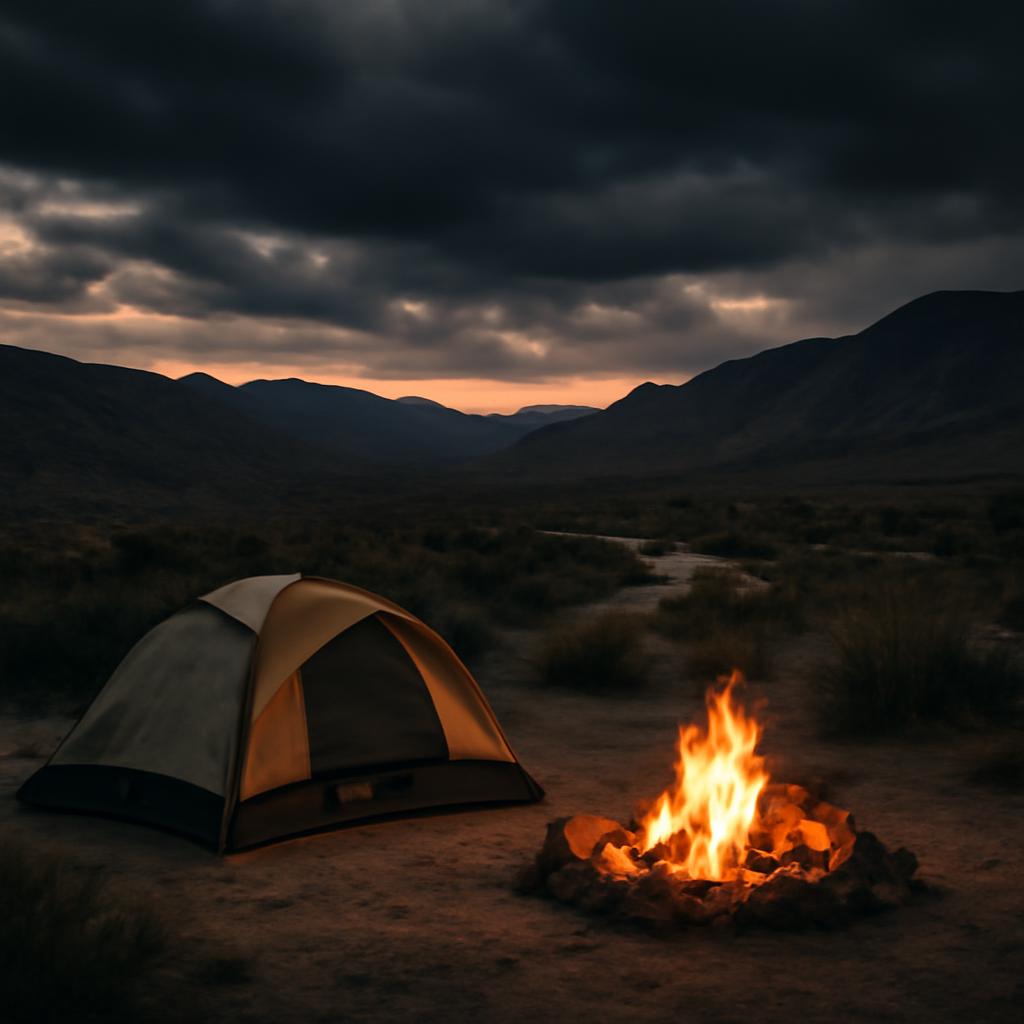
Camping Anza Borrego Desert State Park can mean three very different trips: a developed campground with showers, a primitive area with only a toilet and little else, or a free backcountry night where your real amenities are whatever you brought with you. That range is the appeal. It is also the planning problem.
California State Parks describes Anza-Borrego as the largest state park in California, with 500 miles of dirt roads. California State Parks Foundation describes the park at more than 600,000 acres. In a landscape that large, the difference between an easy overnight and a rough one usually comes down to access, water, and honesty about your vehicle.
This guide sorts the park by camping type first, then by the driving questions that matter most: how to reach the park, where a sedan still makes sense, where high clearance starts to matter, which rules are easy to miss, and what to check before you leave pavement.
Overview: Camping Types and Park Access from Major Routes
Anza-Borrego offers three broad camping styles: developed campgrounds, primitive campgrounds or primitive areas, and dispersed or backcountry camping. California State Parks highlights the park’s 500 miles of dirt roads, while California State Parks Foundation describes paid campgrounds, primitive areas, and broad backcountry opportunities across more than 600,000 acres. That matters because “camping in Anza-Borrego” is not one product. It can mean a fairly conventional campground near Borrego Springs, or a remote dirt-road site where self-sufficiency is the whole point.
The simplest planning framework is this:
- Developed camping is the easiest arrival and the best fit for travelers who want showers, potable water, clearer site organization, and less vehicle stress.
- Primitive camping is a middle ground: recognized camping areas, usually first-come, sometimes with vault or chemical toilets, but typically no water.
- Dispersed camping is the loosest and often the cheapest option, but it asks the most of your judgment, your water supply, and your vehicle.
California State Parks gives directions to the visitor center via S-22/Palm Canyon Drive from both west and east approaches. For trip-planning distance, Ready, Set, PTO places the park at about a 1.5-hour drive from San Diego and roughly 2.5 hours from Los Angeles, while Eat See TV describes it as roughly two hours from Palm Springs.
That paved approach is the easy part. Once you leave the main roads, the vehicle question changes quickly. California State Parks Foundation notes that some dirt-road camping areas, including Blair Valley, are often accessible to RVs and two-wheel-drive vehicles, while others require ground clearance and four-wheel drive. California State Parks also makes an important legal distinction: street-legal vehicles only are allowed in the park, and OHVs are not permitted.
Fees and seasons need careful wording because both can change. Eat See TV lists an entrance fee of $10 per vehicle as of 2023, but that should be treated as a dated planning reference, not a promise. The more stable seasonal guidance comes from California State Parks Foundation, which says summer temperatures can reach 110°F and recommends November through April. That lines up with how most desert campers plan the park: cooler months first, wildflower timing second, summer only with real heat tolerance and a reason to go.
Water is the non-negotiable. California State Parks says to bring at least 1 gallon per person per day. For a trip that may include dirt roads, long walk-ins from a roadside camp, or a breakdown in hot weather, treat that as a floor rather than a comfort target.
Developed Campgrounds: Reservations, Fees, and Amenities
If you want the easiest version of camping Anza Borrego Desert State Park, start with the developed campgrounds. These are the best choices for travelers who want a clearer arrival process, easier road access, and a buffer against the harsher realities of desert backcountry camping.
The exact site inventories you see online do not always agree. That is normal here. Park-affiliated guides, brochures, tourism sites, and reservation roundups describe the same campgrounds with different counts, loop breakdowns, and RV length details. The most reliable practical takeaway is not the exact number of pads, but the camping style, access level, and core amenities.
Borrego Palm Canyon
Borrego Palm Canyon is the main developed campground and the first place most road trippers should evaluate. A park-affiliated camping guide from the Anza-Borrego Desert Natural History Association describes it as the park’s largest developed campground, close to the visitor center and a couple of miles from Borrego Springs, with flush toilets, showers, drinking water, and a dump station. That same guide lists 122 sites, including 52 hookup sites, with camping fees starting at $35 per night. A local Borrego Springs tourism guide gives a more detailed but not identical breakdown, listing 52 hookup sites, 65 non-hookup sites, and 5 group sites, with a 35-foot limit on hookup sites and a 25-foot limit on non-hookup sites. Campnab, a reservation-monitoring site, describes 175 developed campsites parkwide and limited RV hookups.
The counts differ, but the planning conclusion is consistent: Borrego Palm Canyon is the park’s main developed base, the easiest fit for a standard vehicle, and the likeliest choice if you want the most services in one place. Reservations are commonly handled through ReserveCalifornia, as noted by the ABDNHA camping guide, and California State Parks Foundation notes the usual California booking window of up to six months in advance.
Tamarisk Grove
The official park brochure describes Tamarisk Grove as centrally located, open seasonally, and offering shade, pay showers, and reservable campsites and cabins. The ABDNHA guide lists campsites and cabins starting at $35 and $70 respectively, and notes a seasonal closure from June 1 through September 30. A local tourism guide gives a different site count, which is another reminder not to over-trust static third-party inventories for exact numbers.
What matters for planning is simpler than the conflicting counts: Tamarisk Grove is a smaller, seasonal developed campground with easier road access than most primitive areas, plus shade and showers that matter in the desert.
Vern Whitaker Horse Camp
Vern Whitaker Horse Camp is specialized rather than general-purpose. ABDNHA describes it as a developed horse camp with non-hookup sites, horse corrals, flush toilets, showers, and drinking water, with fees starting at $35 per night. A local Borrego Springs guide likewise presents it as a horse-only camping area.
If you are not camping with horses, it is not the default choice. If you are, it is the park’s purpose-built developed option.
Rules that matter in developed campgrounds
For basic campground rules, the official park page is the best source. California State Parks lists a 2 p.m. check-in time, quiet hours from 10 p.m. to 6 a.m., generator hours from 10 a.m. to 8 p.m., and a maximum of 8 people and 2 vehicles per site. The same page says visitors must leave by 10 p.m..
One easy-to-miss fee detail: California State Parks says camping fees include entry for one vehicle plus one towed vehicle, with additional vehicles charged $10. For groups arriving separately, that can matter as much as the nightly site fee.
About closures and availability
Do not assume a campground is open just because a guide describes it. The official park page can show changing restrictions and service limitations, and in the evidence reviewed for this article it included examples such as Tamarisk Grove, Vern Whitaker Horse Camp, and portions of Borrego Palm Canyon being closed or restricted at the time of that listing. The point is not that those places are always closed. The point is that status changes, while campground roundups often lag.
A clean planning sequence is:
- Choose the developed campground that fits your route and amenity needs.
- Check the official park page for advisories, restrictions, and current operating notes.
- Then verify booking through the park’s reservation system.
If you want showers, potable water, dump access, and the least stressful road approach, the developed campgrounds earn their price. If you mainly want solitude and can live without built amenities, primitive or dispersed camping will fit better.
Primitive Campgrounds: First-Come Sites with Basic Facilities
Primitive camping in Anza-Borrego sits in the middle ground: more structured than dispersed camping, much less serviced than the developed campgrounds. For many drivers, this is the sweet spot. You get a recognized camping area and often some form of toilet, but you should not expect developed-campground comfort.
The most important assumption is simple: bring your own water.
Bow Willow
The official brochure says Bow Willow and nearby Mountain Palm Springs are first-come, first-served primitive campgrounds with chemical toilets. ABDNHA adds that Bow Willow has about 16 sites plus open camping, vault toilets, no water, and a nightly fee starting around $20. Eat See TV, writing for RV travelers, recommends a 35-foot RV maximum.
That makes Bow Willow a good first primitive option for campers who want a simpler desert night without going all the way into unstructured backcountry camping.
Blair Valley
Blair Valley is one of the most important names in Anza-Borrego planning because it often comes up for travelers in ordinary cars. The official brochure says Blair Valley is a great area for primitive camping, with roads usually accessible by two-wheel-drive vehicles, plus vault toilets but no water. California State Parks Foundation similarly describes the Blair Valley road as one of the dirt-road areas that can be accessible to RVs and two-wheel-drive vehicles. Eat See TV lists Blair Valley dispersed camping at no nightly cost.
The important word is usually. Blair Valley is one of the better 2WD bets in dry conditions. It is not a guarantee after rain, washouts, or softening road surfaces.
Yaqui Well
Yaqui Well is where the vehicle conversation starts moving away from normal passenger cars. The official brochure describes it as a primitive camping area with pit toilets but no water, fire rings, or tables. A Borrego Springs tourism guide says the area includes numbered sites and some unnumbered camping space, while Eat See TV flags Yaqui Well as a free option where 4x4 is recommended.
The official brochure is the safest baseline here: primitive, no water, minimal facilities.
Fish Creek
Fish Creek is another good example of a place where road access matters more than campsite labels. The official brochure describes Fish Creek as a primitive campground with eight sites, no water, and chemical toilets. ABDNHA lists it as first-come, first-served, with no water and a nightly fee starting around $20, and notes that some primitive access roads in this part of the park may require higher clearance.
For planning purposes, Fish Creek is less about amenities than about whether your vehicle matches the approach.
Mountain Palm Springs, Arroyo Salado, and Sheep Canyon
Mountain Palm Springs is the easiest of this group to describe because the official brochure directly includes it with Bow Willow as first-come primitive camping with chemical toilets. Arroyo Salado and Sheep Canyon are more often described in third-party camping guides than in official overview materials. A Borrego Springs guide describes Arroyo Salado as free primitive camping with vault toilets and a recommendation for high clearance, while California State Parks Foundation includes Sheep Canyon, Mountain Palm Springs, and Arroyo Salado among the park’s primitive or backcountry camping areas.
For practical planning, it helps to group primitive options this way:
- More vehicle-dependent: Fish Creek, Yaqui Well
What primitive really means here
Primitive in Anza-Borrego does not just mean “no hookups.” It often means:
- first-come, first-served access
- little or no shade
- no potable water
- minimal or no cell service
- a vault or chemical toilet if you are lucky
- road conditions that can change after weather
That last point matters. The official brochure says Blair Valley roads are usually accessible by 2WD, and it also notes that trails and conditions in the Bow Willow and Mountain Palm area can change with rainfall. If your vehicle is borderline for a road, a dry-weather recommendation is not enough. Check conditions before committing.
Dispersed and Backcountry Camping: Free Rules and Spots
Dispersed camping is the part of camping Anza Borrego Desert State Park that attracts people who want space, darkness, and flexibility. It is also the part most likely to get oversimplified.
The main official park page confirms the broad framework: Anza-Borrego allows backcountry camping, limits access to street-legal vehicles only, and caps backcountry occupancy at 30 days per calendar year per persons, vehicles, or equipment. But some of the most specific placement rules commonly quoted online come from third-party summaries of the park order rather than from the main official page.
Those third-party summaries are unusually consistent. California State Parks Foundation says backcountry campers can use previously used campsites or clearings free of vegetation, with vehicles parked no more than one car length off designated dirt roads. Boondocker’s Bible likewise summarizes the park order as allowing camping at designated primitive camps and along dirt roads where vehicles stay no more than one car length off the road, and says camps should be at least 100 yards from water sources. Ready, Set, PTO and Go To Borrego Springs repeat the same one-car-length and 100-yard-from-water rules here.
Because those details are coming through summaries rather than the main official rules page, the safest way to use them is as the best available planning guidance and to verify locally if a ranger clarification matters to your trip.
What dispersed camping usually looks like in practice
In practice, dispersed or backcountry camping in Anza-Borrego usually means one of two things:
- Camping in or around recognized primitive areas such as Blair Valley, Fish Creek, Mountain Palm Springs, Sheep Canyon, Yaqui Pass, Yaqui Well, Culp Valley, or Arroyo Salado, as summarized by Boondocker’s Bible’s park-order overview.
- Using a previously disturbed roadside site off a designated dirt road, while keeping your vehicle close enough to the road to avoid making new tracks, as summarized by California State Parks Foundation.
What it does not mean is driving into open desert until you find an empty flat. California State Parks is explicit that OHVs are not allowed and vehicles must be street-legal, while Boondocker’s Bible’s park-order summary emphasizes staying on established roads and previously used sites.
Places people commonly consider
The Slot Canyon area appears in personal guides because it makes sense for an early hike. Ready, Set, PTO says the author found a dispersed site near Slot Canyon to get an early start the next morning. Use that as an example of how people camp in the park, not as a guarantee that any particular turnout near Slot Canyon is legal or suitable.
Peg Leg Road and Carrizo Valley also come up in Anza-Borrego trip planning, but Boondocker’s Bible is careful to say those are nearby BLM options rather than state-park-managed camping. That distinction matters because the land manager, rules, and enforcement context are different.
No-camping zones and occupancy limits
Backcountry freedom still has boundaries. Boondocker’s Bible’s park-order summary says primitive camping is not allowed near the visitor center, near Borrego Palm Canyon Campground, or in areas posted with “No Camping” signs. The same source notes that Galleta Meadows is private property and not a legal camping area. California State Parks separately confirms the parkwide backcountry duration limit of 30 days per calendar year.
The practical reality of free camping here
Free dispersed camping sounds easy because the nightly cost is zero. The real cost is self-reliance.
Expect:
- no potable water
- weak or absent cell service
- no guaranteed toilet
- longer dirt-road exits if your vehicle has trouble
- more need for judgment than in a developed campground
California State Parks Foundation specifically warns travelers to research accessibility so they do not get stuck in sand far off course. In Anza-Borrego, your vehicle and your decision-making are part of the campsite.
Vehicle Access: Dirt Roads, RV Limits, and Pre-Trip Checks
The biggest planning mistake in Anza-Borrego is treating campsite names as the main decision. In reality, road access is often the main decision.
Getting to Borrego Springs and the visitor-center area is straightforward on pavement. California State Parks provides directions via S-22/Palm Canyon Drive. Once you leave that paved network, you are entering a park with 500 miles of dirt roads, and the difference between “technically possible” and “smart for your vehicle” starts to matter.
What 2WD can usually handle
If you are driving a normal sedan or crossover, the reasonable targets are Borrego Palm Canyon and, in dry conditions, Blair Valley. The official brochure says Blair Valley roads are usually accessible by two-wheel-drive vehicles, and California State Parks Foundation says the road to Blair Valley is one of the dirt-road areas that can be accessible to RVs and 2WD vehicles. Borrego Palm Canyon is the obvious paved-access choice.
“Usually” still means conditions matter. After rain, washboards, mud, ruts, or soft patches can change the answer fast.
Where high clearance or 4WD starts to matter
Yaqui Well and Fish Creek are common examples where the answer shifts away from standard passenger cars. Eat See TV marks Yaqui Well as a 4x4-recommended area. ABDNHA and other campground guides treat Fish Creek as a more clearance-sensitive primitive destination. If you find yourself asking whether you can coax a low-clearance rental through a route, that is usually the sign to choose a different camp.
RVs and trailers: site fit and road fit are different
Third-party campground guides commonly describe 35 feet as an important upper-end planning number around the park, whether because of site dimensions or road geometry. The Borrego Springs tourism guide lists 35 feet as the maximum RV length for Borrego Palm Canyon hookup sites, while Eat See TV says 35 feet is a sensible practical limit for many park roads because some are steep and winding.
Treat that as planning guidance rather than a universal rule for every road and campsite. The useful distinction is:
- Can the campsite fit your rig?
- Can the approach road comfortably fit your rig?
Those are not the same question.
The pre-trip checks that matter most
Before a desert trip with dirt-road options, the useful prep is mechanical and unglamorous. The strongest single checklist in the evidence pack is this guide to long-road-trip tire and gear basics, which recommends checking tire pressure only when the tires are cold, using the door-jamb sticker rather than the sidewall number, watching tread depth before a long trip, checking oil, coolant, washer fluid, and battery condition, and carrying basics such as an inflator, jumper cables or a jump pack, a flashlight, reflective triangles or flares, tools, and extra water.
For a shorter recap before departure, this road-trip tire and gear checklist covers the same basic checks.
For Anza-Borrego specifically, that advice matters because a small problem gets harder once you are on a dirt road with weak signal and a long drive back to town.
Navigation, fuel, and communication
Eat See TV says cell service is limited to none across much of the park. That is enough reason to assume weak coverage unless you know otherwise. Download maps before entering the backcountry and do not rely on a live signal for route-finding.
Remote camping areas do not come with services.
A final access rule worth remembering
Even if your vehicle can physically go somewhere, that does not make it legal. California State Parks prohibits OHVs and limits park access to street-legal vehicles. Boondocker’s Bible’s park-order summary also stresses no off-road driving and no creating new tracks into the desert. In a fragile desert landscape, that is both an access rule and a conservation rule.
Key Rules: Pets, Fires, Occupancy, and Quiet Hours
The rules in Anza-Borrego are not especially hard to follow, but they are easy to misread if you are used to more forgiving campgrounds.
Pets
California State Parks says dogs are allowed in campgrounds, on designated park roads, and on the Visitor Center/Campground Trail. That is the official baseline.
Some more specific dog restrictions often quoted online come through third-party park-order summaries rather than the main official page. Boondocker’s Bible says dogs must be leashed to 6 feet or less and are not allowed on trails. Because the main park page does not spell that out in the same detail, the conservative interpretation is simple: plan on dogs as campground-and-road companions, not trail companions, and verify locally if dog access is central to your trip.
Fires
The official rule you can rely on is that ground fires are not allowed. California State Parks also notes that fire restrictions can tighten during extreme conditions, and the same page indicates propane stoves are permitted in designated sites under some conditions.
Additional details commonly repeated in local guides come from third-party summaries. Go To Borrego Springs says fires, when allowed, should be in a metal container with firewood brought from outside the park. Boondocker’s Bible gives the same summary about metal containers and outside firewood. Since those specifics are not presented the same way on the main official page, treat them as strong local guidance and confirm same-day conditions before lighting anything.
The practical fire rule set is:
- no ground fires
- expect restrictions to tighten in extreme conditions
- propane cooking is usually the simplest option
- if you plan on a contained fire, verify current rules first
Site occupancy and noise
California State Parks lists the core campground rules on the official park page:
- maximum 8 people per site
- maximum 2 vehicles per site
- check-in at 2 p.m.
- quiet hours from 10 p.m. to 6 a.m.
- generator hours from 10 a.m. to 8 p.m.
- visitors out by 10 p.m.
The same page also says no alcohol or glass containers beyond your campsite, and notes that camping fees include one vehicle plus one towed vehicle, with additional vehicles charged $10.
Other restrictions people miss
California State Parks also prohibits drones, firearms, and OHVs. Backcountry occupancy is limited to 30 days per calendar year. Those are straightforward rules, but they are easy to miss if you arrive thinking of the park as a casual desert free-for-all. It is not.
Safety Prep and Best Seasons for Desert Camping
Desert camping success is mostly about matching the season to your heat tolerance and your willingness to be self-reliant.
Best time to camp
Multiple sources converge on the same answer: late fall through spring. California State Parks Foundation recommends November through April because summer can reach 110°F. Ready, Set, PTO broadens the practical comfort window to October through May, with March and April best for wildflowers if winter rain cooperates.
A practical split looks like this:
- November to February: coolest and easiest for camping
- March to April: best blend of comfortable weather and wildflower potential, but busier
- May: still possible, but with less heat margin
- Summer: much harsher, with fewer operational comforts and less room for mistakes
Summer also changes operations. California State Parks says the visitor center is open Friday through Sunday, 9 a.m. to 5 p.m., from June 1 through September 30. Some campgrounds may also be seasonal or temporarily restricted, so verify before departure.
Water, water, then more water
The official recommendation from California State Parks is at least 1 gallon per person per day. At primitive and dispersed sites, California State Parks Foundation notes there is no drinking water at primitive sites, which makes that minimum more serious than it sounds.
For actual trip comfort, that official minimum often needs to cover more than drinking:
- cooking
- handwashing
- cleanup
- buffer time if you leave later than planned
- emergency reserve if the vehicle has trouble
This is one of the few camping categories where overpacking water is usually the right mistake.
Remote conditions and self-reliance
California State Parks emphasizes preparation for remote areas, and the evidence set includes repeated warnings about limited cell service and changing road conditions. Eat See TV says cell service is limited to none. The official page also includes examples of road advisories, such as Coyote Canyon Road closures and limited parking at the closure gate.
That combination should shape how you plan the trip. Anza-Borrego is not a campground beside a highway exit. If you get stuck, lose service, miss a turn, or have a dead battery, the solution may take time.
Arrive with margin
Desert camping goes better when you arrive with daylight, water margin, and enough flexibility to turn around if the road looks wrong. That matters more here than in a forest campground where the worst outcome is usually an inconvenient setup in the dark.
Nearby Alternatives Outside Park Boundaries
If in-park camping is full, seasonally closed, or wrong for your vehicle, there are workable alternatives around Borrego Springs and the surrounding desert. Just do not confuse them with state-park camping.
San Diego County Parks
ABDNHA lists Vallecito County Park with sites starting around $30 per night and a seasonal closure from Memorial Day to Labor Day. The same guide lists Agua Caliente County Park with sites and cabins starting around $30, plus hookups, pools, trails, and a similar seasonal closure.
These are useful fallback choices if you want a more conventional campground experience with more services than Anza-Borrego primitive areas provide.
Ocotillo Wells SVRA
California State Parks Foundation mentions Ocotillo Wells State Vehicular Recreation Area as the nearby off-road vehicle area. That makes it a fundamentally different environment from Anza-Borrego itself. If you want quiet desert camping under the park’s street-legal-vehicle rules, do not assume Ocotillo Wells is interchangeable.
Private camping near Borrego Springs
For a private fallback, Hipcamp lists Coyote Moon Camping near the park at $40 per night, with water, fire pits, Wi‑Fi, and pets allowed. Treat that as a marketplace listing rather than an official campground directory, but it is useful to know that private alternatives exist.
Nearby dispersed options on other land
Boondocker’s Bible often pairs Peg Leg Road and Carrizo Valley with Anza-Borrego trip planning, but explicitly says those are BLM options nearby rather than state-park camping. That can be an advantage if you specifically want BLM-style dispersed camping, but it means different rules, different management, and different expectations.
Plan your trip as a road trip first and a campsite second: verify current status on the official Anza-Borrego park page, choose access that matches your vehicle, and do the boring checks on tires, fluids, water, and tools before leaving town. Conditions, fees, restrictions, and campground status can change.
Are reservations needed for all camping in Anza-Borrego?
No. Reservations mainly matter for the developed campgrounds. The official park page and campground guides describe reservable developed camping such as Borrego Palm Canyon, Tamarisk Grove, and Vern Whitaker Horse Camp, while California State Parks Foundation notes that developed sites may be booked up to six months ahead. Primitive and dispersed camping are generally first-come or no-reservation options, but always verify current status directly before planning around a booking.
Can I bring dogs camping and where?
Yes, but with limits. California State Parks says dogs are allowed in campgrounds, on designated park roads, and on the Visitor Center/Campground Trail. Boondocker’s Bible’s park-order summary adds that they should be leashed to 6 feet or less and kept off trails. The practical interpretation is that dogs are fine for campground-based camping and road access, but you should not assume they can join you on backcountry hikes.
What fire rules apply and can I have campfires?
Start with the official rule: ground fires are prohibited. California State Parks also warns that stricter fire restrictions may apply during extreme conditions. Local guides and Boondocker’s Bible summarize additional practice rules such as using a metal container and bringing firewood from outside the park here, but because those details are being relayed through third-party summaries, verify current conditions before relying on them. In practice, propane cooking is usually the simplest low-drama option.
Is 4WD required for primitive or dispersed sites?
Not for all of them. The official brochure says Blair Valley roads are usually accessible by two-wheel-drive vehicles, and California State Parks Foundation also describes Blair Valley as one of the more 2WD-friendly backcountry areas. But other areas, including Yaqui Well and some Fish Creek approaches, are more often described as 4WD- or high-clearance-oriented. So 4WD is not universally required, but it becomes more important as you move beyond the easiest primitive areas or travel after rain.
How much water do I need for desert camping?
At least 1 gallon per person per day is the official baseline from California State Parks. That minimum matters even more because primitive and dispersed sites generally have no drinking water. In real use, most campers will want more than the bare minimum once cooking, cleanup, delays, and vehicle trouble are factored in. In Anza-Borrego, bringing too much water is usually the correct mistake.