
Check Tires and Carry Basics Before Long Drives
Check pressure after the car has sat for at least three hours; tire pressure reads 4-6 psi higher when the tires are warm.
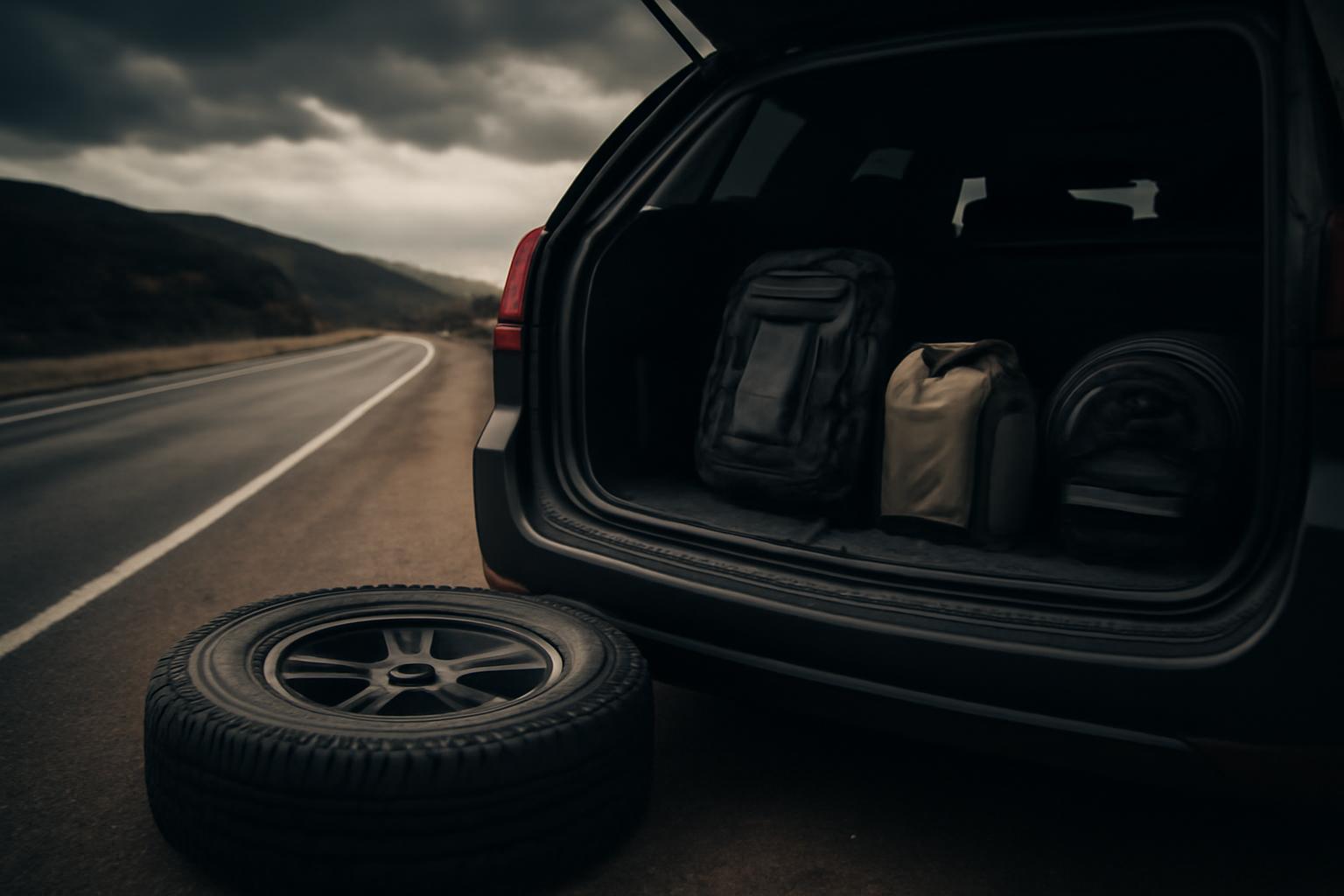
Most road-trip packing lists conflate “nice to have” with “will matter when something goes wrong.” Here is the shorter version: what to check on the car, what to carry, and what to skip.
Pre-departure vehicle checks
Tires — the one thing worth doing yourself before any trip over 300 miles
Check cold pressure in all four tires plus the spare. Cold means the car has been sitting at least three hours — tire pressure reads 4–6 psi higher when warm. The correct pressure is on the door jamb sticker, not the tire sidewall (the sidewall shows max pressure).
Check tread depth with a quarter: insert it into the groove with Washington’s head pointing in. If you can see the top of his head, you’re at 4/32” — borderline. Replace before a long trip if you’re going anywhere wet or mountainous. A penny test (Lincoln’s head fully visible = 2/32”) means legally worn out.
Fluids
- Engine oil: if you’re within 2,000 miles of a scheduled change, do it before the trip
- Coolant reservoir: should be at the full-cold line; a road trip in summer heat stresses cooling systems more than city driving
- Washer fluid: fills up fast on highway driving through bugs or road spray
Battery
If the battery is three or more years old and you’ve noticed slow cranking, test it — most auto parts stores do it free. A dead battery in a parking lot 400 miles from home costs more time than a $150 replacement at home.
What to carry
In the trunk, always
- Tire inflator (12V compressor): a slow leak that would be trivial in a city becomes a two-hour roadside wait in rural Nevada. A decent inflator costs $35–50 and handles most situations.
- Jumper cables or jump starter: a lithium jump starter pack is more useful than cables if you travel solo — you don’t need another car.
- Flashlight with fresh batteries: phones die; flashlights don’t require cellular service to work
- Reflective triangles or road flares (3): required in some states, essential on narrow two-lane roads at night
- Basic tool kit: socket set, pliers, zip ties, duct tape, spare fuses
Water
One gallon per person per day is the survival rule; half a gallon per person is adequate for a car breakdown in moderate temperatures. In desert heat, double it. Water is heavy (8.3 lb/gallon) and cheap — don’t optimize for trunk space here.
Documents
- Vehicle registration and proof of insurance in the glove box, not just on your phone
- Roadside assistance card or number saved offline in contacts
- Written emergency contact with car info (make, color, plate) — useful if your phone is dead
What to skip
- A generator unless you’re camping with power-hungry equipment
- A full first-aid kit beyond a basic one: most road medical situations need a hospital, not more supplies
- Paper maps for areas with reliable cell service — they’re heavy and go out of date; download offline maps instead
- An inverter for charging devices: modern cars have USB-A and USB-C ports; a 12V inverter adding AC is rarely necessary
The 500-mile rule
Long-distance driving degrades concentration more than most people account for. At 500 miles in a day, focus and reaction time are meaningfully impaired — similar to mild alcohol impairment in studies of drowsy driving. Plan stops around this, not around “I feel fine.” Coffee delays but doesn’t reverse the effect.