
Plan an Oregon Coast Road Trip With Five Days on Highway 101
Plan five sightseeing days on Oregon’s Highway 101, with driving allowances, overnight bases, shorter-trip options, access notes and 2026 parking fees.
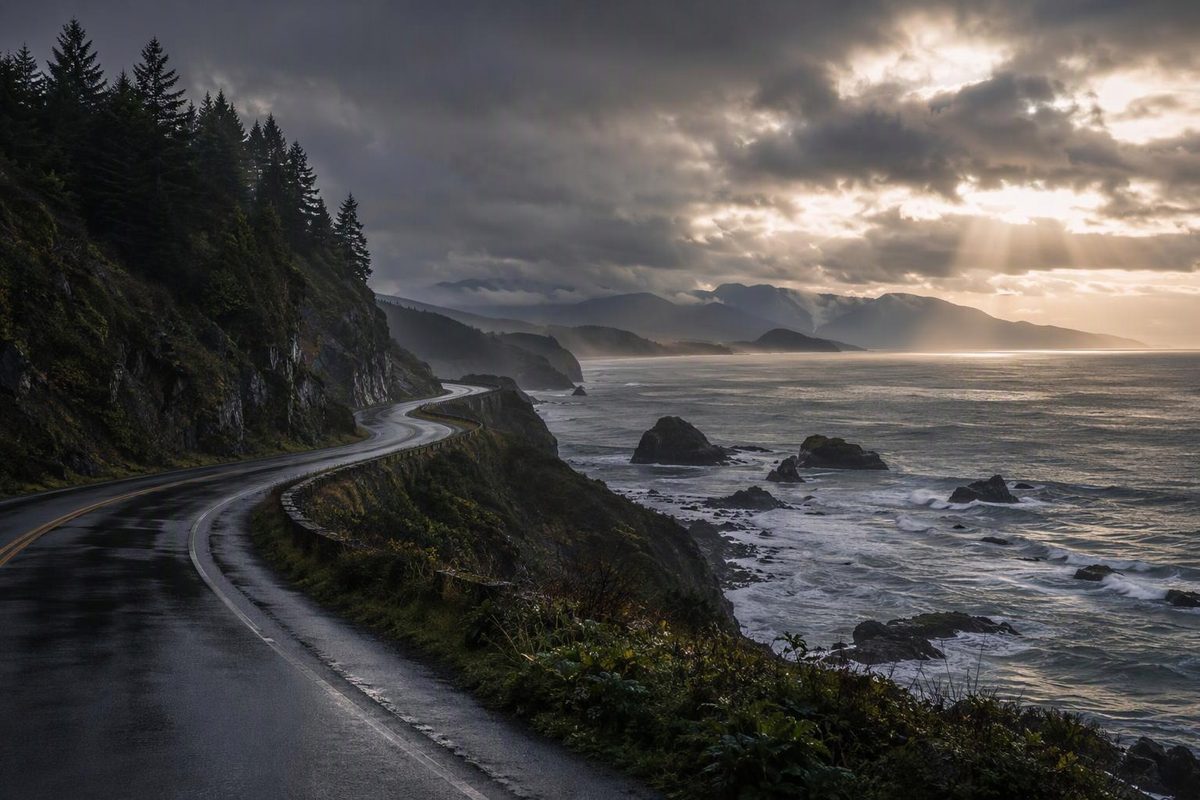
Allow five sightseeing days for an Astoria-to-Brookings Oregon coast road trip, plus time to reach the coast and leave it. That gives you room for beaches, a lighthouse walk and short hikes without making every stop a race. With only three days, choose a section rather than the whole coast.
Route and timing at a glance
- Main road: US 101, following the Pacific Coast Scenic Byway.
- Full byway length: The Forest Service lists 363 miles and a 12-hour allowance to enjoy the byway—not a substitute for several sightseeing days. Your mileage will depend on starting points and side roads. Official byway details
- Suggested direction: North to south, putting many ocean-side turnoffs on your right. Northbound works too; do not force a left turn when traffic makes it unsafe.
- Overnight sequence: Astoria before starting, then Cannon Beach, Newport, Florence, Bandon and Brookings.
- Conditions: Check US 101 and your coast-access highways separately, then check notices for the parks you intend to visit.
Access notes checked October 14, 2026: ODOT lists overnight closures at Astoria’s New Youngs Bay Bridge, 9 p.m.–6 a.m., beginning October 14 with estimated completion October 17. Farther south, its report lists flagger-controlled single-lane traffic at US 101 mileposts 331–333 south of Gold Beach, with expected delays under 20 minutes. Recheck the live ODOT road report before driving; these are dated notices, not permanent route features or a complete list of work zones.
Five days, with driving kept separate from sightseeing
These are planning allowances, not measured travel times or live navigation estimates. The linked route-planner pages provide non-live transfer baselines; the ranges below allow some margin. Driving ranges cover the main US 101 transfer; substantial detours, meals, parking searches and walks are additional. The full-day budgets include selected stops, not every attraction along the way.
| Day | Main leg and route-planner baseline | Driving allowance | Budget for the day | Overnight |
|---|---|---|---|---|
| 1 | Astoria → Cannon Beach | 45–60 minutes | 6–8 hours | Cannon Beach |
| 2 | Cannon Beach → Newport | 3–4 hours | 7–9 hours | Newport |
| 3 | Newport → Florence | 1½–2 hours | 6–8 hours | Florence |
| 4 | Florence → Bandon | 2–2½ hours | 6–8 hours | Bandon |
| 5 | Bandon → Brookings | 2–2½ hours | 6–8 hours | Brookings |
Day 1: Astoria and Cannon Beach
Arrive in Astoria the previous evening if possible. Use the morning for the waterfront or Columbia River Maritime Museum, then drive south through Seaside to Cannon Beach. Finish with a beach walk and views of Haystack Rock. These stops follow the northern section of the official byway route.
Treat Ecola State Park as an optional addition, not a required hike. As of October 14, its Clatsop Loop Trail’s west section remains closed because of an active landslide, under a notice effective April 17, 2026. The park also advises against taking motorhomes or trucks pulling trailers up its tight, winding entrance road. Check the Ecola park notices before committing.
Day 2: Cannon Beach to Newport
Make this a selective driving day: a coastal viewpoint, a lunch stop around Tillamook, and a short stop in Depoe Bay before Newport. US 101 moves inland around bays and valleys; it is not an uninterrupted oceanfront road.
Do not add the entire Three Capes Scenic Loop to this schedule by default. It is a separate coastal detour through Cape Meares, Cape Lookout and Pacific City, described in the byway guide. If those headlands are a priority, add a night around Tillamook or Pacific City rather than keeping Newport as a fixed deadline.
Day 3: Newport to Florence
Choose one substantial Newport-area visit before heading south. Yaquina Head works for lighthouse views and walking paths; tidepooling depends on tide, surf and access restrictions. BLM warns that wildlife protection can limit access to Cobble Beach and the tide pools, particularly during spring and summer. Check the Yaquina Head visitor information.
Continue through Yachats to Cape Perpetua, then Heceta Head before Florence. If you spend the morning at the aquarium instead, shorten the afternoon walks.
Cape Perpetua’s visitor-center deck offers a wheelchair-accessible ocean view, and its trails and viewpoints remain open dawn to dusk even when the building is closed. At Heceta Head, the lighthouse requires a half-mile walk each way from the parking area, climbing 150 feet on the outward leg; there is no public vehicle access to the tower. Allow roughly an hour for that stop, longer if entering the ground floor when staffing and weather permit. Cape Perpetua details; Heceta Head access.
Day 4: Florence to Bandon
Use the morning for a dunes visit around Florence or Reedsport, then continue through North Bend and Coos Bay to Bandon. The dunes and these towns are part of the byway’s central-to-southern sequence.
If you choose a substantial dunes walk or tour, keep the afternoon direct. A Cape Arago excursion adds side-road driving and walking; it should replace another activity, not be squeezed between a tour and a promised Bandon sunset.
Day 5: Bandon to Brookings
Head through Port Orford and Gold Beach, reserving several hours for the Samuel H. Boardman State Scenic Corridor before Brookings.
The corridor occupies 12 miles along US 101. Pick two or three stops rather than braking for every turnoff: Arch Rock has a short path from a paved parking lot, Natural Bridges has a short trail to a viewpoint, and Cape Ferrelo offers a mile-long hike. Use the park’s official trail and viewpoint information, stay on established routes and avoid informal cliff-edge shortcuts.
Fit the route to your available time
Three days: Choose Astoria–Cannon Beach–Newport for the north coast, or base around Newport and Florence for a smaller central-coast trip. Include your arrival and return driving when deciding which fits.
Seven days: Add an extra day in Astoria and a second night in Newport or Bandon. Repeat nights give you room to shift a walk around rain or a suitable low tide.
Returning to Portland: The five-day itinerary ends in Brookings, not Portland. Reserve a separate return travel day and check every connecting highway. If the entire holiday is five days including Portland pickup and return, shorten the coastal route. For broader combinations, use our West Coast trip-length guide.
Weather, parking and preparation
Summer is the simpler choice for a walking-heavy itinerary, but it is not hot-beach weather: Travel Oregon lists average summer highs of 65°F in Newport and 68°F in Brookings. Its coastal averages also show much wetter winters. Pack a windproof rain layer and shoes with grip; in winter, use fewer overnight bases and leave room to cancel exposed walks. Oregon seasonal weather
Before beach visits, check local tide and surf forecasts—not just the rain forecast. Sneaker waves can follow a long period of small waves and can lift heavy driftwood. Stay clear of logs near the surf, keep watching the ocean and retain an escape route. National Weather Service beach guidance
Budget for separate parking systems. As checked October 14, 2026, daily parking at fee-charging Oregon state parks costs $10 per vehicle for Oregon residents or $12 for nonresidents; one daily permit covers multiple participating state parks that day. Oregon Coast Passports sold in 2026 are not valid at Oregon state parks, and federal recreation passes do not cover state-park parking. State-park permit rules
Federal stops are separate: Cape Perpetua charges $5 per vehicle per day, while Yaquina Head charges $7 for a three-day passenger-vehicle pass. Both accept qualifying federal passes; check each site’s accepted-pass list rather than assuming one permit covers the trip.
Combine fuel, food and restroom stops in your overnight towns; do not postpone refueling until after an unplanned detour. EV drivers should verify compatible chargers and backups before choosing lodging. Download maps, carry water and a phone charging cable, and check tires, brakes, lights and wipers before departure. Our road-trip tire and gear checklist covers the vehicle basics; the Oregon TripCheck guide explains how to inspect each highway segment before setting off.