
Plan the Golden Gate Park Japanese Tea Garden Without Losing Time to Parking
Current hours, free entry times, parking directions, accessibility limits and a realistic visit plan for San Francisco’s Japanese Tea Garden.
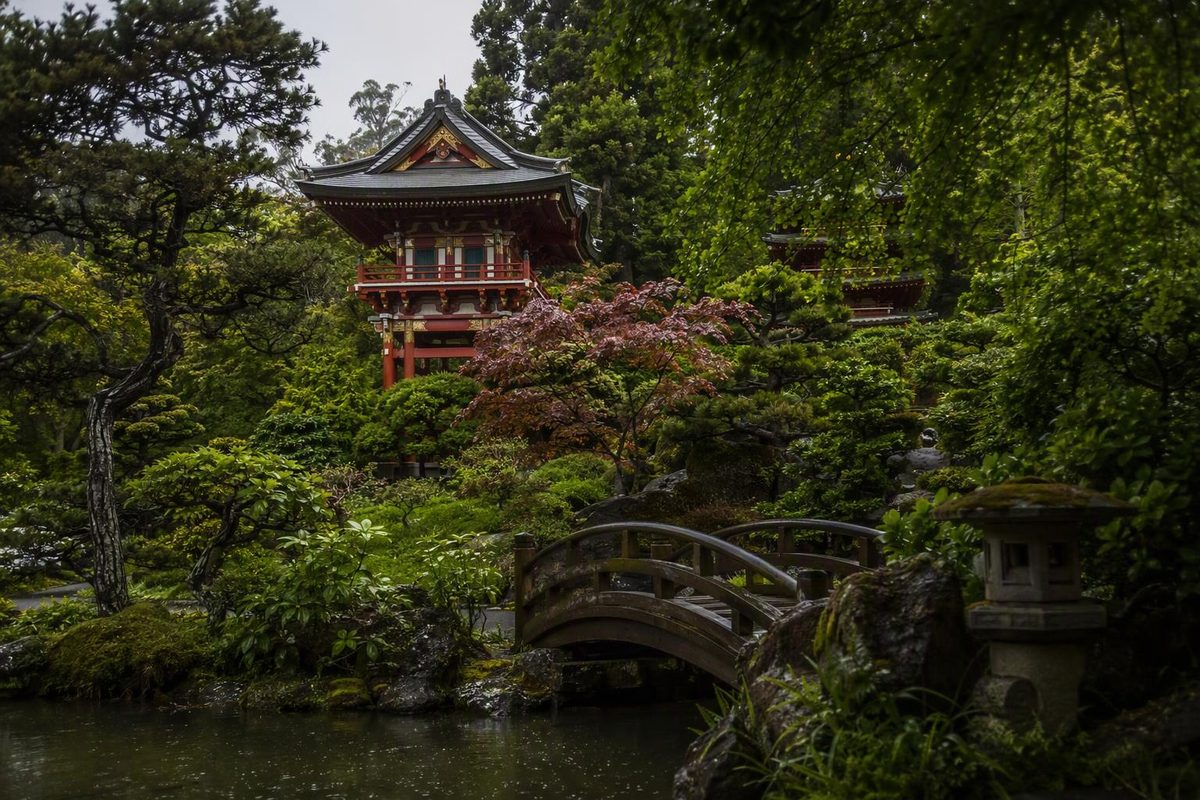
The “Golden Gate Park Japanese Garden” is officially the Japanese Tea Garden, at 75 Hagiwara Tea Garden Drive in San Francisco. It sits in the Music Concourse area beside the de Young Museum—not near the Golden Gate Bridge.
Allow 45–75 minutes to walk through the garden. Add roughly 30–45 minutes if you want tea or food, and more time for parking on a busy weekend. The garden is compact, so it works best as one stop in a larger park day rather than as a stand-alone all-day destination. Our Golden Gate Park sights and itinerary guide helps with the rest of the day.
Quick planning facts
| Detail | What to know |
|---|---|
| Address | 75 Hagiwara Tea Garden Drive, San Francisco, CA 94118 |
| Opening time | 9 a.m. daily |
| Last entry, March–October | 5:30 p.m. |
| Last entry, November–February | 4:30 p.m. |
| Free public hour | Monday, Wednesday and Friday, 9–10 a.m. |
| Practical visit time | 45–75 minutes; longer with the Tea House |
| Closest dependable parking | Music Concourse Garage |
The operator says last entry is 30 minutes before closing, with the cutoff changing seasonally. Check the current Japanese Tea Garden hours and admission information before setting out, especially near a seasonal change or special event.
What to see inside
A sensible route does not require a detailed itinerary: follow the garden paths and give yourself time at the ponds, stone lanterns and planted viewpoints. The principal features include the arched drum bridge, pagoda, koi ponds, dry landscape garden and Tea House.
The garden operator identifies several details worth seeking out: a Buddha cast in Japan in 1790, a dry landscape garden designed by Nagao Sakurai in 1953 and a restored pagoda originally built for the 1915 Panama-Pacific International Exposition. The official garden overview also places cherry blossoms and azaleas in March and April, with wisteria generally blooming in April and May. Bloom timing can shift, so treat those months as a window rather than a promise.
The Tea House overlooks the south-facing pond and serves tea and Japanese refreshments, including mochi and udon. It is inside the garden, so include it in your visit rather than treating it as a separate café stop. The Tea House overview describes the setting and typical offerings, but availability can change.
Admission and the best time to arrive
Admission is free for San Francisco residents with accepted proof, veterans, Gardens members and qualifying Museums for All visitors. Everyone can enter free from 9 to 10 a.m. on Monday, Wednesday and Friday. The operator lists acceptable residency documents and current ticket options on its ticket page.
For the quietest practical visit, arrive at opening. That is particularly useful during the spring bloom window and on weekends, when the Tea Garden shares its immediate area with two major museums. If using a free-hour entry, arrive before 9 a.m. rather than near 10; entry after the free period requires regular admission.
Driving and parking
Do not navigate simply to “Golden Gate Park” and expect to drive along JFK Drive to the entrance. The park has a continuous car-free route, and vehicle access is channelled onto other roads.
The straightforward paid option is the 800-space Music Concourse Garage:
- From the north: enter at 10th Avenue and Fulton Street.
- From the south: enter the park at 9th Avenue and Lincoln Way, then follow Martin Luther King Jr. Drive to Music Concourse Drive.
- From the east: approach via Fell Street and Stanyan Street, follow Kezar Drive to Lincoln Way, then use the 9th Avenue entrance.
These approaches are specified by San Francisco Recreation and Parks. The garage is below the Music Concourse, a short walk from the Tea Garden entrance.
As of September 22, 2026, the garage is open daily from 7 a.m. to 7 p.m. Standard rates are $5 per hour on weekdays and $6 per hour on weekends, up to a $35 daily maximum. The posted clearance is 8 feet 2 inches. Special-event pricing can override normal rates, so drivers should verify the current SFMTA garage listing before visiting.
Street parking exists elsewhere in Golden Gate Park, but it is not the best basis for a fixed schedule. If your priority is the Tea Garden rather than finding a free space, use the garage. Large vans and taller campervans must check the clearance before entering.
When not to drive
The 44 O’Shaughnessy bus stops directly in the Music Concourse; its southbound stop is in front of the Japanese Tea Garden. The 5 Fulton, 7 Haight and N Judah also serve nearby areas. A free park shuttle connects several eastern park stops with the Music Concourse. It starts at noon on weekdays, after the garden opens, and at 9 a.m. on weekends and holidays. Current shuttle stops and operating times are listed by San Francisco Recreation and Parks.
Transit is the better choice when you are staying in San Francisco and plan to remain around the eastern half of the park. Driving makes more sense when the garden is one stop on a longer Bay Area travel day or when mobility needs and carried gear make transfers impractical.
Accessibility and family constraints
The historic landscape has meaningful access limitations. The operator says most of the Japanese Tea Garden is not wheelchair accessible, while access to the Tea House and restrooms is limited. Visitors who need step-free routing should review the garden’s current accessibility information before visiting. The Music Concourse Garage has 33 designated accessible spaces within 150 feet of museum entrances, according to the city’s Music Concourse access guide.
Strollers are not allowed inside and must be left outside; pets and outside food or drink are also prohibited, except that service animals are permitted. Those restrictions make advance planning important for families: bring a carrier if needed, and plan snacks for before or after the garden rather than during the walk.