
How to Choose the Right Sights for Your Day in Golden Gate Park
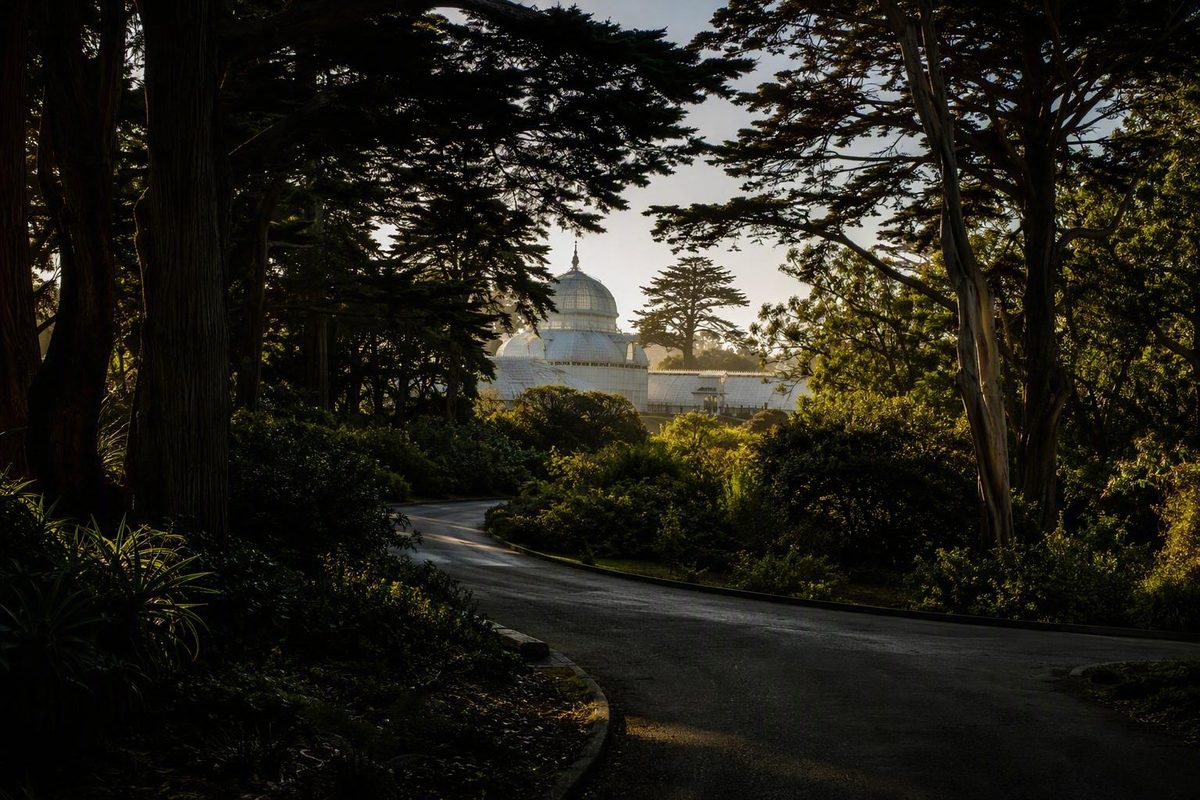
Golden Gate Park is not beside the Golden Gate Bridge, and it is not part of the Presidio. It is a separate destination on San Francisco’s west side, with museums, formal gardens, lakes, wooded paths, bison, historic windmills, and public spaces.
The simplest way to decide what to see is to divide the park into three zones:
- East: museums, formal gardens, the Music Concourse, and JFK Promenade
- Center: Blue Heron Lake and Strawberry Hill
- West: the Bison Paddock, windmills, seasonal flowers, and the Ocean Beach end
For two or three hours, choose one zone. For half a day, combine one major attraction with a nearby garden or outdoor stop. With a full day, connect selected sights across the park—but do not expect to explore every museum, garden, lake, and landmark properly.
Jump to:
- Park scale and zones
- Attraction comparison
- Eastern cluster
- Blue Heron Lake
- Western park
- Timed itineraries
- Themed visits
- Transportation
- FAQ
Start With the Park’s Scale, Geography, and Three Main Zones
Golden Gate Park extends roughly three miles from the Haight-Ashbury side of San Francisco toward Ocean Beach and covers more than 1,000 acres. Its scale explains why attractions that appear close on a small map can still involve significant transfers. The park is also separate from the Golden Gate Bridge and the Presidio, which are farther north, as this geographic overview of Golden Gate Park explains.
| Zone | Main character | Notable sights | Best for |
|---|---|---|---|
| East | Compact cultural and garden district | de Young, California Academy of Sciences, Japanese Tea Garden, Botanical Garden, Conservatory of Flowers, JFK Promenade | First visits, museums, gardens, short itineraries |
| Center | Lake and wooded island | Blue Heron Lake, Strawberry Hill, Huntington Falls, Golden Gate Pavilion | Walking, outdoor breaks, slower visits |
| West | Dispersed landmarks and open space | Bison Paddock, Spreckels Lake, Dutch Windmill, Queen Wilhelmina Tulip Garden, Beach Chalet | Wildlife, photography, windmills, an ocean-side finish |
The eastern zone is the most efficient starting point for a first visit. The de Young Museum and California Academy of Sciences face each other across the Music Concourse. The Japanese Tea Garden and San Francisco Botanical Garden are nearby, while JFK Promenade provides a car-free connection through part of the eastern park.
The central zone revolves around Blue Heron Lake, formerly Stow Lake. Here, the emphasis shifts from indoor exhibits and formal gardens to water, bridges, wooded paths, an island, and Strawberry Hill.
The western zone contains distinctive sights, but they are not arranged as one compact attraction district. The Bison Paddock, Spreckels Lake, Dutch Windmill, Queen Wilhelmina Tulip Garden, second windmill, and Beach Chalet require more movement between stops. Choose selectively rather than trying to collect every landmark.
Ocean Beach adjoins the park’s western edge but is not an attraction inside Golden Gate Park. Treat it as an optional extension after the windmill or Beach Chalet area.
The core planning rule is straightforward: stay in one cluster during a short visit; connect selected zones only when you have most or all of a day.
Choose Your Priority: Art, Science, Gardens, or Outdoor Landmarks
There is no objectively best attraction in Golden Gate Park. The right choice depends on your interests, available time, weather, budget, and preference for indoor or outdoor sightseeing.
| Attraction | Primary appeal | Setting | Access planning | Zone | Logical companion |
|---|---|---|---|---|---|
| de Young Museum | Art, textiles, costumes, architecture | Mostly indoors | Check current tickets and tower access | East | Japanese Tea Garden |
| California Academy of Sciences | Aquarium, rainforest, planetarium, natural history | Mostly indoors | Check current tickets and program reservations | East | Music Concourse |
| Japanese Tea Garden | Compact designed landscape | Outdoors, with tea house | Check current admission rules | East | de Young |
| San Francisco Botanical Garden | Broad international plant collections | Outdoors | Check current admission rules | East | Academy or Tea Garden |
| Conservatory of Flowers | Tropical and aquatic plants | Indoors | Check current admission and gallery access | East | JFK Promenade |
| Blue Heron Lake | Lakeside paths, bridges, island, waterfall | Outdoors | General park visit; verify optional services | Center | Strawberry Hill |
| Bison Paddock | Opportunity to see American bison | Outdoors | Public outdoor stop; visibility varies | West | Spreckels Lake |
| Dutch Windmill | Historic structure and seasonal garden | Outdoors | Public outdoor stop | West | Tulip Garden or Ocean Beach |
Museums and enclosed gardens may charge admission, while many public outdoor areas can be visited without general park admission. Rules, discounts, reservation systems, and included access can change, so check each venue before visiting; an overview from San Francisco Travel summarizes the principal institutions.
Choose the de Young Museum if art is your priority. Its collections encompass American art, photography, textiles, costumes, and works from Africa, Oceania, and the Americas. Its architecture and observation level also give it appeal beyond the galleries.
Choose the California Academy of Sciences for a science-centered visit, especially with children or a mixed-interest group. It combines an aquarium, four-story rainforest, planetarium, natural-history material, and living roof. Because it can occupy much of a half day, combining it with the de Young on a short schedule is likely to feel rushed.
Choose the Japanese Tea Garden for a compact, closely designed landscape. Its paths lead among bridges, pagodas, stonework, water features, koi ponds, traditional plantings, and a tea house.
Choose the San Francisco Botanical Garden when plant variety matters more than compact design. Its geographically diverse collections include a redwood grove, cloud-forest plantings, California plants, a fragrance garden, and a succulent garden.
Choose the Conservatory of Flowers for an indoor greenhouse experience centered on tropical and aquatic plants. It is particularly useful when plants are your priority or the weather discourages a long outdoor route.
Choose Blue Heron Lake, the Bison Paddock, or the windmills if you prefer outdoor landmarks to ticketed institutions. These sights also suit repeat visitors who have already explored the principal museums.
Weather can settle the decision. Wet or windy conditions favor the Academy, de Young, or Conservatory. A clear day favors the lake and western landmarks. For a lower-cost visit, emphasize JFK Promenade, public areas around the Music Concourse, Blue Heron Lake, the bison enclosure, and the windmills.
The Eastern Cluster: Museums, Formal Gardens, and JFK Promenade
The eastern side offers the greatest concentration of major sights with the least cross-park travel. The de Young and California Academy of Sciences face each other across the Music Concourse; the Japanese Tea Garden and Botanical Garden sit nearby, while JFK Promenade and the Conservatory of Flowers extend the cluster eastward.
The de Young Museum
The de Young is the logical anchor for visitors interested in American art, photography, textiles, costumes, and works from Africa, Oceania, and the Americas.
Temporary exhibitions change, so review the current calendar before building a visit around a particular show. For the permanent collections, identifying two or three areas of interest in advance is more manageable than trying to inspect every gallery.
Multiple travel sources describe the Hamon Observation Tower as accessible without museum admission. Because access arrangements can change, confirm directly with the de Young before relying on it as a free stop. Do not make the tower the hinge of a tightly timed itinerary unless access has been verified for your visit.
California Academy of Sciences
Across the Music Concourse, the California Academy of Sciences combines an aquarium, natural-history content, a four-story rainforest, planetarium programming, and a living roof. This range makes it a practical anchor for families, science-focused travelers, and poor-weather days.
The Academy can absorb most of a half day. Exhibit availability, timed programs, reservation procedures, and access to individual presentations may change. If the planetarium is important to you, check how attendance is being managed rather than assuming a particular presentation is included automatically.
Japanese Tea Garden
The Japanese Tea Garden provides a more contained experience. Winding paths reveal arched bridges, pagodas, koi ponds, rock arrangements, stone lanterns, water features, traditional plantings, and a tea house.
It pairs naturally with the de Young: broad gallery collections in the museum, followed by close attention to landscape composition and detail in the garden. It can also follow the Academy as an outdoor change of pace.
Compact does not necessarily mean quick. Photography, a tea-house stop, crowds, and slow exploration can substantially extend a visit.
San Francisco Botanical Garden
The Botanical Garden is the broader plant-collection option. Rather than presenting one unified landscape style, it contains collections associated with different regions and growing conditions. Examples include redwoods, cloud-forest plants, California plantings, fragrant species, ancient plants, and succulents. A local overview of the Botanical Garden and neighboring sights shows why this eastern cluster is easier to combine than the western park.
If time is limited, choose selected areas rather than trying to cover the full garden. Seasonal flowers may enhance the visit, but no particular bloom should be considered guaranteed.
JFK Promenade
JFK Promenade is a car-free route through part of Golden Gate Park. Along and near it are public spaces, seating, art, gardens, and access toward several eastern attractions.
Use it in one of three ways:
- As the connection between nearby sights
- As a lower-cost attraction in its own right
- As a flexible backup when a ticketed venue is full, closed, or no longer fits the schedule
Walking and cycling both work here. The promenade does not, however, make every western attraction immediately adjacent; cross-park distances still accumulate.
Conservatory of Flowers
The Conservatory of Flowers lies east of the Music Concourse cluster. Its landmark wood-and-glass exterior encloses humid plant environments focused on tropical and aquatic species.
Galleries can close, and individual plants or flowers may be seasonal or temporarily unavailable; the official Conservatory attraction page provides current gallery and access notices.
The Conservatory makes the most sense when plants are a central interest or when you want a shorter indoor attraction. Adding it to a day that already includes a major museum, the Japanese Tea Garden, and the Botanical Garden may create more rushing than variety.
For a half-day eastern visit, choose one major museum, then add one garden, the Conservatory, or a walk on JFK Promenade.
The Central Outdoor Stop: Blue Heron Lake and Strawberry Hill
Blue Heron Lake, formerly Stow Lake, is the principal central outdoor stop. Older maps and articles may still use “Stow Lake,” but they refer to the same place.
The lake offers a useful change of pace after the eastern museums and gardens. Visitors can remain beside the water, follow portions of the lakeside paths, cross bridges to the island, or explore Strawberry Hill.
Notable features include:
- Paths around the lake
- Bridges connecting to the island
- Strawberry Hill
- Huntington Falls
- Golden Gate Pavilion
- Wooded and waterside views
Birds and turtles may be present, but wildlife is never guaranteed. Weather, season, time of day, and chance all affect what appears.
Travel guides have also reported boat rentals at the lake. Treat them as a variable service rather than a dependable part of the itinerary, and confirm operations for your visit date before promising a boating session.
The effort required depends on the route. Remaining beside the lake is different from following paths on and around Strawberry Hill. Visitors who need step-free routes, use strollers, or prefer gentler terrain should verify current path conditions rather than assuming every island route is equally suitable.
Blue Heron Lake can fill a focused outdoor visit on its own, particularly if you walk slowly or cross to the island. It can also act as the central link in a full-day east-to-west itinerary.
Do not organize the visit around seeing the Golden Gate Bridge from Strawberry Hill. Some accounts mention a possible view in clear conditions, but visibility and the reliability of that sightline are too variable to make it an itinerary promise.
The Western Park: Bison, Windmills, Flowers, and the Ocean End
The western half feels more dispersed than the Music Concourse area. Its appeal comes from a sequence of outdoor landmarks rather than one concentrated group of institutions.
Bison Paddock
The Bison Paddock is the place to look for Golden Gate Park’s American bison. The enclosure is a straightforward stop, but the animals may be far from the viewing area or difficult to see at a particular moment.
Treat the paddock as one part of a western route, not as a scheduled wildlife performance. It combines naturally with Spreckels Lake or the windmill area, depending on your direction and available time.
Dutch Windmill and Queen Wilhelmina Tulip Garden
The Dutch Windmill and Queen Wilhelmina Tulip Garden form a logical pair at the western end. The windmill is the permanent architectural landmark; the flowers vary with season and weather.
The Via guide to the western park covers the windmills, bison, Beach Chalet, and other nearby sights.
Treat tulips as a seasonal bonus rather than a guaranteed sight between fixed dates. Weather and growing conditions can shift bloom timing.
Spreckels Lake
Spreckels Lake is an optional quieter stop associated with model-yacht activity. It suits visitors who enjoy slower park scenes or want an outdoor break between the cultural district and farther-west landmarks.
Regattas and organized model-yacht activity occur on schedules. If seeing boats is the reason for stopping, confirm an event with the organizer rather than assuming activity will coincide with your visit.
The second windmill and Beach Chalet
The park’s second historic windmill is commonly identified as Murphy Windmill. It can be included in a deliberate western exploration, although collecting both windmills may not be the best use of a short visit.
Beach Chalet is another possible endpoint. It stands near the ocean-facing edge and is notable for WPA murals. Its position makes it a practical transition from Golden Gate Park to an optional walk toward Ocean Beach.
Wind, fog, and temperature can also differ from conditions farther east, so keep the beach portion optional.
Choose two or three western stops, not every landmark. Coherent combinations include:
- Bison Paddock and Dutch Windmill
- Spreckels Lake and Bison Paddock
- Dutch Windmill, Beach Chalet, and Ocean Beach
- Bison Paddock, one windmill, and the ocean-facing edge
After a museum-heavy morning, adding every western sight usually turns the afternoon into a series of transfers.
What to See in Two Hours, Half a Day, or One Full Day
These routes are attraction-selection templates rather than timing guarantees. Walking pace, queues, operating hours, ticket arrangements, weather, accessibility needs, and interest in individual exhibits will determine what fits.
Two-hour first-visit route
Stay in the eastern cluster:
- Begin on JFK Promenade or at the Music Concourse.
- See the public setting around the de Young and Academy.
- Choose either the Japanese Tea Garden or the de Young observation level, if current access permits.
- Use any remaining time for a promenade walk rather than starting another major attraction.
This route introduces the park’s cultural center without consuming the visit in cross-park travel.
Two-hour outdoor alternative
Make Blue Heron Lake the destination:
- Begin beside the lake.
- Follow the easier portions of the lakeside route.
- Cross a bridge if time and comfort permit.
- Add Strawberry Hill or Huntington Falls only if the extra effort suits your group.
Do not attempt to add both the Music Concourse and the western windmills to this short outing.
Half-day art-and-garden route
- Visit the de Young Museum.
- Add either the Japanese Tea Garden or selected parts of the Botanical Garden.
- Finish with a short walk on JFK Promenade or around the Music Concourse.
The museum is the anchor; the garden provides contrast without requiring a cross-park transfer.
Half-day family or rainy-weather route
- Devote most of the visit to the California Academy of Sciences.
- Step outside to the Music Concourse afterward.
- Add one nearby garden only if the group still has time and energy.
Avoid treating the Academy as a quick prelude to the de Young. Both are substantial institutions.
Half-day outdoor route
- Explore Blue Heron Lake.
- Continue toward Strawberry Hill if appropriate for your group.
- Travel west to either the Bison Paddock or the windmill area.
If transfer time becomes tight, keep the lake as the anchor and drop the western extension.
Full-day first-visit route
- Choose either the de Young or California Academy of Sciences.
- Add the Japanese Tea Garden or Botanical Garden.
- Continue to Blue Heron Lake for an outdoor break.
- Finish with selected western sights, usually the Bison Paddock and Dutch Windmill.
- Add Ocean Beach only if time, weather, and energy remain.
This route touches all three zones without pretending to cover each one completely.
Full-day free-focused route
- Walk part of JFK Promenade.
- Explore public spaces around the Music Concourse.
- Visit the Hamon Observation Tower only if current free access has been confirmed.
- Continue to Blue Heron Lake.
- Stop at the Bison Paddock.
- Finish at the Dutch Windmill and nearby garden.
Many outdoor spaces do not require general park admission, but venue-specific access and garden admission rules can change.
Return-visit route
Use a later visit to prioritize what the first trip omitted:
- Chose the Academy last time? Visit the de Young now.
- Stayed east? Build an outdoor day around the lake, bison, and windmills.
- Rushed the Botanical Garden? Return and make plants the anchor.
- Visited in poor weather? Explore the western landscape on a clearer day.
Trying to see every museum, garden, lake, and western landmark properly is unrealistic during a short visit and can remain exhausting even with a full day.
Build a Themed Visit for Families, Gardens, Photography, or Bad Weather
A themed itinerary makes choosing easier by removing attractions that are impressive but irrelevant to your priorities.
Families and science interests
Center the visit on the California Academy of Sciences. Its aquarium, rainforest, planetarium, natural-history content, and living roof provide enough variety for a substantial outing.
Afterward, add a short outdoor stop such as the Music Concourse, part of JFK Promenade, or one nearby garden. A change of pace will usually work better than a second large museum.
Art and architecture
Build around the de Young:
- Permanent collection areas that match your interests
- The building’s architecture
- Hamon Observation Tower, if currently accessible
- Music Concourse
- Nearby public art, promenade spaces, or a formal garden
Check rotating exhibitions before arrival, but do not assume a temporary show will be available without a current listing and appropriate ticket.
Plant enthusiasts
Connect the Conservatory of Flowers, Botanical Garden, and Japanese Tea Garden. Each offers a different plant experience:
- Conservatory: tropical, aquatic, and greenhouse environments
- Botanical Garden: geographically varied outdoor collections
- Japanese Tea Garden: plants integrated into a compact designed landscape
All three require time. If you prefer close observation or photography, choose two rather than rushing through the trio.
Wildlife and outdoor interests
Combine Blue Heron Lake, the Bison Paddock, and one western landmark. This creates a mostly outdoor day with lake scenery, a possible wildlife encounter, and historic structures.
Keep expectations flexible. Bison may not be near the viewing area, birds and turtles may not appear, and rental operations may be unavailable.
Photography
A photography-oriented route might include:
- Conservatory of Flowers exterior and plant displays
- Bridges, stonework, water, and architectural details in the Japanese Tea Garden
- Reflections and wooded scenes at Blue Heron Lake
- The Bison Paddock enclosure
- Dutch Windmill and Queen Wilhelmina Tulip Garden
- Beach Chalet and the ocean-facing end
Treat flowers, wildlife, and long-distance views as variable conditions rather than fixed exhibits.
Wet, foggy, or windy conditions
Prioritize the California Academy of Sciences, de Young Museum, or Conservatory of Flowers. Add the Music Concourse or a nearby garden during a dry interval, but avoid committing to an end-to-end outdoor crossing if exposed western stops are unappealing.
Free or lower-cost day
Emphasize:
- JFK Promenade
- Public areas around the Music Concourse
- Hamon Observation Tower, only if current free access is confirmed
- Blue Heron Lake
- Bison Paddock
- Dutch Windmill and surrounding outdoor spaces
The outdoor landscape can support a substantial visit without museum admission. Transportation, food, parking, and selected garden entry may still add costs.
Finally, distinguish permanent anchors from variable experiences. Museums, the lake, windmills, and major landscapes are enduring sights. Tulips, magnolias, dahlias, boat rentals, live music, festivals, model-yacht events, and temporary exhibitions depend on seasons, schedules, weather, or current operations.
Getting Around Without Wasting the Day
Choose your arrival side according to your first attraction. No entrance is equally convenient for everything.
If your anchor is the de Young, Academy, Japanese Tea Garden, or Botanical Garden, arrive near the eastern cultural cluster. If your priority is the Bison Paddock or windmills, starting in the west avoids spending the beginning of the visit crossing the park.
Walking
Walking works well within the Music Concourse cluster. It also suits a focused visit to Blue Heron Lake or a deliberate western outing.
What tends not to work is treating every individual transfer as negligible. Repeated walks, time inside venues, rest stops, and the final return journey can make an apparently reasonable map into an overfilled schedule.
Cycling
Cycling can reduce transfer time between zones, particularly along JFK Promenade. It is useful when the itinerary includes more than one part of the park and the rider is comfortable navigating a large urban space.
A bicycle is not automatically suitable for every visitor or attraction. You still need a secure parking plan, and museums and gardens will generally be explored on foot.
Public transit
Muni serves streets around Golden Gate Park, but routes, stops, schedules, and service patterns can change. Check current transit information shortly before departure rather than relying on an older travel article.
Transit is particularly useful for an itinerary that begins at one end and finishes at the other because it can remove the need to return to a parked car.
Driving and parking
Driving is an option, not a requirement. Its usefulness depends on mobility needs, the number of western stops, parking conditions, and current road access.
Limited free parking and a paid garage near the Music Concourse have been reported, but capacity, prices, restrictions, entrances, and road closures can change. Do not build a tightly timed reservation around the assumption that nearby parking will be immediate.
A car may help a group reach dispersed western sights, but it can also create backtracking if everyone must return to the original parking place. Walking, cycling, transit, or a mixed approach may be more efficient for an east-to-west itinerary.
Some sources also report a park shuttle, but the available information may be outdated. Verify whether it is operating and what schedule applies before incorporating it into your route; the uncertainty is illustrated by this older visitor discussion about crossing the park.
Accessibility and comfort
The available evidence does not establish that the entire park is step-free, wheelchair accessible, or equally suitable for strollers. Conditions differ among museum interiors, formal gardens, lakeside paths, Strawberry Hill routes, restrooms, and transportation stops.
Visitors who need step-free routes, wheelchair or stroller access, frequent seating, or accessible restrooms should confirm details with individual venues and the park authority. A shorter verified route is more useful than a broad assumption about the park as a whole.
Before leaving, complete this five-step check:
- Select one anchor attraction.
- Identify its zone and arrive on the appropriate side.
- Confirm current hours, admission, reservations, transit, parking, road access, and closures.
- Choose one nearby backup in case plans change.
- Avoid scheduling too many cross-park transfers.
Frequently Asked Questions
Is Golden Gate Park next to the Golden Gate Bridge?
No. Golden Gate Park, the Golden Gate Bridge, and the Presidio are separate destinations. Golden Gate Park lies on San Francisco’s west side and extends toward Ocean Beach; the bridge and Presidio are farther north.
Do not choose transportation or an entrance based on the assumption that visiting the park will place you at the bridge. Plan them as separate stops.
Is Blue Heron Lake the same place as Stow Lake?
Yes. Blue Heron Lake is the current name for the lake identified as Stow Lake in older maps and guides. Searching both names may help when comparing older articles with current navigation tools.
The area includes waterside paths, bridges to the island, Strawberry Hill, Huntington Falls, and the Golden Gate Pavilion.
Should I choose the de Young Museum or the California Academy of Sciences?
Choose the de Young for American art, photography, textiles, costumes, works from Africa, Oceania, and the Americas, and an architecture-focused visit.
Choose the California Academy of Sciences for an aquarium, rainforest, planetarium, natural history, and a family- or science-centered day.
With only half a day, choose one rather than rushing through both. Pair it with the Japanese Tea Garden, Botanical Garden, Music Concourse, or JFK Promenade.
Can I see Golden Gate Park in one day?
You can see a strong selection in one day, but not every major attraction properly. A realistic full-day route combines one major museum, one nearby garden, Blue Heron Lake, and selected western sights such as the Bison Paddock and Dutch Windmill.
Attempting both major museums, all principal gardens, the lake, Strawberry Hill, bison, both windmills, and the ocean end will leave much of the day devoted to rushing or transferring.
Do I need a car to explore Golden Gate Park?
No. Walking works well within individual clusters, JFK Promenade supports car-free movement through part of the park, and transit serves surrounding streets. Cycling can also help connect zones.
A car may suit visitors concentrating on dispersed western sights or managing particular mobility needs, but parking and road access can change. Choose transportation after choosing the itinerary—not the other way around.
The most reliable formula is one anchor attraction, one nearby garden or outdoor stop, and a western extension only when the schedule genuinely allows it. Golden Gate Park rewards a selective, well-clustered visit more than an exhaustive checklist. Before setting out, confirm current hours, admission rules, reservations, transportation, accessibility information, and closures with the relevant venues and park authorities.