
What Your Hyundai’s Warning Lights Are Telling You—and What to Do Next
A red brake light may simply mean the parking brake is applied, while a flashing amber check-engine light can indicate an urgent engine problem.
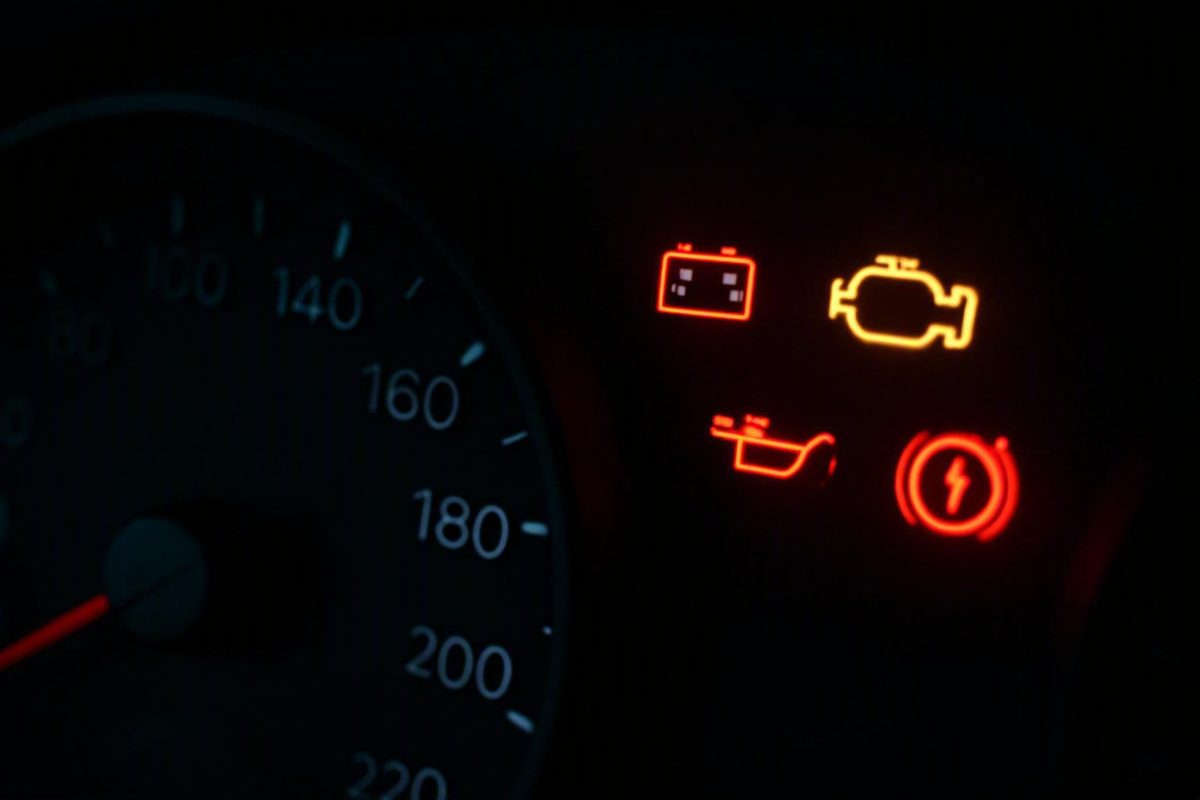
A dashboard light is a triage signal, not a diagnosis. Identify the symbol, note its color, determine whether it is steady or flashing, read the full instrument-cluster message, and assess how the vehicle feels. Together, those details indicate whether to stop safely, make a simple check, continue cautiously, or arrange professional help.
This guide covers common Hyundai dashboard symbols and meanings, primarily using U.S.-market manufacturer information supplemented by general dealership and motoring guidance. It is not a catalog of every symbol used in every Hyundai. Exact artwork, colors, behavior, and procedures vary by model, model year, trim, market, cluster, equipment, and powertrain.
How to read a Hyundai dashboard light before taking action
Start with five observations:
- Symbol: Is it an oil can, battery, thermometer, tire outline, engine, steering wheel, or triangle?
- Color: Is it red, yellow or amber, green, blue, or white?
- Behavior: Is it steady, flashing, flickering during an event, or visible only during startup?
- Message: Does the instrument cluster identify the condition or provide instructions?
- Vehicle behavior: Has braking, steering, power, temperature, sound, smell, or engine smoothness changed?
Color is a useful first clue, but not an absolute rule:
- Red commonly signals a condition requiring urgent attention.
- Yellow or amber commonly calls for prompt checking.
- Green, blue, or white commonly reports an active feature or vehicle state.
Context can override that broad convention. A red brake light may simply mean the parking brake is applied, while a flashing amber check-engine light can indicate an urgent engine problem.
Many indicators illuminate briefly during startup as part of a self-check. A light that stays on after startup or first appears while driving can have a different meaning. Behavior matters as much as color: an ESC light may flicker while stability control is intervening, whereas unexpected persistent illumination can indicate deactivation or a possible fault. A steady check-engine light generally calls for timely diagnosis; a flashing one can require a safe stop. A Hyundai dealership guide describes these distinctions between startup, persistent, and flashing states, but the applicable owner’s manual remains the authority for a particular vehicle. Review that general warning-light explanation.
A warning ordinarily identifies an affected system or condition. It usually does not prove that a specific sensor, battery, pump, belt, motor, module, or other component has failed. Multiple faults can produce the same light, and one electrical or sensor issue can sometimes affect several systems.
Important: Follow the instrument-cluster instructions and the owner’s manual for the exact model, year, powertrain, and market. Hyundai’s U.S. warning-light reference likewise directs drivers to the owner’s manual when a symbol is omitted or more information is needed. Check Hyundai USA’s warning-light reference.
The response terms used throughout this guide mean:
| Response | What it means |
|---|---|
| Stop safely | Signal, leave moving traffic when possible, stop on stable ground, and shut down if the warning calls for it. |
| Arrange assistance | Contact roadside assistance, vehicle recovery, or an appropriate repair facility instead of attempting to complete the trip. |
| Drive cautiously if conditions permit | Continue only if the vehicle behaves normally and the model-specific instructions permit it. Avoid high speed, heavy load, and abrupt maneuvers. |
| Inspect soon | Arrange prompt diagnosis rather than ignoring the warning until the next routine service. |
| Perform a simple check | Correct a directly observable condition, such as an applied parking brake or unsecured fuel cap. |
| Informational only | The indicator ordinarily confirms an active feature or vehicle state rather than a fault. |
Hyundai warning lights that can require a safe stop
Oil-pressure, overheating, braking, steering-assistance, and flashing check-engine warnings deserve a conservative response. Smoke, a burning smell, unusual mechanical noise, rough running, substantial power loss, reduced braking, or changed steering effort raises the urgency of any warning.
The table below is an initial emergency reference. It cannot replace the cluster message or vehicle-specific manual.
| Accessible symbol description | Established meaning | Immediate response | When continued driving is inappropriate |
|---|---|---|---|
| Red oil can, sometimes with a drip | Inadequate engine-oil pressure | Stop safely, switch off the engine, and check the oil level when safely parked. Add the specified oil if the level is low and the manual permits it. | Do not continue if the level is normal but the light remains on, or if it remains on after correcting a low level. |
| Red thermometer over waves or engine-temperature symbol | Engine overheating | Stop safely, shut off the engine, allow it to cool, and follow the manual’s procedure. | Do not continue while the overheating warning remains or the temperature stays abnormal. |
| BRAKE or an exclamation point inside a circle | Parking brake applied, or a possible brake-fluid or braking-system problem | Verify that the parking brake is fully released. If the light remains, stop and arrange assessment. | Do not continue if the warning persists after release, braking feels reduced or uneven, or the ABS and brake warnings appear together. |
| Flashing engine-shaped check-engine light | An urgent engine or emissions-control problem; general guidance associates flashing with a potentially damaging misfire | Reduce engine load and pull over safely for immediate attention. | Do not continue with rough running, shaking, smoke, unusual noise, major power loss, or persistent flashing. |
| Steering wheel or EPS warning with changed steering effort | Possible loss of electric steering assistance | Maintain control, slow gradually, and stop in a safe place. | Do not continue normally if steering becomes substantially heavier or difficult to control. |
The oil-pressure warning is not an oil-change reminder. General Hyundai warning guidance advises stopping safely, switching off the engine, checking the oil level, and obtaining help if the light remains. It also warns that failing to stop the engine promptly can result in severe damage. See the oil-pressure response described by an authorized Hyundai dealership.
An overheating warning also calls for stopping rather than assuming the vehicle can reach the next destination. Shut down when safely parked, allow the vehicle to cool, and use the model-specific procedure.
For the brake warning, first determine whether the parking brake is applied. If the warning remains after full release, low brake fluid or another braking-system problem is possible. Adding fluid does not identify or correct an underlying cause. A red brake warning accompanied by an ABS warning is more serious than an ABS-only warning; RAC’s Hyundai guide advises stopping and arranging help when both appear together. Review RAC’s brake-warning guidance.
Not every red indicator universally prohibits driving. An applied parking-brake light is the clearest exception. The right question is: “What condition does this exact symbol and message describe, and has that condition been corrected?”
Engine, oil, temperature, check-engine, and charging symbols
The check-engine light and Malfunction Indicator Lamp (MIL) commonly refer to the same engine- or emissions-control warning rather than two separate systems. It is generally shown as an engine outline, sometimes with wording such as “CHECK ENGINE.”
A steady check-engine light means the vehicle has detected an engine- or emissions-system problem. If the vehicle is operating normally and no red warning or severe symptom is present, reduce unnecessary load and arrange timely diagnosis. An unsecured fuel cap is one possible cause on applicable vehicles, but it is not a diagnosis. Secure the cap correctly and follow the manual if the warning remains.
A flashing check-engine light deserves a stronger response. Dealership guidance associates flashing with a severe misfire that may cause further damage. Ease off the accelerator and stop safely. If the vehicle shakes, loses substantial power, smokes, smells unusually hot, makes unusual noises, or continues flashing, arrange assistance instead of trying to finish the trip. See the steady-versus-flashing distinction in this Hyundai dealership guide.
Some vehicles have a separate fuel-cap-open indicator. Where equipped, it means the fuel-filler cap is not securely tightened. A warning that remains after the cap is properly installed still requires investigation.
The battery-shaped symbol primarily identifies a charging-system problem while the vehicle is running. It does not prove that the 12-volt battery has failed. Possible diagnostic areas include the generator or alternator, battery, drive belt on applicable vehicles, cables, or electrical connections.
If the charging light stays on after startup or appears while driving, the electrical system may not be charging normally. Turn off nonessential electrical loads if it is safe to do so, move to a suitable stopping place, and arrange prompt inspection. There is no dependable universal estimate of how far the vehicle can continue because operating time depends on the fault, battery condition, electrical demand, and powertrain.
Hyundai USA classifies persistent illumination as a possible alternator or electrical charging-system malfunction that should be inspected as soon as possible.
The red oil-pressure light calls for engine shutdown rather than merely scheduling a later appointment. Once safely parked, switch off the engine and check the level according to the manual. If the warning remains after correcting a low level—or the level was already normal—do not continue driving.
The red engine-temperature symbol indicates overheating. Stop safely, shut down, allow the vehicle to cool, and follow the owner’s manual. A blue temperature symbol on some vehicles can instead indicate that the engine is still cold, illustrating why color and vehicle-specific documentation matter.
Do not reset a warning simply to make the icon disappear. A reset does not correct the condition that triggered it. The underlying problem must be identified and addressed, and the warning should then remain off. An authorized dealership’s dashboard-light guidance similarly cautions against clearing warnings without resolving their cause. Read its explanation of warning-light diagnosis and resetting.
Brake, ABS, electronic parking brake, steering, and airbag warnings
The red brake warning and yellow ABS warning both concern braking, but they do not report the same condition.
A red brake warning may appear as BRAKE or as an exclamation point inside a circle. First check whether the parking brake is applied. If it is fully released and the warning remains, low brake fluid or another brake-system fault is possible. Stop safely and have the condition assessed. Do not assume that adding fluid makes the vehicle safe.
An ABS-only warning generally means anti-lock assistance may be unavailable while ordinary hydraulic braking remains available. Avoid high speed and abrupt braking, and arrange prompt inspection if the vehicle otherwise brakes normally and the manual permits cautious travel.
If the ABS and red brake or parking-brake warnings appear together, the combination can indicate an Electronic Brake Force Distribution problem. Avoid high speed and sudden braking, stop safely, and follow the recovery instructions for the specific vehicle. Hyundai USA distinguishes an ABS-only fault from the combined ABS and brake-warning condition and advises avoiding abrupt braking when both lights are present.
The EPB warning applies to vehicles with an electronic parking brake. A persistent EPB light may indicate a malfunction rather than merely an applied parking brake. Read the cluster message before attempting to move. If the parking brake will not apply or release normally, do not force continued travel.
On equipped vehicles, Downhill Brake Control (DBC) can have several display states. Its indicator may illuminate when DBC is activated, blink while the system is operating, or turn yellow when a malfunction is reported. In this case, blinking can describe normal operation, so behavior is as important as color.
An EPS or power-steering warning, often represented by a steering wheel or the letters “EPS,” can indicate a malfunction in electric steering assistance. If steering suddenly feels heavy, inconsistent, or difficult to control, slow gradually and stop safely rather than continuing at normal speed. A general Hyundai warning guide identifies changed steering effort as a reason to stop and obtain assistance. Review its EPS and other safety-warning guidance.
An airbag or SRS warning ordinarily illuminates briefly during startup. If it remains on or appears while driving, it can indicate a restraint-system fault that may prevent the airbags or related restraints from operating as intended. Arrange prompt diagnosis; a visual roadside check cannot establish that the restraint system is functioning correctly.
None of these lights identifies a particular wheel-speed sensor, hydraulic component, pump, steering motor, clock spring, or airbag module. Those are possible areas for diagnosis, not conclusions established by the icon.
TPMS, ESC, traction-control, and AWD-related indicators
The Tire Pressure Monitoring System (TPMS) icon resembles an exclamation point inside a tire- or horseshoe-shaped outline. It generally indicates that one or more tires are outside the expected pressure range.
At the next safe opportunity, inspect the tires for visible damage and measure all road-tire pressures when cold. Use the pressure specification on the driver-door or door-jamb label, not the maximum pressure molded into the tire sidewall.
If the light remains after the pressures are corrected, verify the measurements again when the tires are cold and follow any recognition procedure described in the manual. If the indicator flashes during startup and then remains illuminated, or persists despite verified correct pressure, a TPMS sensor or system fault may be present. The light alone cannot distinguish pressure loss, a puncture, a damaged sensor, or another system issue. A Hyundai dealership guide distinguishes a pressure warning from flashing behavior that can indicate a system fault.
The ESC or traction-control indicator often resembles a car with wavy skid lines. Brief flashing or flickering on snow, rain, gravel, or another low-traction surface can mean the system is actively trying to stabilize the vehicle. Ease off and drive smoothly; flashing during such an event does not necessarily indicate a failure.
Unexpected steady illumination is different. It may mean the system is deactivated or has detected a fault. A separate ESC OFF indicator means stability control has been switched off. Check whether the control was pressed inadvertently, restore the normal setting if appropriate, and consult the manual if the indicator does not respond as expected.
Some Hyundai clusters also include AWD, AWD Lock, Auto Hold, icy-road, or related chassis indicators. Depending on the vehicle, a light can confirm activation, warn of operating limitations, or identify a fault. Read the accompanying message and consult the manual rather than assuming a symbol seen in another Hyundai has the same meaning.
Do not confuse the ABS fault warning with the normal ESC or traction-control intervention indicator. Persistent ABS illumination should be treated as a possible ABS fault unless the vehicle-specific manual states otherwise.
Master Warning Light and Hyundai driver-assistance alerts
On applicable Hyundai vehicles, a triangle containing an exclamation point is the Master Warning Light. It is a general alert, not a diagnosis.
When it appears, read the LCD or instrument-cluster message and look for another illuminated symbol. Depending on the model and equipment, possible triggers include a tire-pressure condition, low washer fluid, failed exterior lighting, another fluid warning, or a blocked or malfunctioning driver-assistance sensor. A dealership guide focused on this symbol emphasizes that the accompanying message supplies the actionable detail. See its Master Warning Light explanation.
Urgency comes from the associated message, other warnings, color, and vehicle behavior. A triangle accompanied by “Low Washer Fluid” is not equivalent to one appearing with a brake, oil-pressure, or steering warning. Do not assume every Master Warning Light requires the same response—or that every yellow triangle permits continued driving.
Driver-assistance alerts can involve features such as:
- Lane Keeping Assist or lane-safety systems
- Lane Following Assist
- Forward Collision-Avoidance Assist
- Blind-Spot Collision-Avoidance Assist
- Rear Cross-Traffic Collision-Avoidance Assist
- Smart Cruise Control
- Driver-attention or forward-safety systems
An alert can reflect snow, grime, or debris over an exterior sensor; weather or road conditions; temporary unavailability; or a system fault. The affected feature may not provide its usual assistance while the warning is present. Continue to steer, brake, monitor traffic, and maintain a safe path yourself.
When safely parked, inspect accessible exterior camera and sensor areas if contamination may be blocking them. If the warning remains or the cluster identifies a malfunction, arrange diagnosis.
On applicable vehicles, Lane Keeping Assist System states may differ by color: green can indicate operation, white can indicate that the system cannot operate under current conditions, and yellow can indicate a malfunction. These states are equipment-dependent and should be confirmed against the exact display message. A Hyundai dealership symbol reference documents these LKAS color states.
Informational symbols that usually report an active feature or simple condition
Green and blue indicators often confirm an active feature, but identify the symbol rather than relying on color alone. Some simple-condition indicators still require action—such as refueling or fastening a seat belt—even though they do not establish a mechanical failure.
| Symbol or accessible description | Usual meaning | Typical response |
|---|---|---|
| Fuel-pump shape | Low fuel | Refuel as soon as practical; do not rely on a generic remaining-range estimate. |
| Blue headlamp with straight beams | High beams active | Dim them when required for other road users. |
| Headlamp marked “AUTO” or similar | Automatic high-beam feature active or available | Monitor operation and control the lights manually when needed. |
| Lamp with angled or wavy beams | Front or rear fog lights active, where equipped | Switch them off when conditions no longer call for them. |
| Single left or right arrow | Corresponding turn signal active | Informational; unusual persistent or rapid behavior may require checking. |
| Both directional arrows flashing together | Hazard lights active | Informational; switch them off when no longer needed. |
| Seated person with belt | Seat belt not fastened | Fasten the applicable belt. |
| Vehicle with open door | One or more doors are not fully closed | Stop or remain parked and close the door securely. |
| Vehicle with open rear panel | Trunk or liftgate open | Close and latch it before driving. |
| Windshield with spray or droplets | Low washer fluid | Refill with suitable fluid when practical. |
| Speedometer or “CRUISE” | Cruise control is switched on, ready, or set, depending on display state | Confirm whether speed is actually set. |
| Key or immobilizer symbol | Key-recognition or immobilizer status | Interpret steady or flashing behavior using the manual. |
A single flashing arrow ordinarily indicates the selected turn signal, while both arrows flashing together indicate the hazard lights. Low fuel and washer fluid are usually conditions the driver can correct, but a low-fuel light does not provide a dependable universal estimate of remaining distance.
Seat-belt, door, and trunk indicators should go out after the corresponding condition is corrected. If one persists after every occupant is belted and all openings are securely latched, check for an accompanying message and arrange further inspection if necessary.
Immobilizer behavior varies. On applicable models, steady illumination can confirm key recognition, while flashing can indicate a key-recognition or immobilizer problem. Do not assume the same pattern applies to every conventional-key, smart-key, or push-button-start vehicle. This symbol guide documents common lighting, access, turn-signal, fuel, and immobilizer states.
Hybrid and electric Hyundai dashboard indicators
Every indicator in this section is equipment- and powertrain-dependent. Gasoline-only vehicles do not use the same traction-battery, charging, readiness, or regenerative-braking displays. Even among hybrids, plug-in hybrids, and battery-electric vehicles, symbols and procedures can differ.
The EV Power Down or power-limited indicator means the vehicle is limiting output to protect high-powered components. Hyundai USA lists a low high-voltage battery level and battery or motor temperature among possible conditions. Acceleration may be reduced.
While Power Down is displayed:
- Avoid sudden acceleration and abrupt starts.
- Allow extra space before entering fast-moving traffic.
- Follow the instrument-cluster instructions.
- Charge the vehicle if a low traction-battery state is identified.
- Stop safely if the vehicle cannot maintain a suitable speed for the road.
The low high-voltage battery indicator means the traction battery should be charged as soon as practical. It is separate from the conventional battery-shaped charging-system warning associated with the 12-volt electrical system.
On applicable vehicles, a green charging-connector indicator illuminates temporarily after the connector is attached. It reports a connection state; it does not establish that the entire charging session will complete successfully. Check the charge-port and vehicle displays if charging does not begin as expected.
A hybrid-battery warning on a hybrid or plug-in hybrid can indicate a possible battery-pack problem. Follow the model-specific cluster instructions and arrange diagnosis. Do not open high-voltage enclosures or attempt roadside work on high-voltage components.
On applicable electric vehicles, simultaneous red brake and yellow regenerative-brake warnings can mean regenerative braking is not operating and overall braking performance is reduced. Slow smoothly, avoid abrupt braking when possible, and stop safely for assistance. Hyundai USA documents the Power Down, low traction-battery, charging-connector, and regenerative-braking states in its warning-light reference.
EV clusters can also include readiness and high-voltage-system indicators, but their exact wording, colors, and required actions must be taken from the applicable manual. Do not infer a universal meaning from generic EV artwork.
A five-step response when an unfamiliar Hyundai light appears
When you cannot identify a light immediately, use a consistent response rather than guessing.
1. Keep control and reduce demand on the vehicle.
Steer smoothly, avoid abrupt acceleration or braking, and look for a safe place to stop. Move out of active traffic if the warning is red or flashing, concerns oil pressure or temperature, affects braking or steering, or appears with smoke, burning odor, rough running, unusual noise, or substantial power loss.
Do not stop in a live traffic lane solely to inspect the dashboard if the vehicle can still reach a safer location. If braking or steering has changed significantly, concentrate on maintaining control rather than reading the display.
2. Record exactly what happened.
Photograph the display only after parking. Note:
- The symbol’s shape and color
- Whether it was steady, flashing, or intermittent
- The exact cluster message
- Whether it appeared during startup or while driving
- Vehicle speed and operating conditions
- Recent fueling, charging, maintenance, or tire work
- Changes in sound, steering, braking, temperature, engine smoothness, or power
These observations can help distinguish a startup self-check from a persistent warning, ESC intervention from a steady ESC fault indicator, or a fuel-cap alert from a broader engine-control warning.
3. Perform only safe, direct checks.
Depending on the symbol, appropriate checks may include:
- Fully releasing the parking brake
- Securing the fuel cap
- Measuring all tire pressures when cold
- Checking engine-oil level after stopping and shutting down
- Closing a door, trunk, or liftgate
- Refilling washer fluid
- Removing accessible snow or grime from an exterior driver-assistance camera or sensor area
Do not open a hot cooling system, crawl beneath a vehicle beside traffic, touch moving engine components, perform improvised electrical tests, or work on a hybrid or EV high-voltage system.
4. Consult the exact manual.
Use the owner’s manual or in-car e-Manual for the vehicle’s model, model year, powertrain, trim, and market. Compare the exact symbol, color, flashing pattern, and cluster message. A general dashboard-symbol guide cannot override those instructions.
Messages also change the response. “System temporarily unavailable” when a camera is blocked is different from a message identifying a malfunction. Likewise, a symbol that reports activation in one color may report a fault in another.
5. Reassess after correcting the apparent condition.
If a warning remains after the parking brake is released, tire pressure is corrected, fuel cap is secured, or sensor area is cleaned, the issue is not resolved merely because a plausible cause was found. Arrange appropriate diagnosis rather than repeatedly resetting the light.
Several warnings appearing together do not necessarily prove several independent failures. ABS, ESC, AWD, cruise-control, and driver-assistance functions can use shared information, while electrical or communication conditions can affect multiple systems. Record the entire group of warnings, but do not try to identify a common cause from the lights alone. A general Hyundai warning guide likewise notes that shared data or electrical conditions can produce multiple alerts.
Before a long trip or remote highway section, identify the critical symbols used by your vehicle, keep the manual accessible offline, and save roadside-assistance and insurance contact details somewhere that does not require cellular service. A pre-departure tire, fluid, and equipment check is also sensible, but it cannot guarantee that a warning or breakdown will not occur. This road-trip checklist covers practical tire checks and offline roadside details.
The triage sequence is straightforward: identify the icon and its state; take oil-pressure, overheating, compromised braking, changed steering, and flashing check-engine warnings seriously; and use the cluster message and vehicle-specific manual before relying on a generic interpretation. If a warning persists or the vehicle behaves abnormally, prioritize a safe stop and suitable professional or roadside assistance over completing the trip.
What does the triangle with an exclamation point mean in a Hyundai?
On applicable Hyundai vehicles, it is the Master Warning Light. The triangle is a general alert rather than proof of one specific failure. Read the instrument-cluster message and look for an accompanying icon.
Possible triggers include a tire-pressure condition, low washer fluid, failed exterior lighting, another fluid warning, or a blocked or malfunctioning driver-assistance sensor. The correct action depends on the associated message, other warnings, and vehicle behavior—not the triangle alone.
Can I drive with the Hyundai check-engine light on?
It depends on whether the light is steady or flashing and whether the vehicle has abnormal symptoms.
A steady check-engine light with otherwise normal operation generally calls for timely diagnosis. Reduce unnecessary load, check that the fuel cap is secure where applicable, and follow the manual. Stop rather than continuing if the vehicle runs roughly, loses substantial power, smokes, overheats, or makes unusual noises.
A flashing check-engine light is more urgent because general Hyundai warning guidance associates it with a potentially damaging misfire. Ease off the accelerator, stop safely, and arrange immediate attention rather than attempting to complete the trip.
Does the battery symbol mean my Hyundai battery has failed?
No. The battery-shaped symbol primarily identifies a charging-system problem while the vehicle is running. Possible diagnostic areas include the alternator or generator, battery, belt on applicable vehicles, cables, or electrical connections. The icon does not identify which component is responsible.
If it stays on after startup or appears while driving, reduce nonessential electrical demand when safe, move to a suitable location, and arrange prompt inspection. Do not rely on a universal estimate of remaining driving distance.
What does it mean when the ABS and brake lights are on together?
The combination can indicate a more serious braking-system or Electronic Brake Force Distribution problem than an ABS warning by itself. Avoid high speed and sudden braking, stop safely, and follow the recovery instructions in the vehicle-specific manual.
An ABS-only warning generally means ordinary hydraulic braking remains available without anti-lock assistance. Adding the red brake warning changes the risk assessment, so do not assume the vehicle can be driven normally. RAC advises stopping and arranging help when the ABS and brake warnings appear together.
Why is the TPMS light still on after I inflated the tires?
One or more tires may still be outside the specified cold pressure, the pressure may have been measured while the tires were warm, or the vehicle may require a model-specific recognition procedure. Recheck every road tire when cold against the driver-door or door-jamb label.
If the light persists despite verified correct pressures—or flashes during startup before remaining on—a TPMS sensor or system fault may be present. Inspect the tires for visible damage and arrange diagnosis rather than repeatedly adding air.