
Can You Really See Yosemite and Return to San Francisco in One Day?
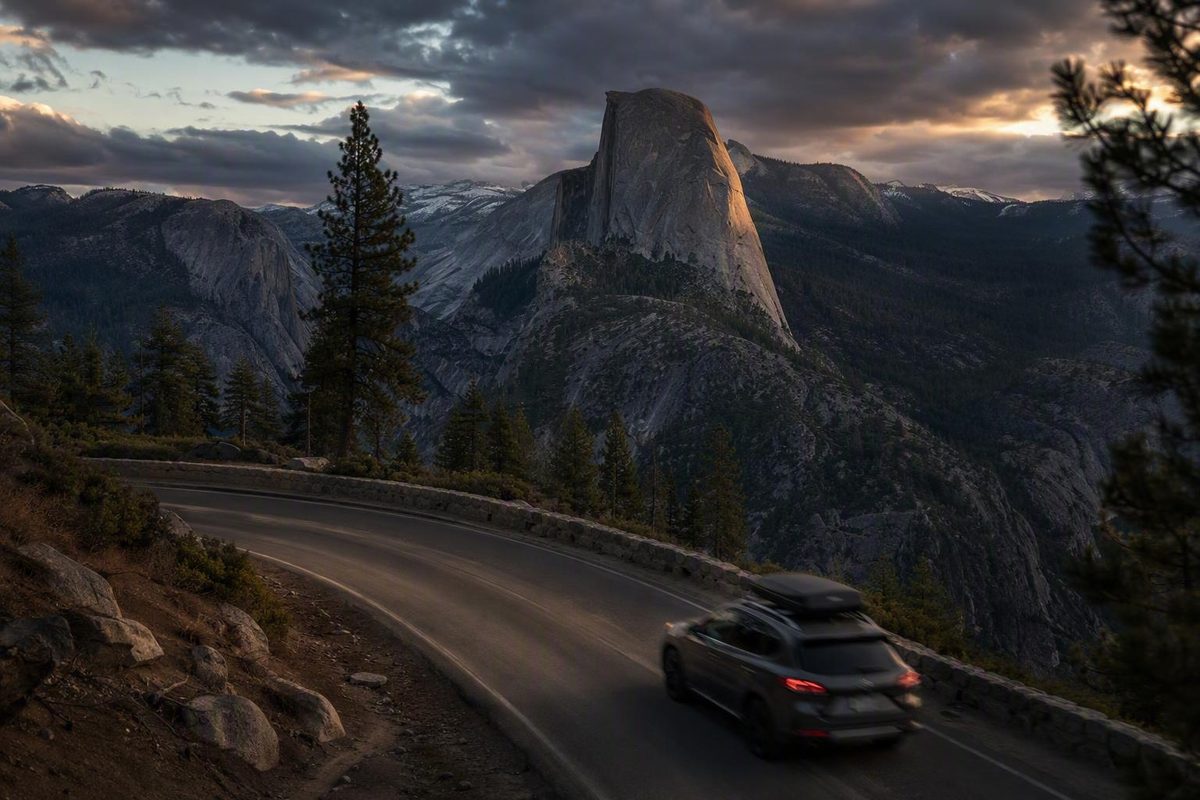
The short answer: possible, demanding, and best treated as an overview
Yes—a San Francisco Yosemite day trip is feasible. But it is best understood as a 14- to 15-hour Yosemite Valley highlights tour, not a complete park visit. Published excursions commonly leave early in the morning and return late in the evening; Extranomical, for example, advertises an approximately 15-hour itinerary with hotel pickup beginning around 5:20 a.m. and an estimated return around 9:30 p.m. See the published Extranomical itinerary.
Distance is the controlling constraint. Commercial route guidance estimates approximately three to four hours of driving in each direction under favorable conditions. Traffic, rest stops, entrance delays, parking searches, weather, road restrictions, and movement within Yosemite can extend that considerably. A same-day trip can therefore involve six to eight or more hours on the road before local park travel is counted. Extranomical’s transportation comparison gives the three- to four-hour estimate.
Several guided products publish roughly five hours in Yosemite, but total park time is not the same as independent sightseeing time. Scheduled viewpoints, narration, loading, restroom breaks, food stops, and group coordination all reduce the period when you control the itinerary. Depending on the product, published independent time is generally around two to three hours.
That can still be worthwhile. A carefully managed day may include a broad Yosemite Valley panorama, views of El Capitan and Half Dome, one short walk, and one or more scheduled waterfall, meadow, or viewpoint stops. For someone who has only one available day and may not otherwise reach Yosemite, trading a long vehicle journey for a concise introduction can be reasonable.
This trip is a good fit if you:
- Have exactly one available day
- Accept a predawn start and late return
- Want an overview rather than an immersive visit
- Are satisfied with a few major Yosemite Valley sights
- Prefer to leave navigation and parking to a driver
- Can tolerate prolonged sitting and a tightly managed schedule
It is a poor fit if you want:
- A substantial hike
- A relaxed meal and unhurried photography
- Extensive time at every viewpoint
- A guaranteed list or sequence of stops
- Broad exploration beyond Yosemite Valley
- A predictable early-evening return
- Considerable flexibility for children, mobility needs, or rest
If you can add one night, do it. An overnight visit is the stronger planning choice for meaningful hiking, a slower pace, additional recovery time, or uncertain seasonal conditions. It also prevents the return journey from consuming such a large share of the experience.
Current-information limitation
Tour prices, entry treatment, pickup points, road access, chain controls, shuttle service, trail conditions, accessibility arrangements, and active hazards can change. This guide compares the published material supplied for review; it does not establish live park or highway conditions. Recheck official park and California road information, along with the final operator booking terms, immediately before travel. No disputed nonresident entry-charge figure should be treated as confirmed here.
Where the 14 to 15 hours actually go
A tour’s advertised duration can obscure how little of the day is independent. The following is a representative range, not a guaranteed schedule:
| Approximate time | What may happen |
|---|---|
| 5:20–6:45 a.m. | Pickup or departure in San Francisco |
| Early to late morning | Outbound drive, usually with a food or restroom stop |
| Late morning | Arrival in or near Yosemite Valley; scheduled viewpoints begin |
| Around midday to mid-afternoon | Guided stops plus approximately two to three hours of independent time |
| Around 4 p.m. | Departure from Yosemite |
| 8:00–9:30 p.m. | Estimated return to San Francisco |
Incredible Adventures, for example, publishes pickups between 6:20 and 6:45 a.m. at named San Francisco hotels, a sample Yosemite departure around 4 p.m., and an estimated hotel return between approximately 8:30 and 9 p.m. Its itinerary is expressly a sample that may change. Review the operator’s timing and pickup details.
A typical day may contain:
- Six to eight or more hours: travel between San Francisco and Yosemite
- About five hours: total time within Yosemite on products that publish that allocation
- Roughly two to three hours: time when the traveler chooses where to walk, eat, or linger
- The balance: scheduled viewpoints, narration, loading, restrooms, meals, and group movement
The difference between two and three independent hours is significant. With two hours, buying lunch or waiting in a food queue may displace a second sight. You may need to choose between a meal, visitor facilities, a short waterfall walk, and time in Yosemite Village.
Three hours creates more room, but it is not an assurance that every desired activity will fit. Lunch, essential facilities, Lower Yosemite Fall, and Yosemite Village may be possible if the meeting point, walking speed, access, and queues cooperate. One additional nearby stop should be treated as optional.
Neither window is suitable for a substantial trail. Think of independent time as a compact Valley block near the appointed meeting place, not permission to roam across the park.
A firsthand example—not a forecast
Travel writer Rachel Nicole described a Gray Line trip with an outbound journey of about four hours, approximately three hours of Valley free time, and a return drive of roughly five hours because of traffic. She reported reaching her hotel around 9:30 p.m. This illustrates how a nominal 14-hour product can expand, but it does not predict another date, vehicle, driver, or traffic pattern. Read Rachel Nicole’s firsthand account.
Do not schedule a flight, train, rental-car return deadline, theater ticket, or inflexible dinner reservation after this trip. Published return times are estimates, and a delayed park departure or congested return can push the arrival later.
Guided tour, self-drive, public transit, or overnight?
The best format depends less on the advertised journey time than on who carries the driving burden, how much flexibility you need, and how much uncertainty you can tolerate.
| Option | Typical duration or constraint | Flexibility | Driving burden | Likely usable park time | Cost framework | Best fit |
|---|---|---|---|---|---|---|
| Guided coach | About 14–15 hours | Low | None for traveler | Commonly 2–3 hours independent, plus guided stops | Ticket plus food, gratuity, local transport and possible uncovered entry-related charges | Visitors prioritizing convenience |
| Small-group van | About 14 hours | Low to moderate within a fixed itinerary | None for traveler | Operator-dependent | Usually a higher headline ticket than the lowest coach examples, plus common extras | Travelers who value a published smaller capacity |
| Self-drive | Often 14+ hours door to door | High in theory | Six to eight or more highway hours, plus park driving | Potentially more if delays remain limited | Rental, insurance or waivers, fuel, entry treatment, food and possible multiday rental | Parties with multiple capable drivers |
| Public transportation | About 6.5 hours or more each way in supplied examples | Low | None | Little or no useful same-day visit | Carrier tickets, transfers, food and usually overnight lodging | Overnight travelers without a car |
| Overnight visit | One night or longer | High | Spread across days | Substantially more | Transport plus lodging, meals and entry treatment | Hikers, families, photographers and slower-paced travelers |
The evidence does not provide date-matched rental, fuel, transit, and lodging prices, so a defensible all-in comparison is not possible. Rather than inventing totals, compare fixed and variable costs for your dates:
- Guided trip: ticket price, meeting-point transport, food, gratuity, optional activities, and any charge not included by the seller
- Self-drive: rental duration, insurance choices, fuel, entry treatment, meals, parking terms, and a late return or extra rental day
- Transit: every connecting ticket, transfer risk, food, local transportation, and lodging
- Overnight: transportation, accommodation, meals, and the value of gaining a less compressed park day
Guided coach or van
A guided tour removes navigation, entrance routing, parking searches, and the late drive back to San Francisco. That is a substantial practical benefit after an early start and hours of walking or sightseeing.
The tradeoff is control. Pickup times are fixed, passengers spend long periods in a shared vehicle, and delays can reduce free time. Advertised stops may be reordered, shortened, replaced, or omitted because of traffic, parking, weather, road conditions, or group timing.
For many travelers limited to one day, a tour is the more practical format—not because every tour is better, but because it transfers the most tiring part of the trip to a driver. Recommendations from operators and individual travel writers should still be recognized as commercial guidance or personal judgment, not neutral comparative research.
Self-drive
Driving gives you control over departure time, food, route, photo stops, and when you leave Yosemite. It also allows you to remove low-priority stops when delays build.
That flexibility is constrained by traffic, parking, entrance queues, weather, road restrictions, and the need to preserve enough energy for the return. A solo driver should approach the plan particularly cautiously. Multiple capable drivers can divide the workload, but they cannot remove congestion, poor weather, or closures.
Self-driving may also require a longer rental than expected. An early departure and late return can fall outside rental-office hours, so compare the price and terms of a multiday booking rather than assuming a one-calendar-day rental will work.
Public transportation
Conventional transit is poorly suited to a meaningful same-day visit. One supplied example requires a San Francisco-area bus, a train to Merced, and a YARTS connection into Yosemite; another uses an intercity bus to Merced before a transfer. The published secondary comparison estimates at least approximately 6.5 hours each way, while one bus timetable does not permit a same-day round trip. HI USA explains the sample connections and limitations.
Those examples should not substitute for checking current carrier timetables. Their practical lesson is narrower: public transportation is better paired with at least one night near or inside the park.
Overnight
An overnight stay is the preferred format if you want a substantial hike, dislike prolonged sitting, need more recovery time, or are traveling when weather and access are uncertain. It can also make public transportation workable and reduce the pressure to complete every important sight in one afternoon.
How the available guided tours compare
The comparison below reflects published operator or marketplace descriptions, not firsthand testing. Prices, pickup coverage, inclusions, accessibility, and cancellation terms are commercially volatile and must be confirmed on the final booking screen.
| Tour | Published duration and price | Pickup | Yosemite and free time | Sequoias and capacity | Inclusions, exclusions and cancellation |
|---|---|---|---|---|---|
| Extranomical | About 15 hours; standard price not supplied | Major San Francisco hotels | More than 5 hours in Yosemite; 2 hours independent in the Valley | Tuolumne Grove when conditions permit; public capacity not established | Transport, guide and stated entry treatment included; meals, drinks and gratuity excluded; full refund with at least 24 hours’ notice |
| Incredible Adventures | 14–15 hours; from $219 | Named hotels and Dublin BART | About 3 hours of Valley free time | Private option up to 22, which does not establish public-tour capacity | Transport, guide, narrated touring and stated entrance treatment included; meals and gratuity excluded |
| Gray Line through Gray Line or Viator | About 14 hours; Gray Line displays 218.99 without a visible currency | Viator lists Fisherman’s Wharf and Union Square meeting points | About 5 hours in Yosemite; around 3 hours independent | Viator lists up to 45 travelers; no core sequoia stop | Permit and stated entrance treatment, commentary and photo stops included; food, drinks, gratuity and optional bike rental excluded; 24-hour cancellation policy |
| Best Bay Area Tours | About 14 hours; seasonal adult prices of $239–$250 | Most downtown and waterfront areas | Sample schedule gives about 5.5 hours in Yosemite; independent allocation not separately quantified | Van capacity up to 15; conditional Tuolumne Grove walk | Food purchased separately; collapsible wheelchair by advance arrangement; cancellation terms differ for parties of 5 or more |
Extranomical
Extranomical publishes an approximately 15-hour day, pickup from major San Francisco hotels, more than five hours in Yosemite, and two hours of independent Yosemite Valley exploration. Its planned itinerary includes Valley viewpoints and a Tuolumne Grove walk when trail conditions permit.
The operator lists transportation, guide service, Wi-Fi, and stated admission treatment among its inclusions. Meals, drinks, and gratuity are excluded. Because admission rules and operator treatment can change, rely on the final terms for your departure rather than assuming every passenger is covered identically.
Incredible Adventures
Incredible Adventures advertises a 14- to 15-hour tour, named pickup points at Fisherman’s Wharf, Union Square, the InterContinental San Francisco, and Dublin BART, and approximately three hours of Valley free time. Its advertised public price starts at $219. A private format accommodates up to 22 people, but that number should not be presented as the standard public vehicle capacity. See the published price, schedule and private-group terms.
Transportation, guide service, narrated touring, stated park-entrance treatment, and select-hotel pickup are listed as included. Meals and gratuity are excluded. The operator also describes the itinerary as a sample rather than a guaranteed sequence.
Gray Line through Gray Line or Viator
The Viator marketplace listing identifies an approximately 14-hour Gray Line-operated coach tour, a 6:20 a.m. start, meeting-point choices at Fisherman’s Wharf or Union Square, about five hours in Yosemite, and approximately three hours of independent time. It also lists a maximum of 45 travelers and says the product is not wheelchair accessible. Review the Viator product details.
Pickup language is not consistent across the supplied Gray Line material. One page refers to selecting or requesting a pickup point while also listing hotel pickup and drop-off as excluded. Confirm whether the selected booking uses a fixed meeting point or an actual hotel collection.
Gray Line’s own page displays a starting figure of 218.99 without a visible currency in the supplied text. Because the currency is unclear, it should not be compared directly with dollar-denominated prices until the booking screen confirms it.
Best Bay Area Tours
Best Bay Area Tours publishes a 14-hour trip in a van seating up to 15 passengers, with pickup in most—not all—downtown and waterfront San Francisco areas. Its sample itinerary gives approximately 5.5 hours in Yosemite, and listed seasonal adult prices range from $239 to $250. See the operator’s published schedule, prices and capacity.
The operator says a collapsible wheelchair can be carried with advance notice, but Tuolumne Grove is not wheelchair accessible. Cancellation terms are also less flexible for parties of five or more than for smaller groups, so larger parties should read the policy attached to the exact booking.
How to choose without chasing a “winner”
Prioritize the feature that will materially change your day:
- Independent exploration: Prefer approximately three hours over two if walking on your own matters.
- Pickup convenience: Confirm hotel pickup if an early cross-city trip would be difficult.
- Passenger count: Choose a published smaller capacity if fewer fellow travelers matter to you.
- Meeting-point clarity: A fixed location may be preferable when hotel coverage is uncertain.
- Mobility: Confirm both vehicle boarding and access at every planned attraction.
- Sequoias: Treat the grove walk as conditional, not as the foundation of the purchase.
- Cancellation: Read the policy for your party size and booking channel rather than assuming one operator-wide rule.
An extra hour of independent time may be more useful than a longer advertised stop list. Stop lists are vulnerable to changing conditions, while the free-time allocation indicates how much control you may have.
Headline price is not all-in cost. Before paying, confirm the final price, exact meeting point, required arrival time, entry treatment, meals, gratuity guidance, accessibility, cancellation terms, and expected sequoia itinerary.
What can realistically fit into one day in Yosemite
Yosemite Valley and its immediate viewpoints should anchor a first-time day trip. Trying to combine the Valley with distant park regions, multiple trailheads, and numerous roadside detours creates a schedule that can fail after one parking delay or closure.
Recurring planned tour sights include:
- Tunnel View
- El Capitan
- Half Dome viewpoints
- Bridalveil Fall
- Yosemite Falls
- Yosemite Village
- El Capitan Meadow
- Valley View
These are common itinerary features, not guaranteed stops. Some may be seen through a vehicle window or during a brief photo stop rather than explored on foot.
Tunnel View is particularly efficient because its panorama includes El Capitan, Half Dome, and Bridalveil Fall. It provides a quick geographic orientation and the broad Yosemite view many first-time visitors expect.
A conservative two-hour plan
If your tour provides two independent hours:
- Decide beforehand whether to carry lunch or buy it.
- Use essential visitor facilities promptly.
- Choose one short Valley objective, such as Lower Yosemite Fall.
- Return to the meeting point with a generous buffer.
Buying food can consume a substantial part of a short window when queues are present. A packed lunch protects some sightseeing time, although time is still needed to eat. Do not assume multiple walks will fit unless they are close together and access is straightforward.
A workable three-hour plan
With approximately three hours, an illustrative sequence is:
- Lunch or a packed picnic
- Lower Yosemite Fall
- Yosemite Village and essential facilities
- One additional nearby stop only if time and access permit
This is a planning possibility, not an expected outcome. Walking speed, queues, the meeting location, parking, trail access, and transportation can all change what fits.
If the Yosemite Valley shuttle is operating and useful on your date, it may reduce some walking. Waiting for it can also consume limited time, so do not build the entire plan around unverified service.
Self-drivers should minimize parking changes. Park once where practical, focus on a few core Valley locations, and avoid repeatedly crossing the Valley for low-priority stops.
Normally omit:
- Long or strenuous hikes
- Distant park regions
- Numerous pullouts
- Routes that depend on exact minute-by-minute progress
- Activities with unpredictable queues
- Any trail that leaves no margin for the return drive
Waterfall flow is seasonal and variable. Reaching Bridalveil Fall or Yosemite Falls does not guarantee the volume shown in promotional photography.
Giant sequoias are an optional branch rather than part of the core Valley sequence. Adding a grove outing may reduce Valley time, and the stop can be changed or omitted when conditions do not permit it.
Self-driving route choices and a conservative schedule
Two approaches recur in the supplied route guidance:
- Highway 120 through Big Oak Flat Entrance: commonly described as the more direct route
- Highway 140 through Arch Rock Entrance: described as a lower-elevation alternative
Neither route is always open, fastest, safest, or suitable as a winter fallback. The appropriate choice depends on the San Francisco starting point, the destination inside Yosemite, current restrictions, weather, roadwork, and traffic.
Published one-way distances range from roughly 170 to 191 miles. The difference reflects varying city origins, park destinations, entrances, routes, and rounding. An affiliate-supported self-drive guide estimates approximately 191 miles and 3 hours 45 minutes each way while suggesting departure around 4 or 5 a.m. Use that self-drive itinerary only as a planning example.
An early departure does not guarantee clear roads, available parking, or timely entry.
Conservative same-day structure
4:00–5:00 a.m.: Leave San Francisco. Drive directly toward the selected entrance, allowing one necessary fuel, food, or restroom stop.
Late morning: Enter the park and prioritize an orientation viewpoint. If access and routing make Tunnel View practical, use it to establish the Valley’s geography. Do not let an early delay trigger a rushed chain of replacement stops.
Midday to mid-afternoon: Concentrate on Yosemite Valley. Allow time for lunch and one or two short walks. Minimize parking changes and keep the itinerary geographically compact.
Mid- to late afternoon: Begin the return. Choose a firm departure time before the trip. The objective is not to complete every item; it is to preserve the driver’s capacity for the return.
Build margins for:
- Bay Area and regional traffic
- Food, fuel, and restroom stops
- Entrance queues
- Parking searches
- Internal park travel
- Roadwork and restrictions
- Weather, snow, or ice
- A slower-than-expected walk
- Navigation errors or limited cellular service
Rand McNally’s route guidance reports poor cellular service in Yosemite and some remote areas, supporting the practical step of saving maps and essential trip details offline. Its itinerary is designed as a multiday road trip, so its timing should not be treated as proof that a compressed day will work. Review the route guidance and its limitations.
Commercial route guidance also states that Yosemite Valley has no fuel. Because named stations and availability can change, verify fueling options before departure and begin the park approach with adequate range. This is particularly important when a detour could lengthen the trip.
Snow, ice, road closures, and chain controls are date-specific. Check current official park and highway information immediately before leaving. If the conditions make the schedule unreasonable, abandon the day-trip plan.
Use a simple fatigue checkpoint: if there is only one driver, the driver is uncomfortable returning after dark, or the forecast creates meaningful uncertainty, choose a guided tour or stay overnight.
Seasonal limits, sequoias, accessibility, and comfort
Yosemite is not the same day trip throughout the year. Snow, ice, road access, trail conditions, daylight, crowds, waterfall flow, smoke, and other active conditions can change what is practical.
Broad patterns provide context, not a forecast:
- Winter: Snow and ice may restrict roads or trails, while shorter daylight compresses the day.
- Spring: Waterfalls may be stronger, but snow or ice can linger on some routes.
- Summer: More routes and facilities may be available, while crowds, entrance lines, and parking delays can consume time.
A named month does not guarantee an open road, strong waterfall, safe trail, or specific itinerary. Current official conditions must take priority over seasonal generalizations.
Giant sequoias and Tuolumne Grove
Some—but not all—San Francisco tours include a Tuolumne Grove walk. Operators publish different seasonal windows, and access remains dependent on weather and trail safety.
The supplied operator descriptions also conflict on distance: one describes a two-mile round trip, while another describes a one-mile outing. That disagreement should not be resolved by choosing one figure. Both descriptions agree that the outbound portion descends and the return is uphill, making the excursion more demanding than a roadside viewpoint.
Extranomical says unsafe snow or ice can lead to the grove walk being replaced with additional Yosemite Valley time. Best Bay Area Tours likewise presents the grove as weather-dependent rather than guaranteed. Compare the latter operator’s conditional grove and accessibility details.
Travelers should therefore choose a sequoia-inclusive product only if they are comfortable with either outcome: an uphill return walk or a substituted Valley itinerary.
Accessibility is not one question
Vehicle accessibility and attraction accessibility are separate.
The Gray Line product sold through Viator is described as not wheelchair accessible. By contrast, Best Bay Area Tours says it can carry a collapsible wheelchair with advance notice but cannot make Tuolumne Grove accessible. Neither statement by itself answers every question about boarding height, steps, securement, storage, restroom stops, or walking surfaces.
Before booking, travelers with limited mobility, respiratory concerns, young children, motion sensitivity, or difficulty sitting for prolonged periods should ask:
- Can the traveler board the specific vehicle?
- Is there a wheelchair lift, or only storage for a collapsible chair?
- How much walking is expected at standard Valley stops?
- What replaces the sequoia walk?
- How often are restroom and movement breaks scheduled?
- Is there an appropriate waiting place during inaccessible activities?
- Are child restraints required or provided?
- What happens if changed conditions remove the accessible part of the itinerary?
Do not assume a small van is more comfortable, accessible, or safer than a coach. Seat spacing, storage, ride quality, climate control, restrooms, and boarding arrangements depend on the actual vehicle.
Budget, booking checks, and the night-before checklist
Published guided-tour prices provide a baseline, not a final budget. Incredible Adventures advertises public tours from $219, while Best Bay Area Tours lists seasonal adult prices from $239 to $250. Gray Line displays a starting figure of 218.99, but the supplied page does not visibly identify its currency. See Gray Line’s published starting figure and exclusions.
Starting prices can change by travel date, participant age, booking selection, pickup arrangement, promotion, and availability. They are not all-in quotes.
Potential extras include:
- Breakfast, lunch, snacks, and drinks
- Guide gratuity
- Optional bicycle rental or other activities
- Transportation to an early meeting point
- Entry-related charges not covered by the ticket
- A late taxi or rideshare after returning
- Additional rental time, fuel, and insurance choices for self-drivers
- Accommodation and meals for an overnight stay
Incredible Adventures describes a customary guide gratuity of 15% to 20% of the tour cost. That is the operator’s published guidance, not a universal requirement for every product.
The supplied operators publish conflicting claims about additional charges for some non-U.S. residents. Because the material does not include authoritative current park rules, neither amount is repeated here. Verify the governing entry requirements and ask the seller to state in writing exactly what the ticket covers.
Cancellation terms are not uniform. Extranomical, Viator’s Gray Line listing, and Gray Line advertise full refunds with at least 24 hours’ notice. Best Bay Area Tours publishes different conditions for parties of five or more, including a cancellation charge outside the final 24-hour period. These terms remain subject to the exact booking channel and product selected.
Booking checklist
Before paying, confirm:
- Exact pickup or meeting point
- Required arrival time
- Estimated return time
- Whether return is to the same location
- Final price for the selected date and party
- How admission and entry-related charges are handled
- Included and excluded meals
- Gratuity guidance
- Cancellation and operator weather policies
- Maximum or expected group size
- Guaranteed versus approximate independent time
- Walking requirements
- Wheelchair and mobility arrangements
- Child-seat or age requirements
- Expected sequoia availability
- The substitute for a canceled grove walk
- Whether advertised vehicle features are guaranteed
Night-before checklist
Recheck:
- Current park alerts and entry requirements
- Road closures and construction
- Chain-control requirements
- Weather and overnight temperatures
- Smoke or other active hazards
- Trail and sequoia-grove status
- Yosemite Valley shuttle operations
- Food and facility availability
- Messages or pickup changes from the operator
Bring food or money for meal stops, water, layered clothing, necessary medication, a charged phone, backup power, and offline copies of the booking and route. These items reduce avoidable inconvenience; they do not guarantee safe conditions or an unchanged itinerary.
Frequently asked questions
How long is a Yosemite day trip from San Francisco?
Published guided trips commonly last approximately 14 to 15 hours. Depending on the product, departures may begin between about 5:20 and 6:45 a.m., with estimated returns between approximately 8 and 9:30 p.m. Much of that time is spent traveling, leaving only a limited block for independent exploration.
Is it better to drive or take a guided tour to Yosemite for one day?
For many one-day visitors, a guided tour is more practical because it removes navigation, parking searches, and the late return drive. Self-driving provides more control but is better suited to parties with multiple capable drivers, a short Valley itinerary, and substantial time buffers. It is not universally better or worse; the decision turns on whether convenience or control matters more.
Can I visit Yosemite from San Francisco by public transportation in one day?
Not usefully under the supplied examples. Connections through the Bay Area, Merced, and YARTS take approximately 6.5 hours or more each way, or use timetables that do not permit a meaningful same-day visit. Public transportation is better paired with an overnight stay.
Do Yosemite day tours include giant sequoias?
Some do. Extranomical and Best Bay Area Tours publish conditional Tuolumne Grove outings, but access depends on weather and trail safety. The walk includes an uphill return, the operators disagree about its distance, and unsafe conditions can result in additional Yosemite Valley time instead.
How much free time do San Francisco Yosemite tours provide?
Published independent time is generally around two to three hours. Extranomical advertises two hours in Yosemite Valley, while Incredible Adventures and the Gray Line product advertise approximately three. Traffic, parking, weather, group timing, and itinerary changes can reduce the practical amount available.
The final decision rule is straightforward: book a guided tour when reducing the driving burden matters most; self-drive only when flexibility outweighs fatigue and uncertainty; add a night whenever your schedule permits. Concentrate on Yosemite Valley and a few major viewpoints, leave the evening open, and treat sequoias and named stops as conditional. One day can introduce Yosemite. It cannot contain it.