
How to Plan a White Sands Day Around the Drive, Dunes, and Desert Heat
Half a day allows the full drive, a short walk, a picnic and sledding, making it the most balanced choice for many first visits.
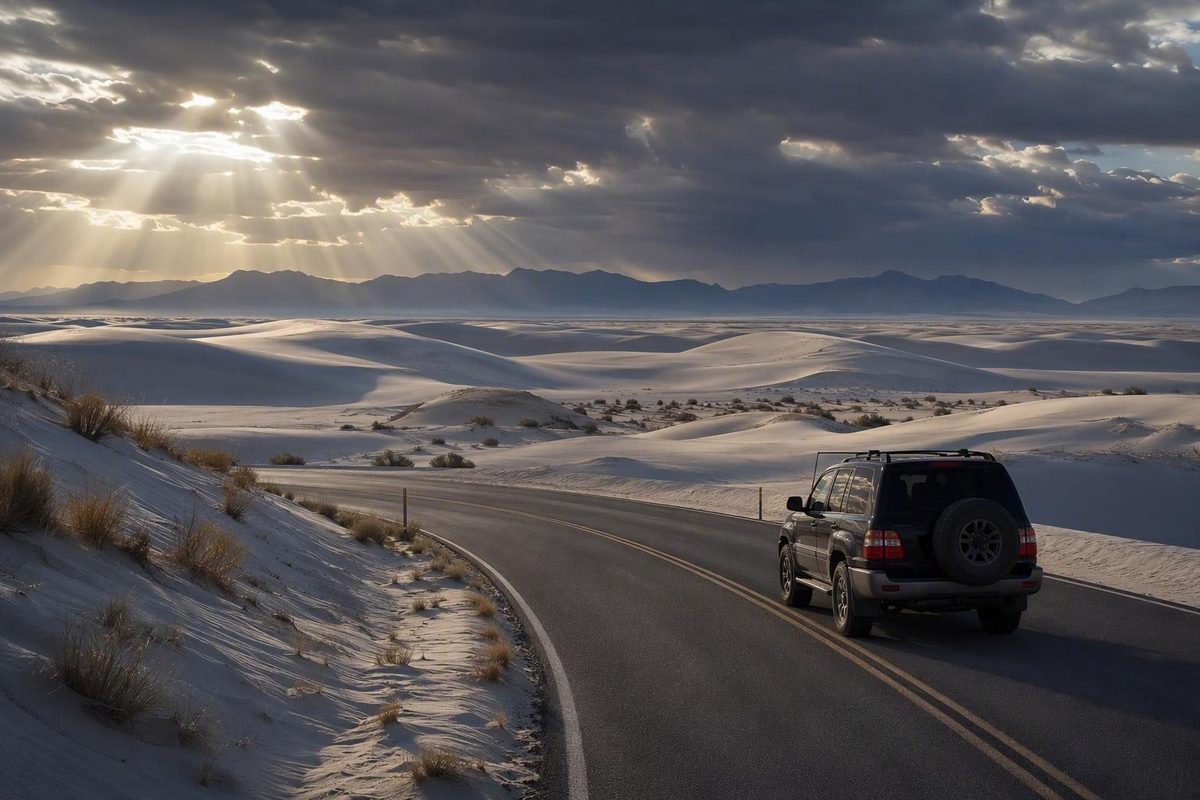
White Sands is easiest to plan as a drive-and-stop park. Dunes Drive carries you from the visitor center into the dunefield, connecting established trails, picnic areas, exhibits, restrooms, parking, photography stops, and places suitable for sledding. Rather than trying to do everything, choose one walk suited to your group, add sledding or a picnic, and coordinate sunset or a ranger program with current access hours.
A scenic drive with several brief stops can fit into roughly two to three hours. A substantial hike, family activities, a long sledding session, or sunset can expand the visit to half a day or a full day. Visitor reviews commonly identify driving, hiking, the museum, and sledding as core activities and suggest two to three hours for a basic outing, but that is a planning range rather than a guaranteed duration.Tripadvisor summarizes common visitor activities and typical visit length
Editorial note: Park hours, road access, trail conditions, camping status, ranger schedules, and sled availability can change. Current National Park Service alerts and instructions supersede this guide.
The best things to do on a first visit
For a first visit, prioritize these experiences in order:
- Stop at the visitor center for current conditions, maps, exhibits, and advice.
- Drive the full length of Dunes Drive rather than turning around after the first dunes.
- Walk at least one established trail, matched to your mobility, available time, and tolerance for sun and sand.
- Try dune sledding on an appropriate vegetation-free slope away from the road.
- Use a covered picnic table if you are staying through the middle of the day.
- Remain for sunset only if current operating hours leave enough time to return to the gate.
The National Park Service also lists bicycling, photography, ranger programs, Junior Ranger activities, horseback riding, and visitor-center activities. These can be worthwhile, but most first-time road-trip itineraries work best when organized around the drive, one trail, and one optional activity such as sledding or sunset.The NPS activity guide outlines the park’s principal visitor activities
Match the day to your group:
- Low-effort visit: Visitor-center exhibits, the park film, scenic pullouts, and Interdune Boardwalk.
- Families with children: Junior Ranger materials, a covered-table lunch, Interdune Boardwalk, and sledding.
- Short-hike visitors: Dune Life Nature Trail, which offers a more immersive sandy walk without requiring the commitment of the park’s longest route.
- Prepared hikers: Alkali Flat Trail during the coolest practical part of the day.
- Photographers: Late-afternoon stops and sunset, subject to weather and gate hours.
- Visitors limiting exposure: The visitor center, scenic drive, pullouts, picnic shelters, and boardwalk.
The table below uses editorial planning ranges, not official completion times. Heat, wind, road conditions, parking, trail pace, closures, photography, and time spent playing on the dunes can change the schedule substantially.
| Activity | Suggested planning time | Effort | Best fit | Ideal part of day | Check current availability? |
|---|---|---|---|---|---|
| Visitor center, exhibits, and film | 20–60 minutes | Low | First-time visitors, families, heat avoidance | Arrival or midday | Yes, for building and film access |
| Dunes Drive without long stops | About 45–60 minutes | Low | Visitors arriving by vehicle | Any open period | Yes, for road restrictions |
| Dunes Drive with pullouts | 1.5–3 hours | Low to moderate | Scenic visitors and photographers | Morning or late afternoon | Yes |
| Interdune Boardwalk | 20–45 minutes | Low | Mobility-conscious visitors, families | Morning or cooler conditions | Yes, for temporary closures |
| Dune Life Nature Trail | 45–90 minutes | Moderate | Visitors wanting a short sandy hike | Cooler morning or late afternoon | Yes |
| Sledding | 30 minutes to several hours | Moderate | Families and active groups | Cooler periods | Yes, for restrictions and store inventory |
| Picnic | 30–90 minutes | Low | Families and road trippers | Midday | Usually only for group-use arrangements |
| Alkali Flat Trail | 2.5–4 hours | Strenuous | Prepared hikers | Coolest practical part of day | Yes |
| Sunset photography | 45–90 minutes plus exit time | Low to moderate | Photographers and scenic visitors | Late afternoon | Always check gate hours |
| Ranger program | Program-dependent | Varies | Visitors seeking interpretation | Program-dependent | Always check schedule and reservations |
A two-hour stop is possible but tight. It leaves little room for an extended trail, leisurely sledding, a meal, or delays. Half a day is the most balanced choice for many first-time visitors because it allows the full drive, a short walk, a picnic, and a defined sledding period. A full day makes more sense if you are adding Alkali Flat, extensive family time, a scheduled program, or sunset.
Use Dunes Drive as the backbone of the visit
Dunes Drive is eight miles one way and 16 miles round trip. The published baseline is about 45 minutes without extended stops, so treat that as driving time rather than the duration of a complete visit. The road is the park’s principal access corridor for dunes, established trails, picnic areas, exhibits, toilets, parking, and sledding areas.Visit Las Cruces summarizes the 16-mile round trip and approximately 45-minute drive
The route begins on pavement and later transitions to hard-packed gypsum. Published material conflicts over exactly how many miles are paved, so the useful planning fact is that drivers encounter both surfaces. The road is described as suitable for standard cars, motorcycles, recreational vehicles, and buses under normal open-road conditions, but windblown material, maintenance, weather, traffic, or temporary restrictions can still affect the drive.
Do not budget only 45 minutes unless you intend to remain in the vehicle almost continuously. Once you add a boardwalk, photographs, restrooms, a picnic, or sledding, the drive becomes a multi-hour outing. A substantial hike or sunset requires still more time.
A practical stop sequence is:
- Visitor center: Check alerts, ask about road and trail conditions, collect a map, and confirm the closing procedure.
- Earlier Dunes Drive stops: Use the shorter interpretive walks and educational exhibits while the group is fresh.
- Deeper dunefield: Stop for broader dune views, picnic facilities, and appropriate sledding terrain.
- Loop and turnaround: Decide whether to retrace the drive promptly or remain for late light.
- Return to the entrance: Leave a comfortable margin before closing instead of beginning the return at the last possible moment.
For roadside safety, pull fully into an established parking area before taking photographs or unloading passengers. Keep people, tripods, and sledding activity out of the travel lane, and supervise children where slopes are close to vehicle areas.
Cyclists may use Dunes Drive, but not the hiking trails or off-trail backcountry. The route has limited shoulder space, motor-vehicle traffic, an unpaved section, strong sun, and little shade. It is a shared park road rather than a protected bicycle path. Riders should be prepared to complete both directions under changing surface, wind, and traffic conditions.
Choose among the five established trails
White Sands has five established trails: Interdune Boardwalk, Playa Trail, Dune Life Nature Trail, Backcountry Camping Trail, and Alkali Flat Trail. Reported distances vary slightly among park and travel resources, particularly for Playa, Backcountry Camping, and Alkali Flat, so use the current park map as the final reference. The approximate figures below follow a comparative trail overview and are paired with editorial time ranges rather than promised completion times.This five-trail overview compares approximate distances and difficulty
| Trail | Approximate distance | Relative effort and suggested time | Accessibility evidence | Exposure and navigation | Best suited to |
|---|---|---|---|---|---|
| Interdune Boardwalk | 0.4 mile round trip | Low; allow 20–45 minutes | Clearest documented wheelchair-accessible trail | Exposed but on a defined elevated route | Mobility-conscious visitors, families, short visits |
| Playa Trail | Short interpretive walk; mileage reports vary | Low; allow 20–45 minutes | No verified wheelchair-accessible claim here | Open desert exposure; follow the current mapped route | Visitors wanting a brief geology-focused stop |
| Dune Life Nature Trail | About 1 mile | Moderate; allow 45–90 minutes | No verified wheelchair-accessible claim here | Repeated sand walking, sun, and limited shade | Families with capable walkers and short-hike visitors |
| Backcountry Camping Trail | Roughly 1.75–2 miles | Moderate; allow 1–2 hours | No verified accessibility claim | More dune travel and dependence on route markers | Visitors wanting a shorter alternative to Alkali Flat |
| Alkali Flat Trail | Roughly 4.5–5 miles | Strenuous; allow 2.5–4 hours | No verified accessibility claim | Repeated dune climbs, exposure, little shade, and consequential route-finding | Prepared hikers with sufficient water and favorable conditions |
Mileage and time mean something different here than on a firm woodland path. Soft sand, repeated dune ascents, heat, wind, and navigation can turn a short-looking distance into sustained work.
Interdune Boardwalk is approximately 0.4 mile and is the clearest documented wheelchair-accessible trail in the available evidence. It offers interpretive signs and a way to see the interdune environment without repeatedly climbing through loose sand. That documented accessibility should not be generalized to every parking area, pullout, picnic site, trail, or dune surface. Visitors with specific mobility needs should confirm the boardwalk’s current status and ask about the surfaces they intend to use.
Playa Trail is a short interpretive walk associated with a playa that is normally dry but can change after wet weather. Because third-party mileage descriptions conflict, do not build a tightly timed itinerary around an old distance figure. Follow the current map and signs.
Dune Life Nature Trail is an approximately one-mile loop with interpretation related to plants and animals living around the dunes. Although short on paper, it involves repeated travel on sand. Allow more time than you would for a paved one-mile walk, particularly with children or in warm conditions.
Backcountry Camping Trail requires two separate status checks. The trail may be available for day hiking even when overnight camping is unavailable. A change in camping policy also does not prove that every part of the trail is open, so verify trail access and overnight camping independently.
Alkali Flat Trail is the most demanding established route in this guide. Its challenge comes from repeated dune climbs and descents, exposure to sun and wind, limited shade, and the need to follow markers through visually similar terrain—not from conventional mountain elevation alone. Published trail accounts place the loop at roughly 4.5 to 5 miles and emphasize staying on the marked route.Earth Trekkers details the repeated dune travel on Alkali Flat and the shorter Backcountry Camping Trail
For any route that leaves an elevated walkway:
- Carry enough drinking water for the full outing and a delay.
- Follow current markers rather than footprints, which may lead elsewhere.
- Save or mark the vehicle location before leaving the parking area.
- Establish a turnaround time before starting.
- Watch for changes in wind, visibility, cloud cover, and temperature.
- Turn around if you lose confidence in the route.
- Do not combine Alkali Flat with an ambitious midday schedule during dangerous heat.
Finishing a long trail is less important than returning before conditions deteriorate. If the day is hotter, windier, or slower than expected, replace Alkali Flat with Dune Life Nature Trail or Interdune Boardwalk.
Go dune sledding without damaging the park
Sledding is allowed in the loop portion of Dunes Drive, away from the road, where vegetation is sparse or absent. A waxed plastic snow saucer is the equipment most commonly recommended for gypsum dunes, and visitors may bring their own. Saucers may be available through the park gift shop, but inventory, new-versus-used availability, purchase or return arrangements, wax, and prices can change.A White Sands day guide summarizes the sledding location rule and saucer guidance
Bringing your own saucer removes the risk that the store is closed or sold out. If you intend to obtain one at the park, confirm the current arrangement before depending on it.
Choose a slope for its runout rather than its height. Before anyone descends, check that:
- The road is not below or beside the run.
- No parked vehicle, picnic table, sign, or person is in the path.
- The slope and runout are free of vegetation.
- The rider can see far enough ahead to identify other visitors.
- Someone at the top can confirm that the path remains clear.
- The return climb does not require trampling plants.
- The group can keep its activity clear of traffic.
Not every white slope is an appropriate sledding hill. Tall or steep dunes can have blind drops, vegetation at the base, or runouts toward the road. For families and first-time riders, a lower slope with a broad, visible stopping area is generally the more conservative choice.
Sledding may be a brief stop or a major part of the day. Groups spend different amounts of time finding a suitable slope, rotating riders, climbing back up, resting, and repeating runs. Set a clear stopping time if you have a trail, ranger program, sunset, or gate deadline later.
Pack out packaging, broken saucers, wax containers, and other equipment. Do not abandon damaged sleds at picnic areas, remove gypsum as a souvenir, or ignore a temporary closure or safety corridor.
Make the visitor center, picnic areas, and family activities count
Begin at the visitor center before committing to Dunes Drive. It is the place to ask about weather, trail status, road restrictions, scheduled programs, and gate timing. The complex also offers exhibits, an orientation film, a park store or gift shop, restrooms, a native plant garden, and Junior Ranger materials.
The visitor-center complex dates to the 1930s and uses Spanish Pueblo or Pueblo Revival architectural styling. That makes it worthwhile even for visitors who do not plan a substantial hike. The architecture, museum, film, and garden introduce the park as more than a place to photograph white dunes.
For children, the film and Junior Ranger booklet can give structure to the day. Pick up the booklet first, identify activities that can be completed at the visitor center and along the drive, and return it as directed if the child wants to complete the program. For anyone limiting prolonged exposure, the museum and film provide geological, ecological, and cultural context without requiring a long dune walk.
NPS information identifies two picnic tables near the visitor center and three established dune picnic areas, with 62 tables in total. Most sites are first-come, first-served, while a group area may be reservable for organized gatherings. A family-oriented itinerary also identifies Primrose, Roadrunner, and Yucca as the established picnic areas and recommends using midday for lunch and the visitor center.This White Sands itinerary summarizes the visitor-center and picnic experience
A covered table is particularly useful around midday, when an exposed hike may be a poor choice. A shelter is not a climate-controlled room, however, and shade remains limited across the open dunefield. Wind can also make a picnic difficult, so secure wrappers and lightweight containers.
Bring a complete meal, snacks, and all the water you expect to need. Sources disagree about the extent of in-park food service, and retail offerings can change. Carrying your own supplies prevents a limited selection or building closure from forcing an unplanned exit.
Ranger activities can add interpretation, but they are not guaranteed daily attractions. Before building one into the itinerary, confirm the date, meeting point, duration, reservation rules, eligibility, and any fee. If a program conflicts with another activity, remove the other activity instead of compressing the entire day.
Build a two-hour, half-day, or full-day itinerary
Every itinerary needs buffer time. Entrance procedures, parking, restrooms, weather changes, loading sleds, changing children’s clothes, and the return drive to the gate all take time. These schedules are editorial frameworks rather than appointments.
Two-hour minimum plan
- Check alerts and road conditions before leaving.
- Spend about 15–25 minutes at the visitor center.
- Drive Dunes Drive with only a few concise pullout stops.
- Walk Interdune Boardwalk.
- Choose one brief photography or sledding stop.
- Begin the return with a clear time margin.
Two hours is tight and does not provide complete coverage. The plan can break down if road access is delayed, the visitor center is busy, or the group wants more time on the dunes. Skip the longer trails and do not add a meal unless it replaces another stop.
Half-day plan
- Start at the visitor center.
- Drive the complete scenic route.
- Walk Interdune Boardwalk or Dune Life Nature Trail.
- Eat a packed meal at an established picnic area.
- Set aside a defined sledding period.
- Add several photography stops on the return.
This is the best-balanced format for many first visits. It covers the defining experiences without requiring a long exposed hike or an all-day commitment.
Full-day plan
- Use the cooler part of the morning for Dune Life, Backcountry Camping Trail, or Alkali Flat.
- Visit the exhibits and film around midday.
- Eat at a covered picnic table.
- Rest, use supplies carried in the vehicle, and reassess the weather.
- Sled during a cooler later period.
- Photograph late-afternoon light.
- Stay for sunset only if current hours support it and you know when to begin the return.
A full day should not mean remaining outdoors continuously. The stronger schedule deliberately places lower-effort, shaded, or indoor activities around midday.
Family variation
Start with the Junior Ranger booklet and film. Walk Interdune Boardwalk, complete relevant booklet activities at exhibits and pullouts, eat at a covered table, and finish with a defined sledding period. Keeping dry clothing and spare footwear in the vehicle is a practical precaution after extended play in loose gypsum.
Hiker variation
Make Alkali Flat the first major activity during the coolest practical conditions. Afterward, reduce the plan to the visitor center, lunch, several scenic pullouts, and perhaps a brief sledding or photography session. Reassess honestly after the hike instead of assuming the original afternoon plan must remain intact.
Mobility-conscious variation
Center the visit on the visitor center, scenic drive, established pullouts, picnic facilities, and Interdune Boardwalk. Confirm the boardwalk’s status and ask which current parking areas and facilities meet the visitor’s specific requirements. Do not assume that every stop has a firm, level, or verified accessible surface.
A ranger activity can be inserted into any itinerary only after confirming its starting time, meeting point, duration, reservation process, and effect on the exit schedule.
Plan sunset, photography, and scheduled programs around access rules
Late-afternoon light and sunset are popular with photographers because lower-angle light can emphasize dune shapes, ridges, and shadows. The result still depends on personal preference, wind, clouds, haze, seasonal sunset time, and the direction of the available view.
Use established pullouts and open areas with sparse or absent vegetation. Park completely outside the traffic lane, keep tripods and people away from the road, and do not cross planted interdune areas merely to remove footprints from a composition.
Four access scenarios are often mistakenly treated as one:
- Ordinary sunset viewing during open hours: The simplest option when the day’s gate schedule leaves enough time to return.
- Sunrise access: Dawn may occur before ordinary admission, so approved early access may be required or sunrise may not be feasible that day.
- Independent after-dark stargazing: Ordinary admission should not be assumed to permit remaining after closing.
- Authorized evening or full-moon programs: These operate under their own schedules, meeting points, reservation rules, eligibility requirements, and possible fees.
White Sands is not a 24-hour-access park. Confirm the day’s closing time and account for the complete drive back to the exit. Practical sunset guidance likewise recommends checking the exact sunset time, arriving early, and leaving before the gate closes rather than assuming unrestricted nighttime access.This sunset guide explains why photography plans must account for changing park hours
Sunrise requires the same caution. A promising dawn forecast does not establish that the gate will be open. If sunrise is important, ask whether approved early access is available for the intended date and what requirements apply.
Seasonal ranger offerings may include sunset or full-moon activities, but a schedule from a previous season is not reliable evidence of current availability. Confirm whether the program is operating, where it begins, how long it lasts, whether reservations are required, and how it interacts with ordinary closing procedures.
If you leave an established walkway for photography, save the vehicle location and retain an offline map. These are backups, not evidence that unrestricted wandering is safe. Visually similar dunes, wind, fading light, and changing visibility can make the direct return route harder to identify.
Prepare for heat, limited services, and sudden closures
Complete this checklist on the morning of the visit:
- Current NPS park alerts
- Missile-testing notices
- US-70 access
- Weather and temperature forecast
- Wind forecast
- Opening and gate-closing times
- Trail and boardwalk status
- Dunes Drive restrictions or safety corridors
- Ranger-program availability
- Backcountry camping status, if relevant
A plan based only on ordinary operating hours can therefore fail before you reach the entrance. Check conditions again immediately before departure, particularly when driving from well beyond Alamogordo.Earth Trekkers discusses the park’s location within the missile range and the resulting access constraints
Carry all expected drinking water, a complete meal or substantial snacks, sun protection, supportive footwear, weather-appropriate layers, an offline map, and a charged phone. Travel guidance for the park consistently recommends bringing food, drinks, sun protection, seasonal clothing, and appropriate footwear instead of depending on in-park supplies.This White Sands planning guide summarizes the basic supplies visitors should carry
Before a long approach drive, it may also help to use a general road-trip tire and gear checklist.
The principal environmental concerns are intense sun, high air temperatures, little natural shade, wind, rapid temperature changes, and disorientation among similar-looking dunes. The pale surface is not proof that barefoot walking is safe. Air temperature, debris, wildlife, individual skin sensitivity, and changing surface conditions still matter. Supportive footwear also improves protection and traction on longer walks.
Before leaving a parking area:
- Save or mark the vehicle location.
- Identify a landmark without relying on it exclusively.
- Photograph the trailhead map if one is posted.
- Note the route-marker style and color.
- Set a turnaround time.
- Monitor wind and visibility.
- Return early if navigation becomes uncertain.
Offline navigation and a saved vehicle position are prudent backups when moving away from established routes, but neither eliminates the hazards of open-dune travel.Practical White Sands guidance emphasizes offline maps, vehicle-location marking, water, and vegetation protection
Federal rules prohibit removing or disturbing sand and other natural, cultural, archaeological, or mineral resources. Alcohol is restricted to specified picnic and group-use locations rather than allowed generally throughout the dunefield. Service animals are permitted at facilities open to the general public, although that does not establish that every trail, dune surface, or activity will be suitable for every team.The NPS planning page explains resource protection, alcohol restrictions, service-animal access, and current planning links
Pet owners should verify current area-specific rules, use a leash wherever required, carry extra water, and shorten the plan in hot conditions. Never leave an animal in a hot vehicle. Even where pets are permitted, a long sandy trail may be unsuitable for an individual dog because of exposure, exertion, age, paw condition, or lack of shade.
If weather or an operational closure disrupts the plan, simplify rather than improvising deep in the dunes. The visitor center, scenic drive, boardwalk, established pullouts, and picnic shelters can still produce a worthwhile visit when a long hike is unsuitable.
Know which specialized activities require extra planning
Bicycles are permitted on Dunes Drive but not on hiking trails or in off-trail backcountry areas. Riders share the road with cars, motorcycles, buses, and recreational vehicles. Limited shoulder space, mixed pavement and hard-packed gypsum, traffic, wind, sun, and scarce shade make this more demanding than a protected recreational path. Carry water and repair supplies, and preserve enough time and energy for the return.
Horseback visitors must bring their own horses by trailer and obtain a horse permit signed by a ranger. Documentation, trailer parking, permitted routes, and temporary restrictions should all be confirmed before arrival. This is not an activity to arrange spontaneously at the entrance.
Backcountry camping requires direct confirmation. The NPS activity page, last updated in 2024 according to the supplied research, marked backcountry camping as closed while also retaining information about the ordinary camping opportunity.The NPS activity page contains the qualified camping-status notice
A newer NPS planning overview mentions primitive camping, creating an apparent conflict that may reflect different update dates or operational changes. Consult the current camping information or contact the park shortly before departure rather than treating either statement as a permanent answer.The current NPS planning hub should be used to verify overnight status
Remember that hiking the Backcountry Camping Trail and staying overnight are separate questions. The trail may be open for day use when camping is unavailable, but both statuses need confirmation.
Visitors do not need to hike conventionally to have a complete experience. Alternatives include:
- Driving Dunes Drive
- Exploring visitor-center exhibits
- Watching the orientation film
- Photographing from established stops
- Picnicking
- Completing Junior Ranger activities
- Walking Interdune Boardwalk
- Joining a scheduled park program when available
Commercial audio tours and third-party tours are separate products. Purchasing one does not replace park admission, create after-hours access, or enroll the visitor in an official ranger program.
Frequently asked questions
How much time do you need at White Sands National Park?
Allow roughly two to three hours for a concise visitor-center stop, the scenic drive, Interdune Boardwalk, and a few brief pullouts. Choose half a day if you want a short sandy trail, a picnic, and sledding. Set aside a full day for Alkali Flat, extensive family activities, a scheduled ranger program, or sunset. The two-to-three-hour baseline is also the typical duration presented in the visitor overview, but weather, closures, pace, and stops can extend it.Tripadvisor lists two to three hours as a common visit duration
Can a regular car drive all of Dunes Drive?
Under normal open-road conditions, Dunes Drive is described as suitable for standard cars as well as motorcycles, recreational vehicles, and buses. The route includes both pavement and hard-packed gypsum.Visit Las Cruces summarizes the road length, surface, and vehicle access
Check current restrictions before arrival and drive according to conditions. Temporary safety corridors, weather, maintenance, or windblown material can affect access.
Can you rent or buy a sled at White Sands National Park?
Visitors may bring their own waxable plastic snow saucer, and saucers may be available through the park gift shop. Current transactions may involve purchases, used equipment, returns, or other arrangements, but those details can change.
Confirm inventory, prices, wax availability, and return terms before depending on the store. Bringing your own saucer is the simplest way to avoid uncertainty.
Is backcountry camping currently open at White Sands?
Do not rely on a fixed yes-or-no answer from an undated trip guide. Official pages in the supplied research have presented conflicting status language, and camping availability can change independently of whether the Backcountry Camping Trail is open for day hiking.
Consult the current NPS camping information or contact the park shortly before departure. Confirm permits, site availability, parking, trail access, and missile-testing restrictions before building an overnight itinerary.
Can you stay in White Sands after sunset to stargaze?
Do not assume ordinary admission allows independent after-dark access. White Sands is not generally open 24 hours, and closing times can vary. Confirm the day’s gate schedule and allow enough time to drive back to the exit.Sunset planning guidance emphasizes checking closing time and leaving before the gate shuts
Authorized evening, full-moon, or ranger activities may provide access under specific conditions, but their dates, reservations, eligibility rules, meeting points, and fees require direct confirmation.
The simplest first-visit sequence is to check alerts and gate hours before leaving, begin at the visitor center, follow Dunes Drive, choose one trail suited to the group, and add sledding or a picnic if time permits. Attempt sunset only with a confirmed exit plan. A focused half day can cover the defining experiences; a full day works best when adding a substantial hike, family activities, or a scheduled ranger program.