
How to Plan Banaue and Batad Without Rushing the Journey
A 2-3-night trip gives most first-time visitors margin for overnight-bus fatigue, irregular local transport, rain, changing road access and slower climbs.
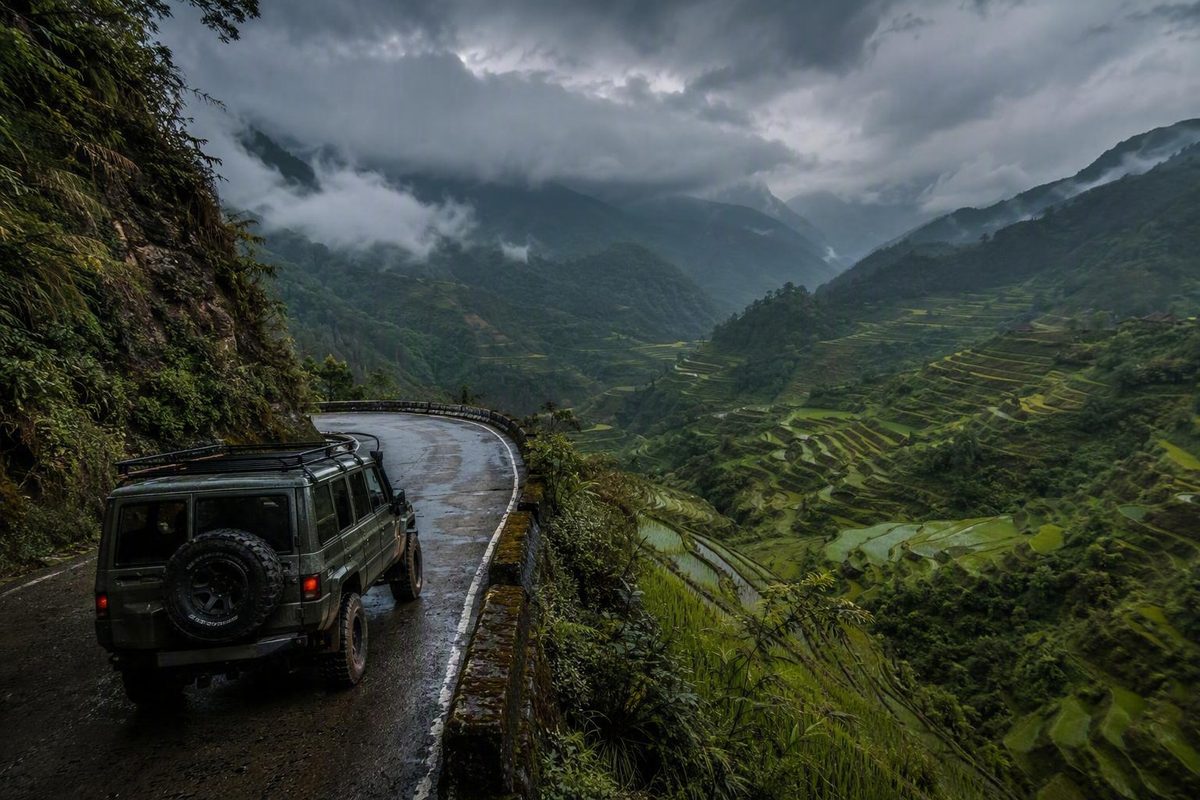
A trip to the Banaue Rice Terraces is not a single bus ride followed by a quick photo stop. From Manila, the journey usually has three distinct stages: long-distance transport to Banaue, a local vehicle toward the terrace villages, and walking where the road ends. If Batad or Tappiya Falls is your goal, a demanding trek follows before you reverse the entire sequence.
Two days can work, but only with favorable conditions and well-timed transfers. For most first-time visitors, two to three nights provides a more useful margin for overnight-bus fatigue, irregular local transport, rain, changing road access, and a slower climb than expected.
This guide is therefore an evergreen planning framework rather than a current timetable or price sheet.
Verification status — August 12, 2026: Current bus terminals, schedules, fares, local transfer arrangements, road access, guide rules, fees, emergency contacts, and destination-specific travel advisories were not established through dated first-party sources for this guide. Confirm them directly with the relevant operator, accommodation, Banaue or Ifugao tourism authority, and applicable government travel-advice service immediately before departure.
Understand Banaue, Batad, and the UNESCO-listed terraces
Banaue is a municipality in Ifugao Province on Luzon. For travelers arriving from Manila, Banaue town commonly serves as the principal transport and accommodation gateway to Batad and other terrace areas. It is the practical place to find meals, organize local transport, leave luggage where secure storage is available, visit roadside viewpoints, or recover after the overnight journey.
Batad is not another name for Banaue town. It is a more remote village within Banaue and a separate trekking destination. Reaching it generally involves a local vehicle from town followed by a walk from the current drop-off point. Staying in Batad puts you closer to its terrace paths, but accommodation and supplies may be more limited.
The UNESCO distinction is narrower than the broad “Banaue Rice Terraces” label used in tourism marketing. The World Heritage property called the Rice Terraces of the Philippine Cordilleras comprises five specified clusters:
- Nagacadan in Kiangan
- Hungduan
- Central Mayoyao
- Bangaan in Banaue
- Batad in Banaue
Batad and Bangaan are the two inscribed clusters within Banaue. UNESCO describes Batad as an amphitheater-like arrangement of semicircular terraces with a village at the base, while Bangaan’s terraces form the setting of a traditional Ifugao village. Not every roadside terrace promoted under the Banaue name is part of the formal World Heritage property. UNESCO’s description defines the five inscribed clusters and their cultural significance.
The terraces are more than scenery. They are a living agricultural and cultural landscape shaped by inherited knowledge, irrigation, adaptation to steep terrain, communal cooperation, environmental stewardship, and cultural traditions. Fields, walls, paths, water channels, forests, villages, and the people maintaining them form one connected system.
That context should influence how you visit. A terrace path may be a farmer’s working route rather than a purpose-built tourist trail. Fields may be planted, flooded, harvested, under repair, or temporarily unused. Agricultural work, water conditions, damaged walls, and weather can all affect access.
For a first trip, the main choices are:
- Banaue roadside viewpoints: The lower-effort option for seeing broad terrace landscapes without committing to a major trek.
- Batad: Best suited to travelers prioritizing an immersive village stay and a physically demanding terrace walk.
- Bangaan: A distinct UNESCO-inscribed cluster combining terraces with a traditional village setting.
- Hapao: A potential lower-effort alternative for travelers who want to walk among terraces without attempting Batad’s steepest route.
The right choice depends less on which photograph looks most dramatic and more on your time, fitness, transport flexibility, and tolerance for uncertain weather.
How many days to allow: two-day, three-day, and extended plans
Two days can cover Banaue and Batad, but there is little room for delayed transport, poor sleep, rain, or a slow trek. A two- to three-night visit is a more practical range for many first-time travelers, though it is not a universal minimum. A fit visitor using arranged transfers may travel faster, while anyone planning several hikes will need longer. A firsthand destination guide similarly recommends allowing two to three days rather than attempting an exhausting one-day visit. That itinerary comparison also distinguishes Banaue’s practical role from Batad’s more rustic setting.
A compressed two-day plan
Day one
- Arrive in Banaue in the morning.
- Eat, hydrate, and recover from the overnight journey.
- Confirm road, trail, weather, guide, and return-transport conditions.
- Leave bulky luggage in secure storage if available.
- Visit one or more roadside viewpoints.
- Transfer toward Batad.
- Walk from the current vehicle drop-off point to the village.
- Stay overnight in Batad.
Day two
- Begin the terrace trek early.
- Add Tappiya Falls only if the weather, trail, fitness, water supply, daylight, and return arrangements are all favorable.
- Return to the guesthouse and collect your belongings.
- Walk back to the confirmed vehicle meeting point.
- Travel to Banaue.
- Keep a substantial buffer before your onward departure.
The weak point is the second day. A waterfall trek, the climb out of Batad, a local transfer, and a fixed bus departure can become an unforgiving combination. If the trail is wet, somebody is struggling, or the return vehicle is uncertain, skip Tappiya Falls. Visiting the terraces and village without reaching the waterfall is still a worthwhile Batad experience.
Do not build this plan around the last theoretically possible transfer. Aim to return to Banaue well before departure rather than calculating the day to the minute.
A more balanced three-day plan
Day one: Arrive and orient yourself
- Arrive in Banaue.
- Eat, rest, and assess how you feel after the bus journey.
- Confirm local transport, guide rules, road access, trail conditions, and weather.
- Visit roadside viewpoints.
- Stay in Banaue, or transfer to Batad only if access and timing are favorable.
Day two: Batad and an optional waterfall trek
- Begin early.
- Walk through Batad’s terraces at a pace that preserves energy for the return.
- Continue to Tappiya Falls only if current conditions and personal ability support it.
- Stay in Batad or return to Banaue using a prearranged pickup with a generous daylight margin.
Day three: Choose a contrasting terrace experience
- Visit Bangaan for its UNESCO-inscribed village-and-terrace setting, subject to current access.
- Alternatively, investigate Hapao as a potentially less strenuous outing.
- Attempt either excursion only if a round-trip transfer has been confirmed and enough time remains before your onward departure.
- Return to Banaue early enough to eat, collect luggage, and absorb a delayed local transfer.
This version is more forgiving because the arrival morning is not immediately committed to a major hike. It also lets you assess the effects of poor sleep, heat, humidity, stairs, and uneven ground before choosing the hardest route.
A split stay
A split stay often provides the best balance:
- First night in Banaue: Easier arrival, access to meals and transport arrangements, and time for roadside viewpoints.
- Second night in Batad: Immediate trail access and no transfer from Banaue before an early hike.
- Optional final night in Banaue: Useful when onward transport is fixed or the return from Batad is uncertain.
The disadvantage is changing accommodation and managing luggage. If secure storage is available in Banaue, take only a small overnight pack into Batad. Confirm the storage hours and retrieval arrangement before leaving.
Adding Sagada
Sagada can be combined with Banaue as part of a longer Northern Luzon itinerary, but it should be treated as an additional destination rather than squeezed into the same two-day window. Commercial itineraries show that Banaue, Batad, and Sagada are combined over several days, but the existence of a package does not mean its pace suits every independent traveler.
Do not rely on an old blog timetable for the connection. Confirm the route, departure point, expected travel time, luggage arrangements, and last practical departure locally. Allow at least one additional day beyond the Banaue–Batad portion—and more if you want to undertake activities in Sagada rather than simply pass through.
Every itinerary needs buffers for four recurring uncertainties:
- Changing road access
- Missed, full, or irregular local transport
- Heavy rain
- A slower-than-expected return climb
The journey chain from Manila to Banaue and Batad
Think of the journey as three separate stages:
- Manila to Banaue: A long or overnight bus journey.
- Banaue toward Batad: A jeepney, tricycle, or arranged private transfer.
- The final approach: Walking from the current vehicle drop-off point into Batad, followed by further trekking if you explore the terraces or waterfall.
This is not best treated as a conventional self-drive road trip. The available evidence mainly describes buses, local vehicles, and walking. A private vehicle does not remove the final pedestrian approach or the physical demands of exploring Batad.
Manila to Banaue
Older traveler reports commonly place the Manila–Banaue journey at approximately 8 to 12 hours, with variation caused by traffic, stops, road conditions, weather, and the service used. Respondents also recommend reserving seats, particularly for the return journey. The range comes from older traveler reports rather than a guaranteed current duration.
Coda Lines and Ohayami Trans appear in supplied travel accounts, while historical reports mention departures in the Cubao and Sampaloc areas. These are research leads, not confirmed current instructions.
Before paying, verify directly:
- Current operator and official booking channel
- Exact terminal and boarding point
- Departure date and time
- Expected arrival window
- Fare and accepted payment method
- Luggage allowance and storage policy
- Cancellation or rebooking conditions
- Whether the service terminates in Banaue
- Return-seat availability
Reserve both directions when possible. Flexibility on arrival will not help if your preferred return service is full and you have a flight, hotel, or other fixed commitment elsewhere.
An early arrival does not mean you will be ready to hike immediately. A night on a bus may leave you tired, stiff, thirsty, or uncomfortable after the mountain roads. Use the first hours for food, water, orientation, and a fresh assessment of conditions.
Banaue toward Batad
Reported onward options include:
- Public jeepney: Potentially the cheapest option, but older accounts describe irregular or limited service.
- Tricycle: More flexible than waiting for a public vehicle, although passenger and luggage capacity may be limited.
- Private jeepney, van, or arranged vehicle: Greater control over departure and pickup times, particularly for groups.
- Transfer arranged through accommodation or a guide: Convenient when the total price, meeting point, waiting policy, and return terms are agreed in advance.
Historical reports describe public jeepneys running only once or twice a day on an irregular basis, with other visitors using tricycles or private vehicles. Those observations illustrate the tradeoff but do not establish a current timetable. The comparison of public and private transfer options is historical and should be checked locally.
Public transport may preserve your budget but consume the time intended for hiking. A private transfer may improve timing control, but it does not guarantee that the road is open, that vehicles can reach the village, or that a return vehicle will be waiting unless pickup has been explicitly arranged.
Before leaving Banaue, confirm:
- Current road condition
- Farthest point vehicles can reach
- Expected walk from that point
- Return meeting place
- Pickup time and waiting policy
- Last practical departure for Banaue
- Whether the quoted price is per passenger or per vehicle
- Whether stops are included
- What happens if rain or road damage changes the pickup point
The final walk into Batad
Historical accounts report very different final approaches. One describes approximately 15 minutes from the drop-off point, while an older trip that began at Batad Saddle reported about 45 minutes on foot. The shorter approach appeared in one destination guide, while the longer walk came from a 2016 firsthand account.
Ask your accommodation where guests are currently dropped off and how much descending or climbing remains. “Close to Batad” can still mean a demanding walk to a particular guesthouse.
If you store luggage in Banaue, obtain clear confirmation of the arrangement, opening hours, and retrieval time. Keep essential medication, travel documents, valuables, water, rain protection, and onward-ticket details with you.
Choose the right base and terrace experience
The choice between Banaue and Batad is primarily about logistics and the type of experience you want—not which one has objectively better scenery.
| Consideration | Banaue | Batad |
|---|---|---|
| Transport | Main gateway for arrival and onward travel | Requires another transfer and a walk |
| Food and supplies | More practical for arranging meals and provisions | Carry essentials rather than assuming availability |
| Accommodation | Wider practical base, though rooms may still be basic | Commonly simpler and more rustic |
| Atmosphere | Busier service and transport center | More remote village setting |
| Trail access | Transfer required for Batad hikes | Immediate access to Batad terrace routes |
| Lower-effort viewing | Roadside viewpoints available | Meaningful exploration usually involves steps or trails |
| Best suited to | Arrival, organization, viewpoints, regional outings | Early trekking and an unhurried village stay |
Stay in Banaue if convenience matters most
Banaue is generally the more practical base if you:
- Have only one night
- Need to connect with fixed onward transport
- Want easier access to meals and transport arrangements
- Prefer roadside views to a major trek
- Plan to visit several terrace areas
- Need to recover before deciding whether to attempt Batad
Roadside viewpoints provide worthwhile views without a full terrace hike. They are not effortless for everybody: Banaue is hilly, distances can feel longer in heat or rain, and roadside walking introduces traffic and footing concerns. Arrange local transport between viewpoints if walking beside the road is unsuitable.
Stay in Batad if trail access matters most
Batad is better suited to travelers who want to wake near the terraces, begin early, and experience the village after day visitors have left. It also removes the need to transfer from Banaue immediately before the hike.
The tradeoff is reduced convenience. Rooms may be basic, supplies limited, and the approach remains on foot. Confirm directly with the property:
- Electricity and charging arrangements
- Hot-water availability
- Private or shared bathroom
- Meal times and food options
- Connectivity
- Blankets or other cool-weather provisions
- Luggage assistance
- Exact walking approach from the current drop-off point
Carry essential medication, water for the approach, rain protection, a warm layer, a light source, and any food you cannot readily substitute.
Use a split stay for both advantages
For many first-time visitors, one night in each location is the best compromise. Banaue handles arrival and organization; Batad provides immediate trail access and a more unhurried stay. Returning to Banaue for a final night further reduces the risk of missing fixed onward transport.
Lower-effort alternatives
Banaue viewpoints are the clearest alternative to a full terrace trek. They allow you to see layered mountain agriculture without committing to the Tappiya Falls route.
Bangaan offers a different UNESCO context, with terraces forming the setting of a traditional Ifugao village. Treat it as a distinct cultural-landscape visit rather than automatically describing it as easier. Confirm the road access, walking distance, visiting arrangements, and guide expectations before departure.
Hapao may suit travelers looking for gentler terrain. A 2016 firsthand account found much of its featured terrace and hot-spring route flatter than the writer’s Banaue and Batad hikes and called it the easiest of the three outings. That is one traveler’s comparison, not an accessibility guarantee. The account is useful for identifying Hapao as an option to investigate locally.
Do not assume that any route is suitable for a particular disability, injury, age, or medical condition. Ask specific questions about distance, gradient, stairs, exposed edges, rest points, toilets, handrails, surface conditions, and vehicle access. If you have a condition that could be affected by prolonged climbing, heat, or uneven footing, seek individualized medical advice before choosing the route.
What the Batad and Tappiya Falls trek actually demands
Calling the Batad route a “walk through rice terraces” understates its physical demands. Routes vary, but reported features include:
- Long sections of irregular stairs
- Narrow terrace-edge paths
- Uneven stone, concrete, earth, or vegetation-covered surfaces
- A substantial descent toward Tappiya Falls
- Heat and humidity
- Limited shade on some sections
- Slippery surfaces after rain
- A strenuous return climb
The descent can be deceptive. Going down may feel manageable while you are fresh, but the lost elevation must be regained. Do not assess the whole route by how easy the first downhill section feels.
Why published hiking times conflict
Different accounts provide substantially different timings:
- One traveler reported about 1.5 hours from the start of the Batad trail to Tappiya Falls. That account also describes steep, uneven stairs and significant ascent and descent.
- Another group reached the waterfall after approximately two hours of walking. Its report includes irregular stairs, rain-slick jungle terrain, and narrow paths.
- A separate destination guide describes the waterfall as roughly one hour from Batad guesthouses. That timing starts from a different point and is not a universal estimate.
The accounts may all have been accurate for their respective routes and days. Guesthouse location, starting point, viewpoint detours, route choice, photography, rest stops, weather, congestion, fitness, and road access can materially change the total.
A better planning question is: “How long can I safely climb irregular stairs in heat after already descending?” Make your turnaround decision according to remaining water, daylight, weather, footing, and energy—not an advertised duration.
Exposure, footing, and turnaround decisions
One firsthand account described some terrace-edge paths as only 20–30 centimeters wide, together with irregular steps and a jungle section made slippery by rain. These conditions will not occur on every route, but they show why dependable footwear and an honest assessment of balance are important. The same report documents the narrow paths and rain-affected terrain in detail.
Heat, humidity, limited shade, fatigue, insufficient water, and wet surfaces can compound one another. Heavy rain is also associated in the supplied travel evidence with slippery trails, landslides, and flash-flood risk. A later Banaue travel account specifically warns about those heavy-rain hazards.
Set a turnaround point before exhaustion. Stop or turn back if:
- Your footing is becoming unreliable
- Pain is increasing
- You are running short of water
- The weather is deteriorating
- Daylight is running out
- The return route or pickup is uncertain
- Someone can descend but no longer has enough energy for the return climb
Travelers with knee, balance, mobility, cardiovascular, or vertigo concerns should not rely on determination alone. Obtain individualized advice and consider the Banaue viewpoints, a confirmed Bangaan visit, or a carefully assessed Hapao route instead.
Tappiya Falls and swimming
Travelers have reported swimming at Tappiya Falls, but that does not establish that entering the water is permitted or safe on a particular day. Ask locally before entering, and do not treat the presence of other swimmers as a safety assessment.
Bring swimwear and a quick-dry towel only if the waterfall is part of your plan. They are optional items, not reasons to continue when conditions are poor.
Independent, guided, or packaged trekking
Independent trekking offers the most freedom and may reduce direct guiding costs.
A separately hired local guide preserves much of that flexibility while adding route knowledge, pacing support, cultural context, and local judgment about current conditions. A guide may be particularly useful on longer routes, in uncertain weather, or for travelers uncomfortable with exposed paths.
A packaged hike may combine transfers, accommodation, meals, guide services, and registration. This reduces coordination but does not guarantee that the route is suitable for your ability or safe in poor weather.
Before booking any guided option, ask for:
- Exact route and starting point
- Expected stair and exposed-path sections
- Group size
- Guide credentials where applicable
- Fitness expectations
- Turnaround policy
- Wet-weather alternative
- Inclusions and exclusions
- Cancellation terms
Sources disagree over whether guides are required. Some travelers report local requirements away from paved roads; others describe independent trekking. That conflict does not establish the current rule. Confirm it with the responsible local authority after arrival.
Do not ride on vehicle roofs or use other unsafe transport shortcuts. Do not continue during active flash-flood, landslide, trail-closure, or severe-weather conditions. Paying for a guide, vehicle, or package does not remove those hazards.
When to visit: plan for conditions, not a guaranteed color
No evidence-grounded month guarantees green, golden, reflective, planted, or recently harvested terraces across Banaue, Batad, Bangaan, Hapao, and the other Ifugao clusters.
Depending on the field and timing, you may see:
- Newly flooded paddies reflecting the sky
- Young bright-green rice
- Mature darker-green fields
- Golden fields approaching harvest
- Recently cut or bare plots
- Muddy paddies
- Waterlogged or storm-affected sections
- Several stages in neighboring fields
The terraces are working farms, not a synchronized display. Adjacent plots can therefore look completely different.
Travel accounts conflict about the most reliable green periods. Some favor April through June, while others mention April–May and October–November. Those are reported tendencies, not promises. A firsthand account offering April–May and October–November also warns that its calendar is generalized.
Do not extend one observation into a universal claim about cultivation. The evidence does not support a single planting season or a fixed number of annual harvests across all terrace clusters.
Weather should outweigh color
Choose dates primarily for workable transport and trail conditions, then accept the appearance you find. Heavy rain can reduce traction and contribute to flash floods, landslides, and road disruption. Conditions may remain affected after rain has stopped, so a clear sky does not by itself establish that roads and paths are usable.
Check:
- A current forecast shortly before leaving Manila
- Road access before committing to a local transfer
- Trail conditions after arriving in Banaue
- Updated local advice after overnight rain
- Applicable official travel advice for every area on your route
Start outdoor activities early enough to protect daylight and leave room for delays. This is a buffer strategy, not a claim that rain always arrives in the afternoon.
Use this decision order:
- Is the road open and return transport workable?
- Is the trail suitable for the intended route?
- Does everyone have the footwear, water, and ability required?
- Only then: Is the terrace appearance what we hoped to see?
If the first three answers are unfavorable, switch to a viewpoint-based or rest-day plan. A particular terrace color is not worth forcing a hazardous hike.
Budgeting and choosing independent, guided, or packaged travel
A reliable current total cannot be built from historical travel blogs. Transport fares, fees, room rates, meals, guide prices, and road access all change. Group size also affects the per-person cost of private vehicles and guides.
Build your budget by category:
- Return transport between Manila and Banaue
- Local transfers to Batad, Bangaan, or Hapao
- Accommodation in Banaue
- Accommodation in Batad
- Meals and drinking water
- Registration, environmental, or conservation fees
- Guide services
- Optional organized tours
- Luggage storage, if charged
- Rain protection, snacks, and other supplies
- Contingency transport
- An additional night if roads, weather, or connections change
Use a worksheet rather than an unsupported total:
Estimated trip cost = confirmed long-distance transport + confirmed local transfers + lodging + meals and water + current fees + guide or tour cost + supplies + contingency reserve
Ask for prices in writing where possible. Clarify whether a vehicle quote covers one passenger or the entire vehicle, whether waiting time is included, and whether the return journey forms part of the agreement.
Independent travel
Independent travel provides greater control over accommodation, timing, and route choices. It also makes you responsible for:
- Booking both long-distance journeys
- Finding the correct terminals
- Confirming local transfers
- Understanding guide rules and fees
- Monitoring weather and access
- Deciding whether the trail is appropriate
- Preserving enough time for the return
- Funding an unexpected transfer or additional night
A plan that looks cheapest on paper may cost more if a missed public vehicle forces a last-minute private transfer.
Hiring a guide separately
A separately hired guide can provide a middle ground between full independence and a package. You retain control over transport and accommodation while gaining route knowledge and cultural interpretation.
Confirm:
- Credentials where applicable
- Language
- Meeting point
- Route and expected duration
- Total fee and inclusions
- Group size
- Weather policy
- Alternative plan if the trail closes
A responsible guide should support conservative decisions rather than pressure the group to complete a route in unsuitable conditions.
Packaged travel
Commercial marketplaces show that Batad day hikes, private groups, two- and three-day treks, and longer Northern Luzon itineraries exist. Some combine transport, accommodation, meals, and guiding; others cover only the activity. Current listings illustrate the range of package formats, but their prices and availability are dynamic.
Compare packages line by line:
- Pickup and final drop-off points
- Whether Manila transport is included
- Banaue–Batad transfers
- Walking required from the vehicle drop-off
- Private or shared room
- Bathroom arrangement
- Meals and drinking water
- Guide services and credentials
- Registration or environmental fees
- Exact hiking route
- Fitness expectations
- Group size
- Luggage handling
- Taxes and optional charges
- Cancellation terms
- Weather and trail-closure policy
- Total cost for your entire group
Do not equate featured placement with independent quality. Tripadvisor states that product-category and featured ordering can consider revenue, popularity, seasonal trends, browsing behavior, clicks, and review signals. Its ranking explanation shows why first position is not proof of the best or safest operator.
Carry enough cash for confirmed transport, meals, fees, and contingencies, but do not assume that current ATM reliability or card acceptance matches an old travel account. Ask your accommodation, operator, and guide which payment methods they accept.
Keep a separate contingency reserve for a changed drop-off point, missed jeepney, private transfer, medical need, or additional night. Do not commit that reserve to optional activities before the trip begins.
Packing, safety, verification, and respectful travel
Pack for stairs, rain, basic facilities, and changing transport—not for a straightforward sightseeing stop.
Compact packing checklist
Core items
- Sturdy walking or hiking shoes with dependable grip
- Lightweight rain jacket or poncho
- Drinking water and a refillable bottle
- Hat and sunscreen
- Warm layer for cool evenings and early departures
- Cash divided between secure locations
- Essential medication
- Offline directions, tickets, and booking details
- Small daypack that leaves both hands free
Prudent supplemental items
- Basic blister and personal first-aid supplies
- Charged phone and power bank
- Small flashlight or headlamp
- Waterproof pouch for documents and electronics
- Snacks appropriate for the planned route
For a waterfall visit, add swimwear and a quick-dry towel, but enter the water only when current conditions, access rules, and local advice permit.
Avoid carrying bulky luggage over steep approaches and terrace paths. If secure storage is available in Banaue, take a small overnight pack into Batad. Confirm storage hours so your luggage is accessible before your return bus.
Dated pre-departure verification checklist
Record when and through whom each item was confirmed:
- [ ] Current Manila–Banaue operator
- [ ] Official booking channel
- [ ] Exact terminal and boarding point
- [ ] Departure time and expected arrival window
- [ ] Current fare and luggage policy
- [ ] Return-seat availability
- [ ] Banaue–Batad transfer arrangement
- [ ] Current Batad road access
- [ ] Vehicle drop-off point
- [ ] Return pickup point and time
- [ ] Last practical local departure
- [ ] Current guide rules
- [ ] Registration, environmental, or conservation fees
- [ ] Lodging location and walking approach
- [ ] Electricity, hot water, blankets, charging, and meals
- [ ] Accepted payment methods
- [ ] Weather forecast
- [ ] Road and trail conditions
- [ ] Applicable official travel advice
- [ ] Emergency contacts supplied by local authorities, accommodation, or guide
Repeat the road, trail, and weather checks after reaching Banaue, especially following storms or heavy rain. Information confirmed several days earlier may no longer describe the route.
Reasons to change the plan
Postpone, shorten, or replace the trek if there is:
- Active heavy rain
- A landslide or flash-flood warning
- A road or trail closure
- Unstable or damaged terrace paths
- Severe fatigue after the overnight journey
- Inadequate footwear
- Insufficient drinking water
- Injury or worsening symptoms
- No dependable return arrangement
- Too little daylight for the selected route
A paid booking is not a reason to continue. Ask before booking how weather cancellations and route substitutions are handled.
Wet-weather fallback
When conditions rule out the Batad trek, consider:
- Banaue roadside viewpoints, if roads and slopes are safe
- A locally available museum or cultural attraction
- Food and recovery after the bus journey
- Confirming Bangaan or another outing for a later window
- Rescheduling Batad rather than compressing it into unsafe conditions
- An additional night in Banaue
Roadside viewpoints are not automatically safe during severe weather. They are a fallback only when current road and slope conditions permit access.
Travel respectfully in a working landscape
Stay on established paths and follow local instructions. Do not step into planted fields, climb terrace walls for photographs, block farm routes, disturb irrigation channels, or move stones.
Carry out waste, minimize disposable packaging, and keep noise low near homes. Ask before photographing residents, agricultural work, ceremonies, or private property. A scenic setting does not erase the right to privacy.
Choose them according to clear credentials, transparent terms, and suitability—not unsupported claims that one provider is the best.
Flexibility is part of the safety plan, not evidence that the trip has failed. Treat Banaue as a multi-stage mountain journey: allow enough time for the overnight transport, use Banaue and Batad for their different strengths, choose hikes according to actual ability and current conditions, and keep a lower-effort alternative available.
Immediately before departure, reconfirm transport, terminals, road access, drop-off points, guide rules, fees, lodging conditions, forecasts, trail status, emergency information, and applicable official travel advice.
Frequently asked questions
Can I visit the Banaue Rice Terraces without hiking?
Yes. Banaue has roadside terraces and viewpoints that can be visited without undertaking a full terrace trek. You may still need local transport between viewpoints, and hills or roadside walking can be tiring.
Bangaan offers a distinct UNESCO-inscribed village-and-terrace experience, but its current access and walking requirements must be confirmed. Do not assume any route suits a particular mobility need without checking gradients, stairs, surfaces, rest points, and vehicle access.
Do I need a guide for Batad and Tappiya Falls?
The supplied sources conflict and do not establish a current universal rule. Some accounts report guide requirements on certain routes away from paved roads, while others describe independent trekking.
Confirm the current rule with the responsible local authority after arrival. Even where independent trekking is permitted, a guide may help with navigation, pacing, cultural interpretation, route selection, and decisions in wet conditions.
Should I sleep in Banaue or Batad?
Choose Banaue for easier transport connections, roadside viewpoints, practical access to meals, and trips to several terrace areas. Choose Batad for immediate trail access, an earlier start, and an overnight village experience.
A split stay often balances both advantages. Confirm all amenities directly because Batad lodging may be basic and old reviews may no longer describe current conditions.
Are all of the Banaue Rice Terraces UNESCO World Heritage sites?
No. The World Heritage property consists of five specified clusters: Nagacadan, Hungduan, central Mayoyao, Bangaan, and Batad. Batad and Bangaan are the two inscribed clusters within Banaue.
The wider “Banaue Rice Terraces” tourism label is also applied to terraces outside the formally inscribed property. Those landscapes may still be culturally important and worth visiting, but their UNESCO status should not be overstated.
What should I do if heavy rain affects my trip?
Check current road, trail, weather, and hazard information locally rather than relying only on the forecast viewed before leaving Manila. Do not enter a closed route or continue during active flash-flood, landslide, or severe-weather risk.
If access remains safe, switch to Banaue’s roadside viewpoints or a local indoor cultural attraction. Otherwise, rest, rearrange transport, or add a night instead of forcing the Batad–Tappiya Falls route. After rain stops, ask whether the paths, slopes, bridges, and return roads are being used normally; clear weather alone does not confirm that the route has recovered.