
Understanding why do buses stop at the railroad tracks
Drivers also check the far side: they should not enter if traffic, a red light or a stop sign could leave the rear of the bus on the tracks.
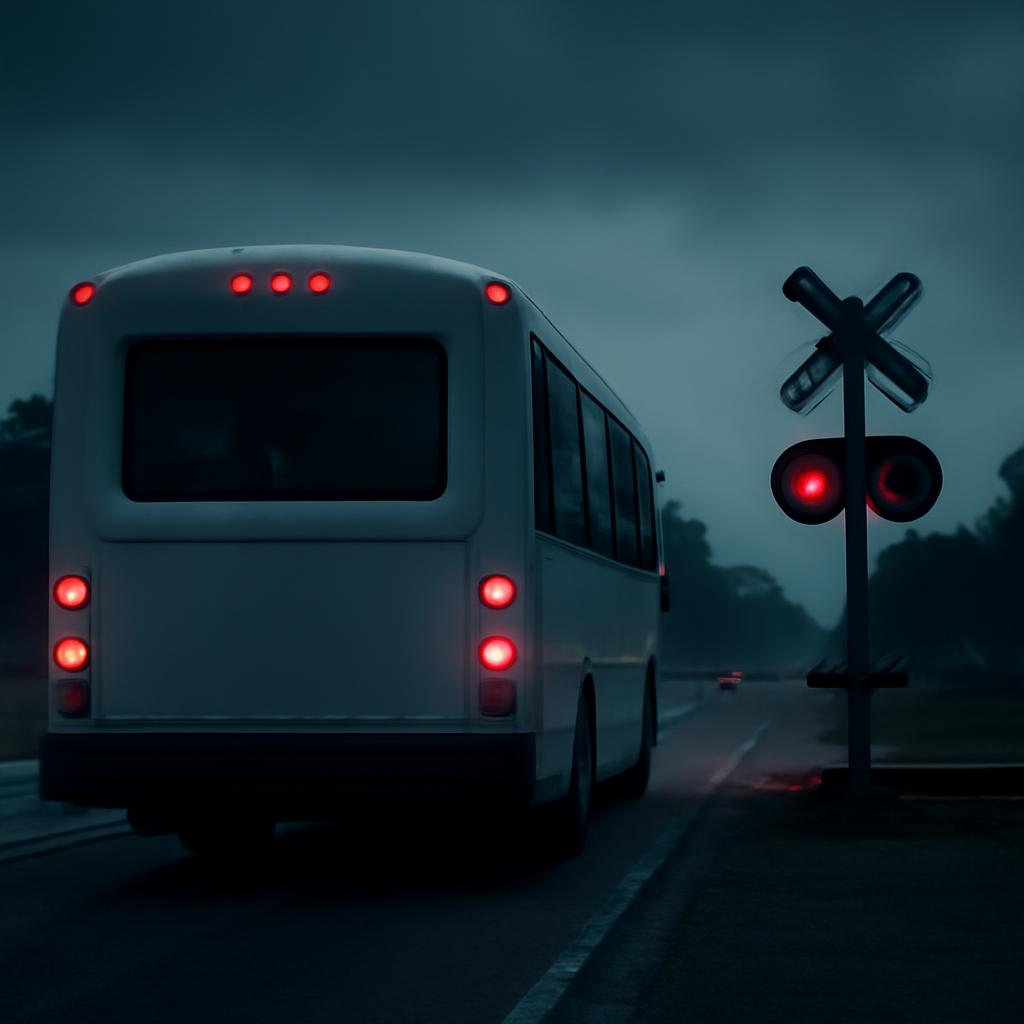
If you have ever sat behind a bus at a railroad crossing and wondered why it stops even when no train is visible, the short answer is this: for many buses—especially school buses—the stop is a deliberate safety check required by training, law, or both. The bus is supposed to stop before the rails, look and listen for trains, make sure there is room to clear the crossing, and then proceed only when it is safe. Operation Lifesaver’s school bus crossing guidance and the Michigan Legislature’s school bus railroad-crossing law describe that basic procedure in detail.
The important nuance is that the evidence is much stronger for school buses than for every kind of bus on the road. A trade report on an FMCSA rulemaking says current federal regulations require commercial motor vehicles transporting passengers or certain hazardous materials to stop before railroad crossings unless an exception applies, but many casual articles blur that into “all buses.” School Bus Fleet’s report on the FMCSA proposal supports the broader passenger-CMV point; the supplied evidence does not cleanly resolve every local transit-bus case.
What why do buses stop at the railroad tracks means
In practical terms, this topic usually refers to a bus driver approaching a highway-rail grade crossing, slowing down, stopping short of the tracks, and performing a check before crossing. It is not a random habit and it is not supposed to mean “stop on the tracks.” The standard training materials in the evidence say the stop should happen 15 to 50 feet from the nearest rail, where the driver has the best view, then the driver should look and listen for trains before moving. Operation Lifesaver’s safety tips and the Michigan Legislature’s statute for school buses both describe that distance and procedure.
It also means the driver is checking more than “Is there a train right in front of me?” A safe crossing decision includes whether signals are active, whether another track could hide a second train, whether bad weather or trees reduce sightlines, and whether the bus can fully clear the crossing without getting stuck in traffic on the far side. The training guide Safe Railroad Crossing Procedures for School Bus Drivers specifically stresses crossing type, sight distance, and “containment area” beyond the tracks, and Operation Lifesaver says the bus should not enter unless there is enough room to hold the entire bus plus additional space.
Another practical point: when people say “buses stop at railroad tracks,” they often mean school buses first, and sometimes charter or other passenger-carrying commercial vehicles second. The evidence does support that school buses generally stop at railroad crossings. It also supports that federal rules currently cover commercial motor vehicles transporting passengers unless an exception applies. But the evidence pack does not prove that every city bus in every jurisdiction follows identical rules, so it is better to avoid the blanket claim that “all buses everywhere must stop the same way.” School Bus Fleet’s summary of current federal regulations and proposed changes is the strongest supplied source for that distinction.
There is also a historical layer. Multiple secondary sources trace the practice to a 1938 Utah school bus–train collision, but they disagree on the exact death toll and some details. One bus-company article says 27 students and the driver died, a Florida bus-operator article says the driver and 24 students, and a Utah injury-law article says 23 students. See Rohrer’s article on why buses stop at railroads, Florida Transportation Systems’ article on school buses and railroad tracks, and Craig Swapp’s article on why bus drivers stop at railroad tracks. So the broad historical claim is plausible, but the exact body count and some specifics are not stable enough in this evidence to present as settled fact.
How why do buses stop at the railroad tracks works
From start to finish, the process works like a structured safety routine.
First, the driver begins preparing before the crossing. Operation Lifesaver says school bus drivers should slow down, test brakes, and activate four-way hazard lights about 200 feet before the crossing. The school bus crossing procedures guide PDF describes the same basic preparation. That early setup matters because it warns traffic behind the bus that a stop is coming.
Second, the driver positions the bus for the best possible view. The supplied safety guidance says the bus should stop no closer than 15 feet and no farther than 50 feet from the nearest rail. Operation Lifesaver’s instructions, the school bus procedures guide, and Michigan’s school bus law all use that range.
Third, the driver reduces noise inside the bus. The reason is simple: the driver is trying to hear a train horn, wheel noise, or other warning signs. Michigan law says the driver must turn off interior switches including fans, heaters, and radios, open the passenger door and driver-side window, and then look and listen in both directions. Operation Lifesaver gives essentially the same sequence.
Fourth, the driver evaluates the crossing itself. That means checking all tracks in both directions and checking the signals, not just glancing once and going. The training guide Safe Railroad Crossing Procedures for School Bus Drivers distinguishes among passive crossings with no gates or flashing lights, active crossings with lights or gates, and signal-controlled crossings tied into road traffic signals. At passive crossings, the burden on the driver is highest because the driver is the main decision-maker. At active crossings, the driver still has to confirm the crossing is safe rather than treating the hardware as infallible. Operation Lifesaver explicitly says to look and listen even with active signals.
Fifth, the driver checks the far side. This is easy for motorists to miss, but it is one of the most important parts. A bus should not enter the crossing if traffic, a red light, or a stop sign on the far side would leave the rear of the bus fouling the tracks. Operation Lifesaver’s guidance says the containment area beyond the rails must be large enough to hold the entire bus plus 15 feet. The school bus procedures guide teaches the same concept.
Finally, if everything is clear, the driver crosses decisively. The supplied training materials say to cross in low gear and not shift while traversing the tracks. Operation Lifesaver and Michigan law both say the bus should cross in a gear that does not require changing gears while on the crossing.
There are exceptions and special cases. For example, Michigan’s statute says a school bus need not stop when directed by a uniformed police officer or traffic-control signal, at certain inactive crossings, at some protected freeway or limited-access crossings when the warning devices are not activated, or where an approved EXEMPT sign is posted. And according to School Bus Fleet’s coverage of the FMCSA proposal, current federal rules already include some exceptions, such as a crossing controlled by a functioning highway traffic signal showing green.
One more special case is the emergency one. If a bus stalls or is trapped on the tracks, Operation Lifesaver’s school bus guidance says to evacuate immediately, move far away from the tracks, and move in the direction of the oncoming train to avoid debris from the impact point. That advice shows why the routine stop is taken so seriously: the consequences of getting trapped are extreme.
The main approaches
A useful way to compare “why buses stop at railroad tracks” is to look at the issue through four lenses: vehicle type, crossing type, legal framework, and route design.
1. Vehicle type: school bus versus other passenger buses
This is the biggest distinction most casual explanations skip. The strongest evidence in this pack is for school buses. Operation Lifesaver, the school bus procedures guide, School Bus Fleet’s general explainer, and Michigan’s school bus statute all clearly address school buses.
The evidence also supports a broader category under current federal regulation: School Bus Fleet’s FMCSA article says commercial motor vehicles that transport passengers or certain hazardous materials are currently required to stop at railroad tracks unless an exception applies. But because the evidence does not spell out every transit-bus scenario or local rule, the safest comparison is this: school bus rule is clear; “every bus” rule is not equally clear here.
2. Crossing type: passive, active, and signal-controlled
The next comparison is the crossing itself. The school bus procedures guide lays out three common types:
- Passive crossing: no active warning devices such as lights or gates.
- Active crossing: flashing red lights, bells, or gates.
- Signal-controlled crossing: coordinated with a road traffic signal.
At passive crossings, the stop-and-check logic is easiest to understand. The driver cannot rely on gates or bells because there may be none. At active crossings, the driver still has to confirm the crossing is safe, but modern hardware changes the risk picture. That is part of why this topic is still debated.
3. Legal framework: blanket stops versus targeted exceptions
A third comparison is whether the rule should be a simple blanket stop at nearly every crossing or a more tailored rule with exceptions. School bus training materials largely present a blanket-stop mindset because it is easy to remember and enforce. School Bus Fleet’s 2023 article says school buses are generally expected to stop at all railroad crossings, though regulations vary by area.
But state law can already be more nuanced. Michigan’s law includes exemptions for inactive tracks, police direction, certain freeway crossings, and posted EXEMPT signs. And at the federal level, the rule may change further: School Bus Fleet’s 2026 report on the FMCSA proposal says FMCSA proposed eliminating the stop requirement at crossings with active warning devices when those devices are not activated. That proposal is not the same as a final rule, but it shows regulators are weighing a more selective approach.
4. Route design: cross safely or avoid the crossing entirely
The fourth approach is not about what happens at the crossing; it is about whether the route should include the crossing at all. The supplied evidence includes training advice to plan routes for better sight distance at highway-rail crossings. Operation Lifesaver says route planning should maximize sight allowance at crossings. In practice, that means some operators may prefer routes with safer geometry or fewer grade crossings where feasible.
The tradeoff is obvious: route avoidance can reduce exposure, but it may add time, distance, or operating cost. A blanket crossing stop is operationally simpler. Route redesign is smarter in some cases, but it is not always available.
A practical process
If you want a usable way to think about this topic, use the following process.
Step 1: Identify what kind of bus you are talking about. If it is a yellow school bus, the evidence is strong: stopping before railroad crossings is a standard, formal safety procedure. Operation Lifesaver, School Bus Fleet, and Michigan’s statute all support that. If it is a coach, shuttle, or other passenger bus, do not assume the school-bus rule applies word for word; check the relevant state and federal rules for that vehicle class. School Bus Fleet’s FMCSA article supports the federal passenger-CMV angle but not every local detail.
Step 2: Understand what the stop is for. The stop is not just to spot an obvious train. It is also to improve hearing, improve sightlines, verify the warning devices, and make sure the bus can completely clear the rails. Operation Lifesaver’s crossing procedure and the school bus driver guide PDF both emphasize those points.
Step 3: If you are driving behind the bus, anticipate the stop early. A school bus may activate hazard lights and begin slowing well before the rails. Operation Lifesaver says roughly 200 feet in advance. Practically, that means give the bus room, do not crowd it, and do not assume the driver is hesitating for no reason.
Step 4: Focus on whether the bus stops before the rails, not on whether it stops at all. A normal, safe procedure is a stop before the tracks. If someone says “the bus stopped on the tracks,” that is a different and much more serious issue. The evidence-based procedure is clear on the proper location: 15 to 50 feet from the nearest rail. Operation Lifesaver and Michigan law both say so.
Step 5: Check local law when you need a definite answer. Because state rules vary, the right next step is often local verification, not internet folklore. A good example is Michigan’s school bus law, which gives the full procedure and the exemptions. A Florida operator article quotes that state’s 15-to-50-foot rule for certain vehicles, showing that similar details exist elsewhere even if the exact wording varies. See Florida Transportation Systems’ explainer.
Step 6: Separate current law from proposed changes. If you hear that buses may no longer have to stop at some crossings, that is not the same as saying the rule is already gone. School Bus Fleet’s report on the FMCSA proposal describes a proposal to add an exception for crossings with active warning devices that are not activated. A proposal matters, but it is not final just because it exists.
Step 7: Treat the historical story carefully. It is reasonable to say the modern practice is widely linked to a 1938 Utah school bus tragedy. It is not careful to repeat one exact death count as unquestioned fact from this evidence set, because the secondary sources disagree. Compare Rohrer, Florida Transportation Systems, and Craig Swapp.
That process gets most readers where they need to go: understand the reason, avoid overgeneralizing, and know when to check local rules.
Common mistakes and tradeoffs
The most common mistake is assuming this topic has one universal answer for every bus on every road. It does not. The evidence strongly supports the rule for school buses and also points to current federal requirements for passenger-carrying commercial motor vehicles, but it does not fully map every transit and local-operating case. School Bus Fleet’s federal-rule summary is a better guide than broad internet claims.
A second mistake is visual: people often describe the bus as stopping “at” or “on” the tracks. In proper procedure, the bus stops before the rails. That distinction matters. Operation Lifesaver and Michigan law are explicit about the 15-to-50-foot stopping point.
A third mistake is thinking gates, bells, and lights make the extra stop pointless. Modern warning systems do change the situation, and regulators are clearly reconsidering old blanket rules. But the training guidance in the evidence still says drivers should confirm safety themselves, because crossings can involve limited sightlines, multiple tracks, weather, traffic congestion beyond the rails, or other complications. Operation Lifesaver and the school bus driver procedures guide both reflect that cautious approach.
A fourth mistake is ignoring the “can I clear it?” question. Many people focus only on the train. Bus procedure also focuses on not entering unless there is enough room on the other side to clear the entire vehicle. Operation Lifesaver’s containment-area instruction is a good example of why the stop is more than a quick peek.
The biggest tradeoff is between train-collision prevention and rear-end crash risk. Blanket stops reduce the chance that a bus driver misses an approaching train, especially at passive or visually difficult crossings. But a mandatory stop can also surprise drivers behind the bus, particularly on faster roads with active protection already in place. In its proposal discussion, FMCSA cited data showing no school bus vehicle-rail collisions at crossings from 2016 to 2024 and also cited fatal rear-end crashes near actively controlled crossings from 2016 to 2023 as part of the case for rethinking the rule at some locations. That summary appears in School Bus Fleet’s 2026 coverage of the FMCSA proposal.
That does not prove the old rule is wrong. It shows the tradeoff has changed. A simple universal rule is easy to teach, easy to remember, and forgiving of rare but catastrophic failures. A more tailored rule may reduce unnecessary stops and rear-end risk, but it is more complex and depends more heavily on crossing equipment, roadway design, and driver judgment. State exemptions such as those in Michigan’s law suggest this balancing act is already happening in practice.
One final mistake is treating the 1938 story as more precise than the evidence allows. The historical narrative may well explain why the rule took hold, but the conflicting casualty counts in the supplied sources mean it should be used as background, not as a perfectly settled statistic. Again, compare Rohrer, Florida Transportation Systems, and Craig Swapp.
How to choose the next step
A sound next step depends on who you are.
If you are an everyday driver or passenger who just wanted the plain-English answer, the practical takeaway is: the stop is a safety procedure, and for school buses it is usually expected and often legally required. The right next step is simply to expect it, leave room, and not pressure the bus at the crossing. Operation Lifesaver’s school bus guidance explains the procedure those drivers are following.
If you are a parent, school staff member, or anyone responsible for student transport, your next step is to check the actual state and district rules that apply to your route. The most useful questions are: Does state law require a stop at this type of crossing? Are there exemptions for inactive or clearly protected crossings? Does the route include crossings with poor sight distance or poor containment space? Michigan’s statute shows how specific those answers can get, and School Bus Fleet’s 2023 overview is a reminder that local variation exists.
If you are evaluating a non-school passenger bus situation, your next step is caution against overgeneralization. Start with the federal current-rule framework for passenger-carrying commercial motor vehicles, then confirm state and operator-specific requirements. School Bus Fleet’s FMCSA article is the key supplied source for that broader federal point.
If your real concern is a specific crossing, shift the question from “Why do buses stop here?” to “What makes this crossing hard?” Look at whether the crossing is passive or active, whether weather or curves reduce visibility, and whether traffic backs up beyond the rails. The school bus procedures guide and Operation Lifesaver both show why those details matter.
So the concrete next step is simple: identify the bus category, identify the crossing type, and verify the local rule before drawing broad conclusions. That is the safest way to understand why buses stop at railroad tracks without repeating myths or flattening important legal differences.
What should a beginner know about why do buses stop at the railroad tracks?
A beginner should know three things. First, the strongest evidence is about school buses, not every bus on the road. Second, the bus is supposed to stop before the rails, usually in the 15-to-50-foot range, not on them. Third, the stop is meant to let the driver look, listen, verify signals, and make sure there is enough room to clear the crossing. Operation Lifesaver’s school bus guidance, the school bus driver procedures guide, and Michigan’s school bus law support those basics.
What are the main risks of why do buses stop at the railroad tracks?
The obvious risk is a bus-train collision, which is why the crossing procedure exists in the first place. But there are other risks too: poor sightlines, multiple tracks, bad weather, traffic congestion beyond the crossing, and the possibility of a bus entering when it cannot fully clear the rails. Operation Lifesaver and the school bus procedures guide describe those hazards. There is also a tradeoff risk: mandatory stops at active crossings can increase the chance of rear-end crashes from following traffic, which is one reason FMCSA has considered a rule change. School Bus Fleet’s report on the proposal covers that debate.
How do you evaluate why do buses stop at the railroad tracks options?
Evaluate the issue by comparing vehicle type, crossing type, and jurisdiction. Ask: Is this a school bus or another passenger vehicle? Is the crossing passive, active, or signal-controlled? Does state law require a stop here, and are there exemptions? The school bus procedures guide is useful for crossing types; Michigan’s law is useful for seeing how specific state rules can be; and School Bus Fleet’s federal-rule article is useful for understanding the current and possibly changing federal framework. In short: do not evaluate the question as one-size-fits-all.
Sources
- Third Party · Safety Tips for School Bus Drivers | Operation Lifesaver
- Third Party · Safe Railroad Crossing Procedures for School Bus Drivers
- Third Party · MCL - Section 257.1857 - Michigan Legislature
- Third Party · No Train, No Stop? FMCSA Considers Rule Change for School Buses | School Bus Fleet
- Third Party · Wheels of Wisdom: When Should School Buses Stop at Railroad Crossings? | School Bus Fleet
- Third Party · Why Does a School Bus Stop at Railroad Tracks? - Florida Transportation Systems, Inc.
- Third Party · Why Do Buses Stop at Railroads? - Rohrer
- Third Party · Why Bus Drivers Stop at Railroad Tracks