
Pack Light, Craft Smart: Fun Camping Activities to Fill Downtime on Your Next Scenic Drive
Skip hauling 20 crafts for a four-night trip. Pick portable ideas for kids or adults, then plan around weather, energy, cleanup and campsite rules.
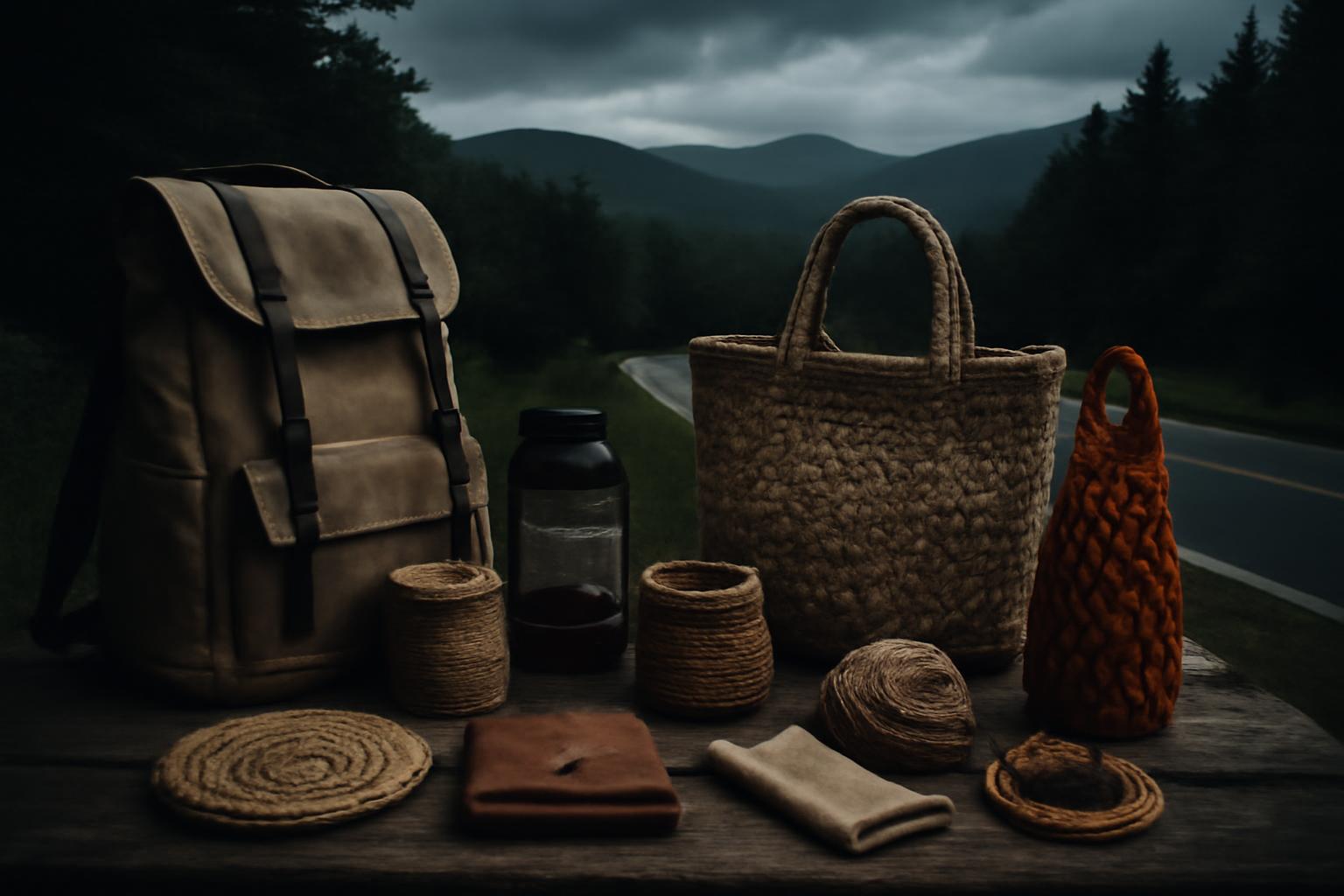
Pack light, craft smart.
On a scenic drive, the road is the attraction—but campsites and pull-offs still come with quiet pockets of time. Dinner ends. Sunset is not here yet. The kids are too tired to hike and not tired enough to sleep. That is the sweet spot for camping crafts.
This guide keeps the focus where searchers want it: on simple, portable DIY ideas. The route facts here come from Road Listings’ driving coverage of the 469-mile Blue Ridge Parkway and the 540-mile Las Vegas-to-Twin Falls stretch of US-93. The craft ideas themselves come from published tutorials and roundup articles about camping and nature crafts. In other words, the roads help you plan the setting; the craft sources supply the projects.
The best road-trip camping crafts share a few traits:
- they pack flat or in a small pouch
- they do not depend on outlets or screens
- they work on a picnic table, in an RV dinette, or under a shelter
- they do not turn cleanup into the evening’s main event
Below, you will find 25+ source-informed camping craft ideas, plus a compact packing system, route-aware safety notes, and quick ways to match projects to weather, age, and energy level.
Why Add Camping Crafts to Your Road Trip Itinerary
Camping crafts are not there to replace hiking, campfire time, or the drive itself. They are there to solve a smaller, more realistic problem: low-energy downtime.
That matters on scenic routes. The Blue Ridge Parkway may be 469 miles, but Road Listings notes that real-world pacing is much slower than the raw mileage suggests. With curves, overlooks, and stops, many travelers take 3 to 6 days rather than trying to rush it. The same goes for US-93 from Las Vegas to Twin Falls, a 540-mile drive through high desert, canyon country, and long service gaps. It can be driven in a day, but the route works better when you accept the pauses: fuel stops, weather delays, early campground arrivals, or windblown evenings when nobody wants another major activity.
That is where crafts help. They give families something small and satisfying to do without asking for much setup.
They also fit the same space-conscious packing philosophy that good road-trip gear does. Road Listings’ route and gear coverage emphasizes practical trunk space: prioritize the vehicle basics, then add only the comforts that earn their keep. A slim craft pouch can fit alongside the real essentials—such as a tire inflator, jumper cables or a jump starter, water, a flashlight, and a basic tool kit—far more easily than bulky entertainment bins or power-hungry gadgets.
Nature-based projects are especially good on scenic drives because the route itself becomes the prompt. A leaf rubbing feels different when it follows a walk near Mabry Mill at milepost 176.2 or Craggy Gardens at milepost 364.6 on the Blue Ridge Parkway. A rock doodle or travel-journal page feels more specific after a stop near the Perrine Bridge, which Road Listings notes stands 486 feet above Snake River Canyon. You do not have to collect anything from those places to use them creatively. Often the best version is simply to observe, sketch, match colors, or make a paper version inspired by what you saw.
If you want the article’s promise in countable form, here are the kinds of ideas that follow:
- Paper crafts: handprint campfire, smiley s’more, construction-paper campfire, roll-a-s’more sheet, paper tent craft
- Nature crafts: leaf rubbings, nature bracelet, nature collage, painted rocks, rock tic-tac-toe, story stones, stick mobile, fairy house, journey stick
- Glow crafts: mini tealight lantern, water bottle lantern, leaf lantern, glowing campfire, recycled lantern variation
- 3D campsite builds: popsicle stick tent, paper straw trees, pinecone critters, flower crown, camp story sticks
- Contained kits and adult-friendly options: rock kits, bird house kits, bracelet kits, paracord, art journaling, sketching, knitting, crochet, embroidery, whittling
The best of them also avoid two classic campsite annoyances:
- No power required
- No miserable cleanup
That is why simple paper scenes, leaf rubbings, story stones, and battery-lit lantern projects work so well. They feel like camp without requiring a real fire, a lot of water, or a whole second layer of packing.
Essential Packing for Road Trip Camping Crafts
A good camping-craft setup should look more like a small travel system than a school-supply explosion.
Start with a reusable core kit:
- crayons or colored pencils
- glue stick
- small bottle of white glue
- blunt-tip scissors
- string or yarn
- masking tape
- black marker
- card stock or sturdy paper
- a few resealable bags
- one or two paint options only if you know you will use them
For storage, a compartment caddy or lidded organizer is useful. One commonly cited craft-storage example is advertised as holding up to 40 pounds and having dishwasher-safe containers. You do not need that exact product. The practical takeaway is simpler: separate compartments, secure lids, and something easy to wipe or wash.
The packing system matters as much as the supplies. The easiest approach is:
-
Keep shared basics together. Crayons, scissors, tape, glue, and string should live in one central container.
-
Build project bags. Put each activity’s extras in its own resealable bag: one for paper campfire pieces, one for lantern supplies, one for rock projects, one for bracelet tape and papers.
-
Bring a table layer. A drop cloth, craft mat, or even a flattened trash bag makes rough campground tables more usable.
-
Carry empty resealable bags. Open supplies spread fast in vehicles. A spare bag solves a lot of mess.
-
Pack wipes and paper towels before extra paint. Cleanup supplies usually matter more than more craft choices.
Water belongs in this conversation too, but in the right order. Road Listings notes that water weighs about 8.3 pounds per gallon and recommends at least half a gallon per person for a car breakdown in moderate temperatures, with more in hotter conditions and double that in desert heat. For camping crafts, that means you should plan for minimal-water cleanup: wipes, a small rinse bottle, and paper towels instead of a big wash tub.
Just as important, craft packing never outranks vehicle prep.
Before a long trip, Road Listings recommends starting with:
- checking tire pressure when the tires are cold
- inspecting tread with the quarter test; if the top of Washington’s head is visible, tread is about 4/32 inch and borderline
- checking fluids
- testing an aging battery if it has shown slow starts
That hierarchy matters. If trunk space gets tight, the tire inflator wins over extra paint every time.
For route planning, offline access is worth more than bulky craft gear. On US-93, Road Listings warns that cell coverage drops out for long stretches, especially in Nevada. Download the route, campground directions, and park maps before leaving the last reliable town. If you use Road Listings while planning, its privacy policy says it does not use tracking cookies for advertising.
A final practical filter: do not pack twenty crafts for a four-night trip. Pack one common kit plus two or three project bags. That gives you options without turning the back of the car into a rolling craft closet.
Handprint Campfires and Smiley S’mores: Paper-Based Classics
Paper crafts earn their place because they pack flat, start fast, and keep the camping theme even when rain, wind, or fire restrictions get in the way.
Here are the strongest paper-first ideas.
1. Handprint Campfire This is one of the best-known camp-themed crafts for kids. Published supply lists use:
- white paper or card stock
- red, orange, and brown paint
- a sponge applicator or paintbrush
- a paper straw
- cotton balls
The basic method is simple: use painted handprints to build the flames and logs, then add a straw with cotton-ball “marshmallows” if you want the full campfire scene. It is easy to scale by age. Younger kids can make the prints; older kids can add a night sky, tents, or more detail around it.
Best use: a settled campsite table with adult supervision Mess level: medium because of paint Packing note: keep wipes close and protect the table surface
2. Smiley S’more This one turns the camping icon into a collage. Common supply lists include:
- card stock
- sandpaper
- brown paper
- cotton balls
- googly eyes
- glue
The sandpaper becomes the graham cracker texture, the brown paper becomes chocolate, and cotton forms the marshmallow. Add eyes and a smile, and it becomes a very kid-friendly keepsake.
Best use: rainy evenings, cabins, shelters, RV tables Mess level: low Packing note: pre-cutting paper pieces makes this much easier on the road
3. Campfire-and-S’more Scene You do not need a separate tutorial to turn the first two projects into a bigger scene. A simple way to make them feel more finished is to place the handprint campfire in the center and add the smiley s’more nearby, then let kids draw a tent, stars, or trees around them.
That works especially well over multiple nights. One stop can produce the campfire; another can add the s’more; a third can finish the background.
4. Construction-Paper Campfire Broader camping-craft roundups also include construction-paper versions of campfire crafts. These are useful when you want the same theme without wet paint. Instead of handprints, kids assemble flames and logs from cut paper shapes.
Best use: windy or damp conditions where paint is a headache Mess level: low
5. Toilet-Paper-Tube Campfire Camping-craft lists also include campfire versions made from cardboard tubes and paper. This is a handy way to reuse a common household item and still keep the project lightweight.
Best use: before the trip if you want to save tubes at home Mess level: low to medium depending on glue
6. Roll-a-S’more Sheets or Similar Paper Games Camping-craft lists sometimes blur into printable activities, but for road trips that is not a bad thing. A roll-a-s’more sheet or comparable camp-themed paper game can work when attention spans are short and you want something flatter than a full craft.
Best use: picnic shelters, quick campground downtime Mess level: very low
7. Paper Tent Craft Published camping-craft roundups also include paper tent crafts. These fit well after campfire or s’more projects because they let kids keep building a campsite theme without adding much bulk to the kit.
Best use: pairing with other flat paper crafts Mess level: low
Why do paper classics work so well on scenic drives? Because they are adaptable. After a long US-93 leg, especially one with heat or wind, a paper s’more or campfire page asks very little of tired kids and even less of tired adults. After a damp Blue Ridge Parkway afternoon, they still work under a shelter while painted rocks may never fully dry.
Nature Sourced: Leaf Rubbings, Rock Art, and Stick Builds
Nature crafts are often the most memorable because they connect directly to the trip. They are also the category that needs the most careful judgment.
The safest default is this: assume collection is restricted unless rules clearly allow it. Use found items lightly, favor already fallen materials, and when in doubt, use brought-from-home rocks, paper leaves, popsicle sticks, or photos and sketches instead. Park or site regulations always override craft plans.
With that in mind, these are the most practical nature-based options.
8. Leaf Rubbings This is the classic low-prep camping craft.
How to do it:
- Place a leaf vein-side up on a flat surface.
- Lay paper over it.
- Rub sideways with a crayon.
The leaf pattern appears almost immediately. That fast payoff is why leaf rubbings work so well for younger kids or tired kids. They also combine easily into a later collage or journal page.
If you are on the Blue Ridge Parkway, spots such as Mabry Mill or Craggy Gardens are strong visual prompts—but do not assume collecting is allowed. Fallen leaves are the safest starting point if rules permit handling them at all. If rules are unclear, sketch the leaf shape or photograph it instead.
9. Nature Bracelet This one comes from simple outdoor-craft instructions: wrap a piece of wide tape loosely around a child’s wrist with the sticky side facing out, then add tiny found items as you walk.
Because it starts with the walk itself, it is good for scenic pull-offs and short trails. It also keeps the collected material small and temporary.
Conservative version: use only tiny, already-fallen items where allowed No-collection version: attach brought-from-home paper leaves, ribbon bits, or color-coded tabs based on what you saw
10. Nature Collage Nature-art roundups frequently include collages made from card stock, glue, and collected natural items. This works best if you treat it as a minimal-contact craft: one or two tiny leaves, a grass blade, maybe a small fallen petal where allowed—not a big bag of gathered materials.
Best use: after a short walk when kids want to turn what they noticed into one page
11. Painted Rocks Rock art shows up in almost every camping-craft roundup because it is flexible. A stone can become a bug, a face, a geometric pattern, or a travel souvenir.
A low-mess version uses paint pens or simple acrylic dots. Some sources suggest hot-gluing rocks together into critters. That can work, but it is much better as a base-camp project than as a quick roadside stop.
Important caution: collection rules vary a lot. The easiest low-impact solution is often to bring your own small rocks from home or use a kit.
12. Rock Tic-Tac-Toe A travel-friendly variation is to paint two matching sets of rocks and use a foldable board or a piece of sturdy card stock as the playing surface. Camping craft sources specifically note this as a good way to keep kids occupied outdoors without screens.
Best use: repeated use over several nights Mess level: low once rocks are dry
13. Story Stones Story stones are painted or drawn stones with simple symbols: a tent, moon, fish, tree, mountain, or marshmallow. Pull a few at night and use them as storytelling prompts.
This is one of the best mixed-age crafts because the making is simple and the use continues after the paint dries.
14. Kindness Rocks Camping and outdoor craft roundups often include kindness rocks. They scale well for siblings or campground friends because each person can make one without needing much instruction.
The best leave-no-trace approach is not to leave them in natural areas. Take them home, give them directly to someone, or keep them as trip mementos.
15. Stick Mobile Nature-craft sources include simple mobiles made from sticks and twine or yarn. A sturdy central stick becomes the top bar; smaller pieces hang below.
Best use: a slower campsite evening Packing note: yarn weighs very little and goes a long way
16. Stick Tent Frame or Mini Structure Sticks can also become a tiny tent frame, picture frame, or other mini structure. If collection is not appropriate, use popsicle sticks instead. They are easier to size, easier to glue, and much easier to pack.
17. Fairy House Nature-art roundups include fairy houses built from found campsite materials. One source notes that the creator’s example lasted about three days, which is a useful expectation. These are usually temporary trip projects, not permanent decor.
That is part of the appeal: they belong to the stop.
18. Journey Stick A journey stick records a walk by tying on small visual markers as you go. If collecting is restricted, you can adapt the idea: bring ribbon colors from home and assign them to what you saw—blue for water, gray for rock, yellow for flowers, dark green for conifers.
That makes this one of the most adaptable scenic-drive crafts in the whole list.
Portable Lanterns and Glow Crafts for Nighttime Camps
Nighttime projects work best when they are decorative first and safe second. They can add atmosphere and help children feel involved in the campsite, but they should never replace your real flashlight or lantern.
Across the better sources, the rule is consistent: use battery-operated lights only.
19. Mini Tealight Lanterns One of the more ambitious lantern crafts uses:
- projector film or clear plastic
- permanent markers
- a tealight
- tape
- yarn
- sometimes colored paper and a hole punch
Kids decorate the clear sides, then the lantern glows when the light goes inside. The same source that shares the idea describes the assembly as a little tricky, so this is better for older kids, teens, or an adult-child team.
Best use: a calmer evening when you have table space Safety note: LED tealight only
20. Water Bottle Lanterns This is one of the most road-trip-friendly lanterns because it uses a recycled bottle. Typical versions use:
- an empty water bottle
- tissue paper
- glue or tape
- an LED tea light
It is compact, uses a material you may already have, and can be packed with supplies inside the empty bottle until you are ready to make it.
Best use: second or third day of a trip after you already have an empty bottle Mess level: low to medium depending on glue
21. Leaf Lanterns Nature-craft instructions for leaf lanterns call for:
- colorful leaves
- a hole punch
- tape
- a jar or bottle
- a battery-operated tea light
The effect is good for how simple the project is. Kids arrange leaves around the outside, punch holes if desired, and set a battery light inside.
Again, do not assume collecting is allowed. Paper leaves traced from observed shapes are a very good substitute when rules are unclear.
22. Glowing Campfire Craft Camping-craft roundups also include faux glowing campfires made from a plastic container and tissue paper to create a lit-from-within flame effect.
This is especially appealing on very hot evenings. Road Listings notes that the Las Vegas-to-Caliente section of US-93 regularly exceeds 105°F in summer, which is exactly the sort of setting where families may want campfire atmosphere without actual heat.
23. Recycled DIY Lantern Variation A separate DIY lantern idea uses a plastic tea light with recyclable materials, parchment, and tissue paper. It fills the same niche as the water bottle version but gives you another way to reuse light household materials.
24. Flameless Lanterns Camping-craft roundups also feature flameless lantern ideas more broadly. Even without a single standard tutorial, the category is useful: translucent sides, battery light inside, simple handle, minimal heat, no fire risk.
That is the right mindset for any campsite craft lighting.
3D Tents, Trees, and Animals: Build Your Campsite Scene
Once kids make one paper campfire or a handful of rocks, they often want to build a whole little world around it. This section is where flat craft pieces turn into a miniature campsite.
25. Popsicle Stick Tents Published supply lists for popsicle stick tents include:
- popsicle sticks
- hot glue or white glue
- colorful paper
- scissors
- optional paper flags
These work because the shape reads instantly as “camping.” White glue is slower but easier for most family campsites. Hot glue is faster, but it is an adult tool.
Best use: picnic table or RV dinette with time to let it set Safety note: adult supervision if hot glue is involved
26. Paper Straw Trees Paper straw trees are light to pack and easy to add to a campsite diorama. Shared supply lists include:
- green paper straws
- brown paper
- green paper
- glue
- scissors
They are a good answer when kids want to “fill in” the scene around a tent or campfire without making the project much messier.
27. Pinecone Critters Nature-craft sources include pinecone animals made from:
- pinecones
- acorns
- optional felt, buttons, or googly eyes
Owls are especially common, but the basic idea is wider than that. A pinecone already suggests an animal body, so the project does not require much imagination to get started.
Important caution: only use natural items where collection is clearly allowed.
28. Pinecone Owls This is the specific pinecone-animal version that appears repeatedly in camping-craft roundups. If you have a wooded stop and legal, fallen pinecones available, it is an easy on-theme option.
29. Nature Crowns or Flower Crowns Nature-craft guidance specifically warns to use only non-poisonous flowers, leaves, or berries. That warning matters more than the craft itself. A beautiful roadside plant is not automatically safe to handle or pick.
This is especially relevant in varied mountain and foothill terrain such as the Ruby Mountains area on the Ely-to-Wells section of US-93. If there is any doubt about safety or permission, make a paper crown inspired by the landscape instead.
30. Camp Story Sticks Camping-craft roundups also include camp story sticks—small sticks decorated or labeled to support pretend play and storytelling. They fit nicely with story stones or journey sticks and can become part of the mini campsite scene.
At this point, a child can build a whole little setup from a handful of low-bulk supplies: one tent, a few trees, one campfire page, a lantern, and a couple of critters. That is exactly the kind of open-ended play a road trip benefits from.
Kits and Adult-Friendly Options for Longer Trips
Not every family wants to improvise with leaves and tape at every stop. Sometimes a contained kit is the smarter choice, especially when the weather is bad, the table is shared, or you want something predictable.
31. Rock Painting Kits This is the clearest kit example. One roundup specifically mentions the National Geographic River Rock Painting Kit, which includes 15 rocks. A second glow-in-the-dark option includes 12 rocks.
The practical value is straightforward:
- no need to collect stones on site
- the activity stays contained
- you get a built-in supply limit
That last point is more useful than it sounds. A kit can stop a “let’s bring every art supply we own” packing spiral before it starts.
32. Wooden Bird House Kits Camping-kit roundups also include DIY wooden bird house kits. These are a little more summer-camp in feel than roadside-downtime in feel, but they can work well on longer trips or rainy rest days when you have table space.
33. Friendship Bracelet Kits Bracelet kits are another contained option. Published recommendations group some of these around the 7-to-12 age range, which makes sense in practice: younger kids may enjoy choosing colors, but older kids are more likely to finish the patterns.
34. Paracord Projects Paracord sits in a useful middle ground between camping gear and craft material. Outdoor craft roundups and travel-craft lists mention it for bracelets, while camping-kit coverage notes that paracord is also a practical camping item, such as for a clothesline.
That makes it one of the few materials that genuinely earns dual-purpose status. Just keep expectations realistic: it is more fiddly than paper crafts and better for older kids, teens, or adults.
Those are the most obvious kit-style options. Longer trips also make room for adult-friendly crafts that stay small and travel well.
35. Art Journaling Travel-craft lists specifically recommend art journaling for road trips and camping. It is one of the best adult choices because it can hold almost anything: a quick sketch, a written memory, a ticket stub, a leaf rubbing, or a color note about the sky.
36. Sketching A small sketchbook and a pencil pouch are hard to beat for scenic drives. Sketching is light, quiet, and flexible, whether you are looking at a Blue Ridge overlook or a wide US-93 basin.
37. Small-Format Painting Travel-craft lists suggest smaller canvases, art pads, or wood cutouts rather than big painting setups. That is the right scale for camping too.
38. Knitting Small Items Knitting is specifically recommended in travel-craft coverage for small projects like hats and scarves. The portability is the point.
39. Crochet Crochet is similarly portable: yarn and a hook fit easily into a bag. It is one of the easiest adult hobbies to keep going on a road trip without needing a dedicated workspace.
40. Embroidery or Cross-Stitch Small embroidery projects travel well and stay tidy. For adults who want a calm camp chair activity rather than a family table craft, this is a strong choice.
41. Whittling Travel-craft lists and adult camping-craft suggestions both mention whittling. It is very portable and very tool-dependent. That means it belongs squarely in the adult category and only where campsite conditions, safety, and local rules make it appropriate.
The overarching rule for all kits and adult projects is the same as for kid crafts: pack out everything—scraps, backing paper, broken string, packaging, and half-finished pieces.
Safety, Cleanup, and Route-Specific Tips
Camping crafts should make a stop easier, not riskier.
Start with the obvious tools. Adult supervision is warranted for:
- hot glue
- sharp scissors
- permanent markers
- pocket knives
- acrylic paints
- battery lights placed inside containers
For lighting, stick to battery-operated lights only. Multiple craft sources specifically recommend battery tea lights. Decorative lanterns are not a loophole around normal campsite fire safety.
Environmental caution matters just as much. For any project that uses natural materials:
- assume collection is restricted unless rules clearly allow it
- favor fallen materials over picked ones
- use only non-poisonous flowers, leaves, or berries
- do not damage habitat to improve the craft
- pack out every added material, including tape, glue, yarn, paint containers, and wrappers
Cleanup deserves actual planning. Road Listings is useful here not as a craft authority, but as a reminder that water on a road trip is first a safety reserve. If you are on a route like US-93, that matters even more. In summer, Road Listings recommends carrying at least two gallons of water per person on the hotter parts of the route. That is not craft water. That is breakdown and heat-safety water.
So the smart cleanup system is small:
- baby wipes or wet wipes
- paper towels
- one small rinse bottle
- a trash bag
- resealable bags for messy leftovers
The route itself also changes what counts as a good craft.
On US-93, Road Listings warns that:
- spring snow is possible near Ely
- the Ely area can ice overnight in spring
- the Las Vegas-to-Caliente segment can exceed 105°F in summer
- rural Nevada has intermittent cell coverage and long gaps between services
That means paper scenes, journals, story stones, and pre-packed kits are usually better bets than wet paint or scavenger-hunt style projects when the weather turns or the stop is short.
On the Blue Ridge Parkway, the usual practical issues are different: damp air, mountain weather, and the fact that the drive invites frequent scenic stops. Painted items may take longer to dry than you expect, and a shelter-friendly backup project is worth having.
A simple storage routine prevents most problems:
- protect the surface
- make the craft
- let wet items dry fully
- return tools to the caddy right away
- isolate tacky items in a drying bag or tray
That last step matters more than people think. It is how you avoid waking up to one glued-together lump of paper, tissue, and yarn.
Themed Bundles: Rainy Days vs. Sunny Hikes
If you pack only loose supplies, you spend downtime deciding what to do. If you pack bundles by weather and energy level, you can start quickly.
Here are the most useful groupings.
Rainy-day bundle
Pack projects that work seated, sheltered, and with minimal drying drama:
- smiley s’mores
- handprint campfire pages if you can manage the paint
- construction-paper campfires
- roll-a-s’more sheets or similar camp printables
- paper tent crafts
- toilet-paper-roll or tube binocular crafts from camping-craft roundups
- simple collage scenes
This is the bundle that earns its space on the Blue Ridge Parkway, where changing mountain weather can turn an outdoor plan into a picnic-shelter plan fast.
Sunny-hike bundle
Pack crafts that begin with observation and use the walk itself as part of the activity:
- nature bracelets
- leaf rubbings
- journey sticks
- quick sketch cards
- a small notebook for color matching or shape tracing
This bundle works especially well on scenic drives because it does not ask you to choose between “hike time” and “craft time.” The walk feeds the craft.
Night bundle
Once it gets dark, switch to calm, contained projects:
- mini tealight lanterns
- water bottle lanterns
- leaf lanterns
- glowing campfire decorations
- story stones
- pre-painted glow-style rock projects from kits
This is a good fit for hot-weather desert stops too. After a high-heat US-93 day, a battery-lit lantern or story-stone session often feels better than anything messy or active.
Group-scalable bundle
If cousins, campground friends, or another family are involved, choose crafts that can scale without turning chaotic:
- kindness rocks
- rock tic-tac-toe sets
- leaf-rubbing collages
- story stones
- simple bracelet stations
- paper campsite scenes
These are the projects where different ages can work side by side without everyone needing the exact same skill level.
Matching the bundle to the route
This is where the road context actually helps rather than distracts.
- Blue Ridge Parkway: plan for damp tables, short scenic walks, and leafy visual inspiration
- US-93: plan for heat, wind, sparse services, and stops where you may only want a short, contained activity
That is the real value of camping crafts on a scenic drive. They are flexible enough to meet the route where it is.
What are the safest camping crafts for toddlers on road trips?
For toddlers, the safest camping crafts are usually the ones built around rubbing, pressing, and sticking rather than cutting, hot glue, or tiny embellishments.
Good choices include:
- leaf rubbings with large crayons
- simple handprint campfires with close adult help
- paper collages with pre-cut or pre-torn pieces
- very simple camp-themed paper crafts
Use extra caution with googly eyes, small rocks, permanent markers, sharp scissors, and hot glue. A useful rule is that the adult should handle the risky setup while the child does the fun part.
How to pack craft supplies without overloading like road trip gear?
Use the same logic you would use for the rest of the car: pack for real use, not for every possible scenario.
A compact system works best:
- one small caddy or pouch for shared basics
- two or three separate project bags
- a table cover
- wipes, paper towels, and resealable bags
Keep the priorities straight. Road Listings’ gear advice is clear that long-trip basics like tires, water, battery condition, and roadside gear come first. Crafts should fit around that, not compete with it.
Are there leave-no-trace nature crafts for parkway stops?
Yes, but the best leave-no-trace version is usually the one with minimal or temporary contact with the landscape.
The safest options are:
- leaf rubbings using already fallen leaves where rules allow
- sketching or journaling based on what you saw
- nature-inspired paper crafts made from observation rather than collection
- journey sticks adapted with brought-from-home ribbons instead of gathered items
At Blue Ridge Parkway stops such as Mabry Mill or Craggy Gardens, check site rules first. If rules are unclear, take the conservative approach: observe, sketch, photograph, trace, or color-match rather than gather.
What quick 10-min crafts for US-93 fuel stops?
If you only have a short stop on US-93, choose crafts that are dry, simple, and easy to start fast.
The best candidates are:
- leaf rubbings if paper and crayons are already out
- nature bracelets made with wide tape
- story stones with a marker or paint pen if you brought the stones
- quick sketch prompts
- a short group storytelling round built from a few drawn symbols
That is especially sensible at practical stops such as Searchlight, Caliente, Ely, or Wells, where the point is to break the drive, not set up a full craft station.
Can adults enjoy these on longer drives?
Absolutely.
Adult-friendly camping crafts usually look a little different from the classic kid campfire-and-s’more projects, but they fit the same travel rules: small, portable, low mess.
Strong options include:
- art journaling
- sketching
- small-format painting
- knitting
- crochet
- embroidery
- whittling
- paracord projects
- rock painting kits
For mixed-age trips, rock painting, story stones, and collaborative campsite scenes work especially well because adults can join without feeling like they are only supervising.
A scenic drive does not need nonstop motion to feel full. Sometimes the most memorable part of the day is the short stretch after dinner, when the route is quiet, the table is finally clear, and a simple project turns waiting time into part of the trip. Pack lightly, keep the rules and the weather in mind, and let the road shape the prompt—not the other way around.