
NYC to Niagara Falls: Plan a Full Travel Day Each Way
Plan the NYC to Niagara Falls drive with realistic timing, interstate routes, sensible breaks, parking, winter checks and optional Canada access.
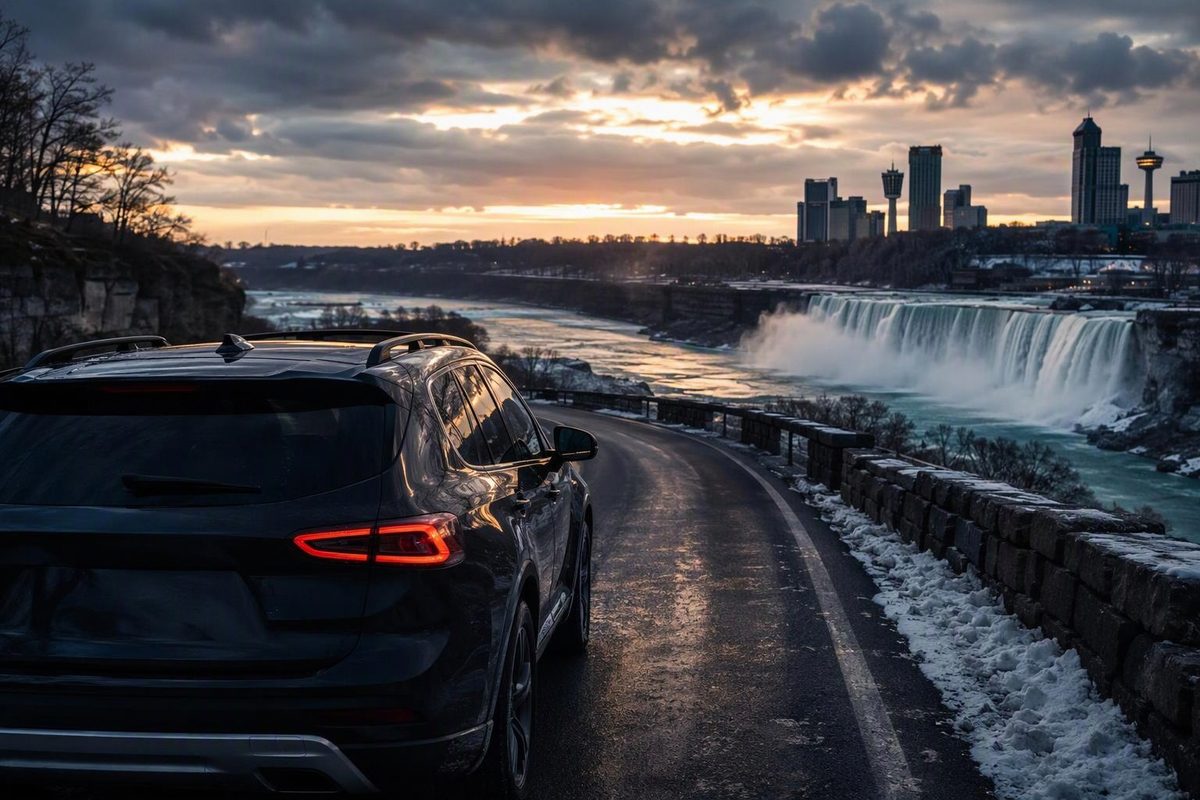
Allow a full travel day each way, and preferably three days with two nights at the falls. A same-day return means roughly 14–17 hours behind the wheel before sightseeing or breaks. If you have only one day, choose a closer NYC day trip.
Drive at a glance
| Planning item | Allowance |
|---|---|
| Destination | Niagara Falls State Park, New York—not Niagara Falls, Ontario |
| Distance | Roughly 400 miles by shorter routes; an Albany sightseeing itinerary can run about 460–475 miles |
| Driving time | Budget 7–8.5 hours each way in ordinary conditions |
| Full travel day | Allow 8.5–10.5 hours with breaks, traffic margin and parking; longer with sightseeing |
| Break plan | Two or three stops; combine a meal and fuel where practical |
| Recommended trip | Three days, two nights |
| Seasonal constraint | Winter weather can override the schedule; park attractions have separate operating seasons |
Destination Niagara USA puts the city-to-city trip at approximately 400 miles and seven hours. SIXT’s longer itinerary, with stops in New Paltz, Albany, Syracuse and Buffalo, gives approximately 460–475 miles. Your borough, river crossing and chosen stops change the total; the allowances above are planning ranges, not a live traffic estimate.
Choose the corridor before choosing stops
Interstate route through Pennsylvania and Syracuse
For a straightforward drive, compare this corridor in your navigation app:
NYC → I-80 west → I-380 north → I-81 north through Scranton and Binghamton → Syracuse → I-90 west → I-290 west → I-190 north → Niagara Falls.
The city exit depends on your starting address. Around Syracuse, follow navigation for the connection to I-90 rather than treating this list as turn-by-turn directions. A regional car-service operator describes this corridor as its simple, no-sightseeing option. (Route overview)
Coming from the east, the park’s directions use I-90 to I-290 to I-190 north, crossing Grand Island, then Exit 21 toward Niagara Scenic Parkway. Those Grand Island bridges are domestic crossings: they do not take you into Canada. (Park driving directions)
Southern Tier route for a Corning stop
If you want to visit Corning, compare the alternative that turns west at Binghamton along NY-17/I-86, then follows I-390 north toward I-90. It puts Corning on your route rather than making it a detour from Syracuse. Compare complete routes from your actual address; neither corridor is universally fastest. (Southern Tier route overview)
The I-87 north–I-90 west route through Albany makes sense if Hudson Valley stops are part of your trip. It is not the default shortcut from Manhattan, and it is not automatically a safer winter alternative simply because more of the journey uses the Thruway.
Break the drive into workable legs
For the Pennsylvania–Syracuse corridor, use these approximate driving allowances:
| Leg | Time before stops | Practical use |
|---|---|---|
| NYC to Scranton area | 2–3 hours | First restroom and stretch break; city-exit traffic is the main variable |
| Scranton to Syracuse area | About 2–2.5 hours | Meal and fuel stop |
| Syracuse to Niagara Falls | About 2.5–3 hours | Add another short break if needed; leave margin for the park approach |
These are scheduling allowances, not measured departure-day ETAs. Don’t stretch a leg to reach a particular restaurant if the driver needs a break sooner.
Start with enough fuel to avoid making your first stop in city traffic. Plan replenishment around your vehicle’s usable range, not an assumed one-tank trip. On I-90, use the official direction-specific service-area listings: Thruway service areas provide restrooms and gasoline/diesel, but restaurant hours differ. EV drivers should plan compatible charging stops separately rather than applying the gasoline-car timing unchanged. (Thruway service areas)
Corning is a substantial stop, not a quick stretch. The Corning Museum of Glass is just off I-86 Exit 46 and provides free parking. Allocate two or three hours for a selective visit, plus lunch and access time. Check its visitor calendar, particularly the posted Wednesday closures during January–March and holiday closures. A museum visit can push your arrival at Niagara into the evening.
A realistic three-day plan
- Day 1: Drive to Niagara Falls with functional breaks. Treat an evening overlook walk as optional, not the reason to skip rest stops.
- Day 2: Keep the day for the falls. Prospect Point overlooks the American Falls; Terrapin Point on Goat Island overlooks Horseshoe Falls. Add a paid attraction if its schedule and queues fit. (Park overlooks)
- Day 3: Return to NYC. Avoid using a full morning of sightseeing to turn the homeward drive into a late-night endurance test.
Two days and one night can work for a limited visit, but give you much less recovery and sightseeing time. Add a fourth day if Corning and a Canada visit are both priorities.
Parking and tolls
Enter a specific U.S. parking destination in navigation:
- Lot 1: 333 Prospect Street, closest to the Welcome Center and Maid of the Mist.
- Lot 2: 15 Goat Island Loop Road, convenient for Cave of the Winds and Goat Island.
Both lots are automobiles-only. As checked October 27, 2026, their posted parking fee is $10 daily for October 12, 2026–March 31, 2027. Recheck for your travel dates. RVs and trailers need a different plan; Lot 3 has limited RV parking and prohibits RVs or trailers over 40 feet in length. (Official parking information)
The park warns that lots fill early on Fridays, weekends and holidays, with backups on Niagara Scenic Parkway. On a busy travel day, consider using a city lot or saving the park visit for the next morning. The park suggests Route 62/Niagara Falls Boulevard as an alternate downtown approach when the parkway is congested. (Access and alternate routes)
Walking into the state park to see the falls is free; parking and paid attractions are separate costs. (Destination Niagara USA)
The Thruway uses cashless tolling: a properly mounted E-ZPass tag pays electronically, or a plate-based bill goes to the registered owner. For a rental, establish the company’s toll arrangements and administrative charges before pickup. Don’t budget only for I-90—your NYC crossing and Grand Island approach also matter. (Thruway tolling information)
Seasonal checks and the optional Canadian side
The park is open year-round, but attractions follow their own schedules. For a late-2026 trip, Maid of the Mist currently lists November 8 as its final operating day, with closure beginning November 9. Buying online does not reserve a boarding time: boarding is first-come, first-served. (Park access, Maid of the Mist schedule)
Check 511NY and, for the Pennsylvania corridor, 511PA before leaving and again while stopped. Lake-effect snow can be intense in a narrow band while nearby places remain clear, so a calm Niagara forecast does not establish conditions along the entire approach. Delay travel when conditions warrant rather than trying to preserve the original ETA. (National Weather Service)
Before a winter departure, check tires, battery, wipers and defrosters; carry a scraper, warm layers, water and essential medication. The Thruway Authority advises keeping at least half a tank of gasoline during winter travel. (Winter preparation)
Canada is optional—you can see the falls without crossing the border. If you do cross, a valid passport book is the simplest document choice for U.S. citizens. Other documents can qualify for land entry and return, but check both Canadian entry guidance and U.S. re-entry requirements, including children’s documents. Other travelers should check requirements for their citizenship and U.S. immigration status; a passport alone may not suffice. Confirm rental permission and insurance before driving across, and keep border time outside your domestic driving estimate.