
Automatic Tire Chains for Road Trips: Do They Fit Your Vehicle and Routes?
Automatic tire chain systems belong to a heavy-duty market; ordinary passenger cars are not a normal target application.
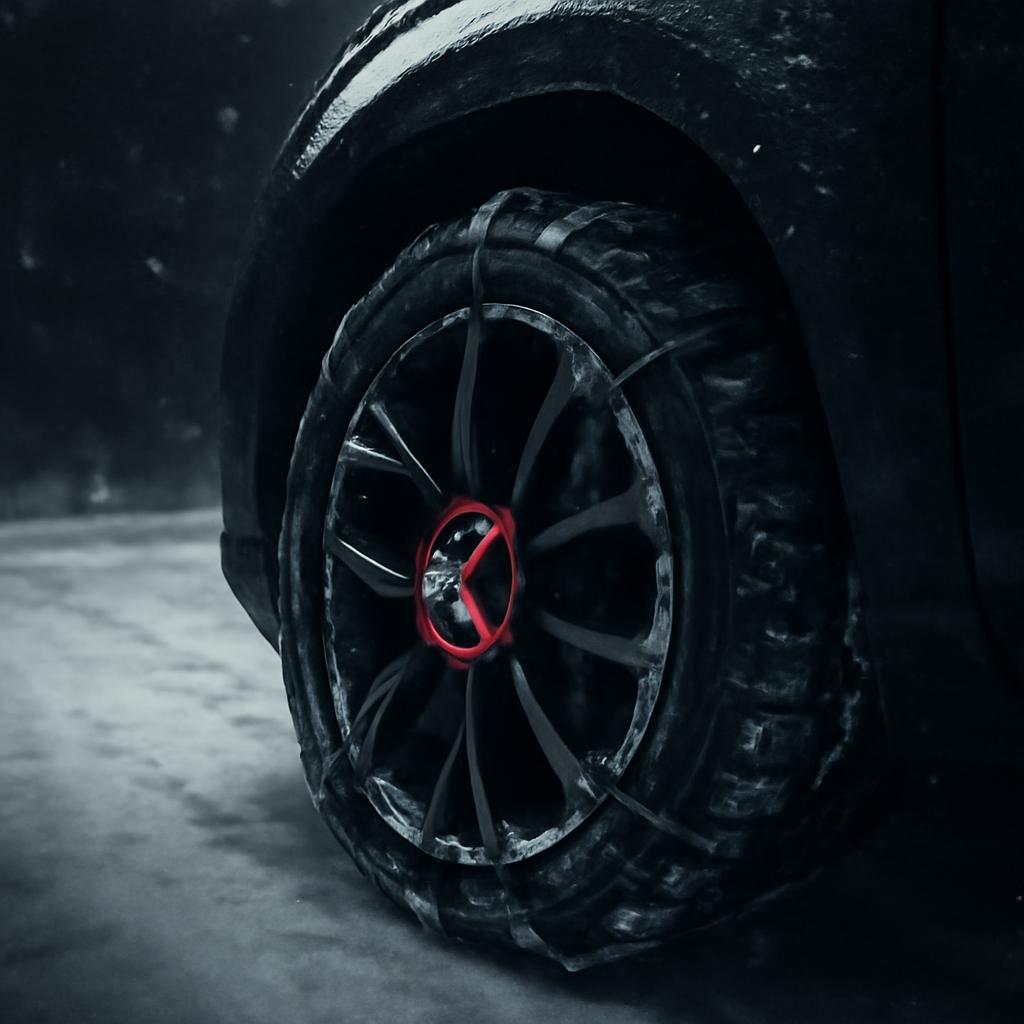
If you are researching an automatic tire chain for winter trip planning, the first thing to understand is that this is a much narrower category than the name suggests. Public product materials consistently describe cab-activated, permanently mounted traction systems for trucks, buses, ambulances, and other heavy-duty vehicles—not the typical crossover or family SUV headed for a snowy scenic drive. That framing is consistent across Onspot’s manufacturer overview, Rotogrip’s product page, and an Insta-Chain seller page.
That does not make the technology irrelevant to road trips. It just means the likely audience is smaller. If you drive a medium-duty pickup, shuttle, ambulance conversion, expedition truck, or work vehicle that regularly encounters short icy sections where stopping to fit manual chains would be risky, an automatic system may be worth investigating. For that broader prep, start with Road Listings’ tire-check and long-drive gear guide.
The other important caveat is evidence quality. Most of the detailed public information on automatic tire chains comes from manufacturers, resellers, and promotional brand guides rather than independent winter testing. That means the mechanics of how these systems work are fairly well described in public, but comparative claims about safety, superiority, or broad legal acceptance should be read cautiously.
What Are Automatic Tire Chains?
An automatic tire chain system is a permanently mounted traction aid installed under the vehicle and activated from the cab with a dashboard switch, according to Onspot’s manufacturer overview and Onspot’s traction guide. Unlike conventional chains, it does not wrap the whole tire before you start driving. Instead, it brings short chain strands into the tire’s contact patch only when extra traction is needed.
Public descriptions of the mechanism are unusually consistent. Onspot, Rotogrip, and Onspot’s technical guide all describe a rotating chain wheel mounted near the drive tire. When the wheel is lowered into contact with the inside of the tire, tire friction spins it. Centrifugal force then swings the chain strands under the tread, feeding chain into the tire footprint as the vehicle rolls.
That distinction matters. Automatic tire chains are not simply “chains that are easier to install.” They are an under-vehicle mechanical system with dedicated brackets, moving parts, and fitment requirements. In practical terms, that puts them in a different category from the manual chains, cable chains, and textile traction devices sold for many passenger vehicles.
The core use case is on-demand traction without leaving the cab. Onspot’s guide presents them as a way to add traction for a slick hill, icy intersection, or short snow-packed stretch, then retract the system once conditions improve. A third-party seller page for Onspot describes the same basic appeal: engage and disengage without stopping the vehicle.
Public materials in this category commonly feature Onspot, Rotogrip, and Insta-Chain. A parts retailer says Onspot has been the original automatic tire chain system since 1977, while Rotogrip and Insta-Chain describe similar switch-activated systems with their own published fitment ranges and speed guidance. Those differences are mostly brand-published distinctions, not independent side-by-side test results.
How Do Automatic Tire Chains Deploy and Retract?
The deployment sequence is straightforward in concept, even if the hardware is not.
- The driver flips a switch in the cab. Both Onspot and Rotogrip describe in-cab activation.
- A chain wheel moves toward the tire. Onspot says the wheel is lowered until it contacts the inside of the tire, while the Torklift Onspot listing describes the chains dropping into contact with the tire sidewall.
- Tire friction spins the wheel. That rotation is what powers the system, according to Onspot’s explanation.
- Centrifugal force swings the chain strands under the tread. Onspot and Onspot’s traction guide both describe the chain wheel continuously throwing chain into the tire footprint.
- The vehicle keeps moving slowly while the system works. Rotogrip says deployment and retraction should happen at 10 mph or less, and the Onspot seller page says engagement must happen while moving and before the vehicle reaches slippery conditions.
That last point is critical. These systems are generally not meant to be deployed while stationary. Their mechanism depends on the tire rolling. Brand-published minimum speeds vary, but they all point the same direction. Rotogrip says the wheel begins lifting chains at roughly 3 to 4 mph, while Insta-Chain’s seller page says minimum speeds depend on model: about 3 to 3.5 mph for a 12-strand version and 5 to 6 mph for 6-strand versions.
Retraction is also switch-based. The Torklift Onspot listing says the driver flips the switch again when assistance is no longer needed, and Rotogrip specifically says to retract on dry pavement. The same Onspot seller listing describes a frame-mounted air electric solenoid and says air pressure holds the chain against the sidewall during operation.
Some public seller descriptions add that the system can work in forward, reverse, or while braking. That appears on the Torklift Onspot page. It is useful as a description of intended operation, but it should still be read as published product information, not as independent proof that all maneuvers perform equally well in real winter driving.
If you are comparing brands, treat speed guidance as brand-specific operating instructions, not universal truth. Rotogrip publishes use up to 30 mph with slow deployment and retraction, the Onspot seller page lists operation up to 35 mph, and Insta-Chain’s seller page says some models engage between 5 and 25 mph. The shared lesson is simpler than the numbers: engage while rolling slowly, use them for low-speed traction help, and follow the specific brand manual rather than generic forum advice.
Which Vehicles Can Use Automatic Tire Chains?
For most readers asking, “Will this fit my SUV or car?” the safest answer from the public evidence is usually no, or at least not without a very specific manufacturer-approved application.
The clearest published fit statement comes from Rotogrip, which says its system is for 3/4-ton pickups and up and explicitly says not cars/SUVs. Onspot’s homepage positions its systems around emergency vehicles, public transport, and commercial haulage, while Onspot’s traction guide says suitable vehicles include trucks, larger vans, and buses with the required ground clearance. The Torklift Onspot listing says it fits most trucks and buses with spring or air suspension.
The broadest published fitment language in this evidence set comes from the Insta-Chain seller page, which says models are available for half-ton through Class 8 vehicles. Even there, though, the examples remain trucks, municipal vehicles, emergency vehicles, semis, utility vehicles, and delivery fleets. That is still a heavy-duty world, not a signal that ordinary passenger cars are a normal target application.
Three recurring fit issues appear across the public materials:
- Vehicle-specific brackets and measuring guides are required, according to Onspot.
- Ground clearance matters, according to Onspot’s traction guide.
- Suspension and frame layout matter, with the Torklift Onspot page specifically mentioning trucks and buses with spring or air suspension.
That explains why automatic tire chains are much less universal than a set of manual chains in a box. As indirect anecdotal context—not direct evidence about cab-deployed commercial automatic systems—an Equipped To Survive forum discussion includes users noting that many modern cars lack clearance for robust chains at all.
For route planning, that hardware reality matters more than the product name. If you are taking a heavier truck onto winter-exposed roads, confirm clearance and application before the season starts. On a corridor like Road Listings’ US-93 winter route guide, mountain sections are described as not recommended in winter without AWD or snow tires and current road reports. On roads with frequent winter closures, such as the Blue Ridge Parkway, the limiting factor may be road access itself rather than the availability of a traction device.
A practical rule of thumb from the public evidence is this: if your vehicle lives in the same ecosystem as ambulances, buses, work trucks, or heavy pickups, automatic chains may be worth researching. If it lives in the world of passenger sedans, compact SUVs, and family crossovers, assume the fit is poor until a manufacturer’s application guide says otherwise.
Performance Limits: Snow Depth, Speeds, and Terrain
Automatic tire chains are best understood as a short-duration traction aid for ice and packed snow, not as an all-purpose winter solution.
The published snow-depth numbers vary enough that you should avoid treating any single figure as universally proven:
- Rotogrip says the system is limited to less than 4 inches of snow and is intended for ice and snowpack, not deep, heavy, wet snow or mud.
- Onspot’s traction guide says automatic chains are effective on snow and ice up to about 6 inches, depending on consistency.
- The Torklift Onspot listing similarly says it works best on ice, packed snow, and up to 6 inches of snow.
- The Insta-Chain seller page claims operation in 4 to 8 inches of snow.
Because these figures come from manufacturers and sellers, and because they conflict, the most defensible takeaway is narrower than the highest claim: public materials support automatic tire chains most clearly for icy pavement, packed snow, and shallow-to-moderate accumulation, not for deep unplowed snow, heavy wet snow, or mud. Rotogrip is explicit that the system is not for mud, and Onspot’s guide says it is not for off-road winter terrain.
Published speed guidance also differs by brand, but the pattern is consistent. Rotogrip lists operation up to 30 mph and says to deploy or retract at 10 mph or less. The Torklift Onspot listing lists speeds up to 35 mph. Insta-Chain’s seller page says engage between 5 and 25 mph, depending on model. That should not be read as permission to drive quickly in poor conditions. It is better read as evidence that these systems are meant for limited-speed traction assistance, not for replacing sound winter tires or route judgment.
Dry pavement is another firm limit. Rotogrip says to retract on dry pavement, and Onspot’s guide says to disengage on dry roads to reduce wear. That aligns with the way the system is described across brands: engage for a slick interruption, then get it out of the way when traction returns.
Noise and wear follow the same pattern. Rotogrip says noise is relatively low on ice and snowpack but increases on dry pavement. That does not prove quiet operation across all brands, but it does reinforce the basic use case: these are for brief traction help in poor surfaces, not for long dry-road travel.
Terrain matters just as much as snow depth. The public materials describe a natural use case such as an icy intersection, bridge deck, loading yard exit, steep side street, or compacted-snow grade. They do not describe these systems as a good answer for deep powder, remote unplowed tracks, muddy roads, or off-road winter travel. That is important on exposed mountain routes: a qualifying truck may gain useful traction on a short icy section, but an automatic chain system does not change weather exposure, plowing priority, closure risk, or the basic seriousness of winter travel.
Pros and Cons vs Manual Chains and Snow Tires
The strongest documented advantage of automatic tire chains is convenience at the moment traction changes. Onspot’s guide says manual mounting typically takes about half an hour, and Onspot’s commercial-driver article focuses almost entirely on avoiding roadside installation in traffic and bad weather. The Insta-Chain seller page says deployment takes about two seconds.
From the public materials, the practical upsides are clear:
- You do not have to leave the vehicle to add traction, according to Onspot’s guide and Onspot’s commercial-driver comparison.
- Activation is quick, according to the Insta-Chain seller page.
- The system stays mounted and ready, according to Onspot.
Those are meaningful benefits, especially for commercial or emergency vehicles that may encounter repeated short icy sections during a workday.
The drawbacks are also clear from the same evidence base.
First, there is the permanent-install burden. Onspot, Onspot’s guide, and the Torklift Onspot listing all describe a system of brackets, chain units, air or electrical components, and vehicle-specific configuration. This is not a “throw it in the cargo area just in case” solution.
Second, there is maintenance. Onspot’s guide says the system should be engaged monthly even in summer and notes exposure to water, gravel, and road salt. The Insta-Chain seller page mentions greasable bearings. That is the profile of exposed mechanical equipment, not a dormant emergency accessory.
Third, the evidence base does not include strong independent head-to-head testing showing automatic systems are broadly superior to manual chains or winter tires for private road-trippers. The cited material is much stronger on convenience and fitment than on verified comparative performance.
Manual chains remain attractive for a different reason: simplicity and cost. An etrailer Q&A says manually adjusted chains are generally more affordable and make sense for people who only occasionally “hit the mountains.” That page is about manual versus assisted chains, not cab-deployed automatic systems, but its economic point still fits the broader decision. Indirect anecdotal discussion on the Equipped To Survive forum also leans toward manual chains as cheaper and less complex, while noting the need for practice and retensioning.
Snow tires are another separate category altogether. GT Radial’s winter-traction article describes snow tires as the quieter, smoother, season-long solution, while chains are temporary and should come off on clear roads. That is not a neutral lab comparison, but it is consistent with the broad distinction most drivers already understand: winter tires are for sustained seasonal grip, while chains are for episodic traction assistance.
So are automatic tire chains “better”? The evidence here only supports a narrower answer: for a compatible heavy vehicle, the published advantage is immediate cab-controlled traction without roadside installation. For a typical private passenger vehicle, the public evidence is much weaker because fitment is limited, installation is significant, and the ownership burden is much higher than with winter tires or manual chains.
Installation, Cost, and Parts Availability
Installation is where automatic tire chains stop feeling like a clever winter accessory and start looking like a real vehicle modification.
Onspot’s manufacturer overview says the system is configured by vehicle brand and model using measurement forms. The Torklift Onspot listing names the major components as a dashboard switch, frame-mounted air electric solenoid, chain unit assembly, and vehicle mounting bracket.
Cost is harder to state cleanly because the public figures are limited and promotional. Onspot’s traction guide gives a rough brand-specific figure of about $2,000 per drive axle for vehicles with air brakes, plus installation, but that comes from Onspot’s own material and should not be treated as a general market quote. A Torklift product page for Onspot lists $1,000.00, which underscores how model, configuration, and what is included can vary. The reliable conclusion is the broader one: automatic systems are substantially more expensive and more installation-intensive than a pair of manual emergency chains.
Parts support appears reasonably developed, but it is highly specific. A parts retailer’s Onspot catalog lists replacement helmets, chainwheel assemblies, side assemblies, angle joints, and air cylinders, and warns that most Onspot parts are not interchangeable with Insta-Chain. That same catalog shows that some small replacement components cost only tens of dollars, while larger assemblies run into the hundreds. In other words, ownership can include actual parts replacement, not just inspection and lubrication.
Availability is only half the challenge. The Torklift listing says products ship in 5 business days or less, and the Dsuban catalog shows stock for some components. But the harder question is whether you are ordering the exact bracket set, side assembly, wheel size, and left/right components for your chassis.
For occasional recreational use, that lifecycle math is the real filter. If your vehicle sees only a few chain-control days each year, the cost and complexity may be hard to justify. If the vehicle is a working truck that regularly meets icy ramps, yard exits, or mountain town streets, the calculation looks different.
Maintenance and Real-World Reliability
Automatic tire chains are marketed as ready whenever you flip a switch, but the public evidence makes clear that they only stay ready if you treat them like exposed mechanical equipment.
Onspot’s guide says the system should be engaged monthly even in summer and warns that it lives in a harsh environment of water, gravel, and road salt. The same guide recommends demounting chains in the off-season to save weight and extend service life. The Insta-Chain seller page notes greasable bearings, which reinforces the point that these systems need periodic attention.
Wear parts are normal. Onspot’s guide says chains can break from wear or damage and recommends replacing worn chain-wheel components. The Dsuban parts catalog shows the kind of replacement ecosystem you would expect for a serviceable commercial system.
Correct installation also matters for tire health. Rotogrip says the system should not damage tires if it is installed and centered correctly. That is useful, but it is also a limitation: correct centering is part of the promise.
What is missing from this evidence set is equally important. It does not provide independent published failure-rate data, winter fleet studies, or neutral long-term durability testing. Most detailed reliability claims come from manufacturers and sellers. So the responsible conclusion is not that these systems are unreliable; it is that public reliability evidence is thinner than the product descriptions are.
Forum material adds only indirect caution. In the Equipped To Survive discussion, users talk about freezing or sticking issues with automatic-tension passenger-vehicle chains. That is not the same product category as a cab-deployed commercial automatic tire chain, so it should not be treated as direct evidence against Onspot, Rotogrip, or Insta-Chain. What it does support is a broader winter truth: exposed moving parts and tension mechanisms deserve maintenance, not trust by assumption.
Using Automatic Tire Chains on North American Routes
The most credible real-world use case for automatic tire chains is not “winter travel” in the abstract. It is a short, high-consequence slippery section where stopping to chain up would be unsafe, impractical, or both.
That is why so much of the public material centers commercial vehicles. Onspot’s guide emphasizes instant traction without roadside mounting, and Onspot’s commercial-driver article frames the benefit around staying in the cab during snowstorms. A private traveler in a qualifying heavy vehicle could face the same problem on a steep campground exit, a frosty canyon approach, or an icy town street.
If your vehicle is not a clear fit for an automatic system, tire and long-drive gear basics are usually the more relevant starting point for winter trip prep.
Route conditions still decide whether the trip makes sense.
On the Blue Ridge Parkway, Road Listings’ Blue Ridge Parkway planning guide notes that winter sections frequently close due to ice and snow. That is the main point for trip planning: if the road is closed, an automatic chain system does not turn it into a dependable through-route. For a qualifying truck on connecting roads outside the parkway, a switch-activated traction aid could still help across a short icy patch, but it does not remove closure risk or make winter access predictable.
On US-93 between Las Vegas and Twin Falls, Road Listings notes winter exposure, mountain sections, and limited plow priority through parts of Nevada. That is exactly the kind of corridor where a compatible truck might benefit from on-demand traction for a brief icy section while still depending mostly on weather timing, proper tires, and road reports.
Legal use needs special restraint in how it is described. The evidence set here does not include official DOT, highway patrol, or park-service chain-law documentation for the routes discussed. Onspot’s guide says legal considerations vary by region and notes that tire-chain use may be restricted on dry roads. That is the strongest defensible takeaway from this evidence pack: legality is jurisdiction-specific and unverified here. Do not assume an automatic system automatically satisfies every chain-control rule without checking current official requirements for the state, province, park, or pass you plan to use.
For most road-trip readers, the prep order stays simple:
- Start with tires, pressure, tread, and basic readiness.
- Choose routes realistically for the season and closure patterns.
- Consider automatic tire chains only if your vehicle clearly qualifies and your use case matches the technology.
That is the whole decision in plain language. Automatic tire chains are a specialized traction tool for specific vehicles and specific conditions. When the hardware fit and the use case line up, they can make good sense. For everyone else, the public evidence points first to tires, route judgment, and simpler traction options.
Do automatic tire chains work on SUVs or passenger cars for road trips?
Usually not, based on the public fitment evidence available. Rotogrip explicitly says its system is for 3/4-ton pickups and up and not cars/SUVs. Onspot’s guide centers trucks, larger vans, and buses with sufficient ground clearance, and the indirect anecdotal context in an Equipped To Survive forum thread is that many modern passenger vehicles already have limited chain clearance. Some Insta-Chain seller material mentions half-ton models, but the public evidence still points mainly to heavy-duty and fleet applications.
How deep of snow can automatic tire chains handle?
Published claims conflict. Rotogrip says under 4 inches and not deep, heavy, wet snow or mud. Onspot’s guide and the Torklift Onspot listing mention about 6 inches, while the Insta-Chain seller page claims 4 to 8 inches. Because those numbers come from manufacturers and sellers rather than independent testing, the safest reading is that automatic tire chains are best for ice, packed snow, and shallow-to-moderate accumulation, not deep unplowed snow.
What’s the difference between Onspot, Rotogrip, and Insta-Chain?
At the concept level, they are very similar in public descriptions: a permanently mounted, switch-activated system that spins a chain wheel and feeds chain strands into the tire footprint. The differences visible in this evidence set are published brand differences, not independent buyer-test comparisons. Onspot emphasizes vehicle-specific measurement forms and permanent installation. Rotogrip explicitly says 3/4-ton pickups and up and not cars/SUVs, and publishes operation up to 30 mph. Insta-Chain’s seller page describes models from half-ton through Class 8, with 6-strand and 12-strand versions that have different minimum operating speeds. A parts retailer also notes that most Onspot parts are not interchangeable with Insta-Chain.
Do they damage tires or make excessive noise?
Rotogrip says its system should not damage tires if installed and centered correctly, and says noise is relatively low on snow and ice but increases on dry pavement. Onspot’s guide says to disengage on dry roads to reduce wear. Indirect anecdotal discussion in the Equipped To Survive forum also warns more generally that poorly matched chains and limited clearance can damage wheels or wheel wells on passenger vehicles.
Are automatic tire chains legal in chain-control areas?
Possibly, but this evidence set does not verify that question by jurisdiction. Onspot’s guide says legal considerations vary by region and notes that chain use may be restricted on dry roads. Without current official DOT, highway patrol, or park-service rules in the evidence provided here, the responsible answer is to treat legality as route-specific and unconfirmed until you check the current official requirements for the exact highway, pass, park, state, or province involved.