
What to Verify Before Buying an Explorer-Converted Chevrolet Van
Match every specification to the exact model year, VIN, chassis and certification labels, converter label, and itemized build sheet before comparing prices.
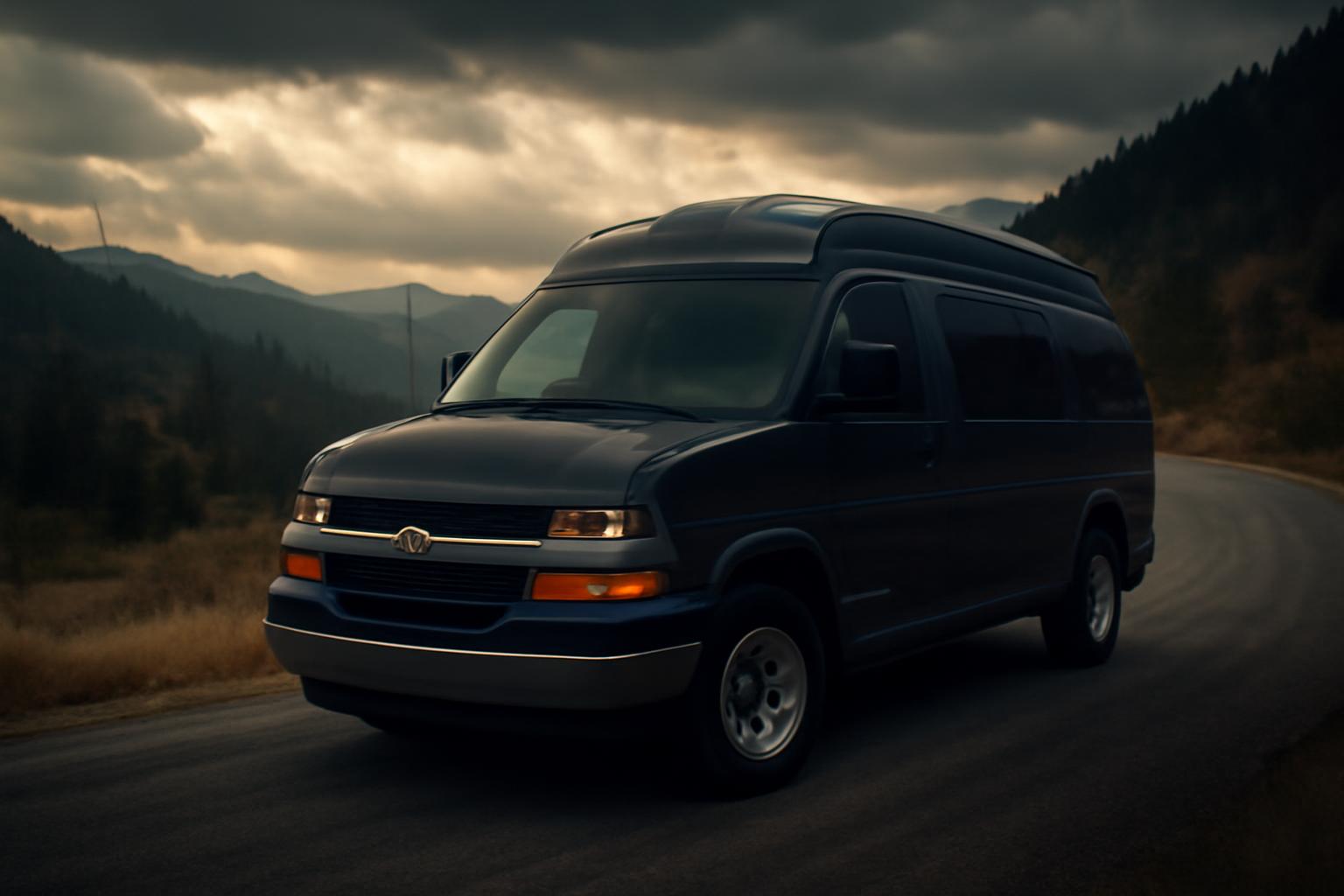
A “Chevy Express Explorer” is best understood as two products joined together: a Chevrolet Express base van and an Explorer passenger conversion. That distinction affects nearly every buying decision, including seating, roof height, payload documentation, equipment repairs, warranty responsibility, and resale value.
These vans may suit large families, group transportation, long-distance travel, trailer towing, and occasional sleeping. However, the Explorer name does not identify one standardized vehicle. Before comparing prices or features, match every specification to the exact model year, VIN, chassis and certification labels, converter label, and itemized build sheet.
Research note: Product specifications and listing examples were checked through July 30, 2026. Current specifications come from Explorer product material; prices and individual equipment examples come from dealer listings. Promotional claims and owner anecdotes are not treated as independent evidence.
What “Chevy Express Explorer” Actually Means
A Chevy Express Explorer commonly describes a Chevrolet Express chassis fitted with an Explorer Van passenger conversion. Chevrolet supplies the underlying vehicle, while Explorer installs or specifies conversion elements such as the raised roof, passenger seating, interior trim, rear climate equipment, electronics, lighting, windows, running boards, and other amenities.
That makes Explorer different from a conventional factory trim. Chevrolet identifies the Express as a cargo and passenger van, but its product material does not identify Explorer as a Chevrolet model or trim. Explorer separately markets conversions based on Chevrolet/GMC, Ford Transit, and Mercedes-Benz Sprinter chassis.
The division of responsibility matters. The Chevrolet chassis supplies the underlying engine, transmission, axle, and other mechanical specifications.
Names such as Explorer Limited, Limited SE, and X-SE generally refer to conversion packages or dealer descriptions. The available evidence does not establish a universal feature list for those names across every year, dealer, and individual build. A Limited SE sold several years ago may not match a current Limited, and two similarly named vans may have different roofs, seats, electronics, upholstery, or accessories.
Do not infer any of the following from the word “Explorer” alone:
- Chassis class, such as Express 1500, 2500, or 3500
- Regular or extended wheelbase
- Low, raised, or sport roof
- Drivetrain
- Engine, transmission, or axle ratio
- Certified passenger capacity
- Number of captain’s chairs
- LATCH-equipped positions
- Payload or towing capacity
- Standard versus optional equipment
- Chassis or conversion warranty coverage
Explorer presents Chevrolet/GMC conversions in seven- and nine-passenger categories and describes a design, quote, production, logistics, and delivery process through representatives and dealers. Its overview of the conversion and ordering model helps explain the product, but promotional descriptions of comfort or superiority should not be treated like vehicle-specific specifications.
The safest verification rule is simple: match every material specification to the exact model year, VIN, chassis and final certification labels, converter label, and itemized build sheet. If a seller cannot connect a claim to one of those records, treat it as preliminary.
Seven-Passenger vs. Nine-Passenger Configurations
Explorer’s current Chevrolet/GMC material centers on a shorter seven-passenger conversion and a longer nine-passenger version. The principal advertised differences are wheelbase, overall length, and the additional seating row in the extended van. The following are manufacturer-advertised—not independently measured—figures from Explorer’s Chevrolet/GMC configuration material.
| Specification | Seven-passenger regular model | Nine-passenger extended model |
|---|---|---|
| Advertised seating | 7 | 9 |
| Wheelbase | 135 in. | 155 in. |
| Approximate overall length | 224.1 in. | 244.1 in. |
| Advertised roof choices | Low or sport roof | Low or sport roof |
| Approximate low-roof height | 82 in. | 82 in. |
| Approximate sport-roof height | 94 in. | 94 in. |
| Approximate low-roof headroom | 51 in. | 51 in. |
| Approximate sport-roof headroom | 62 in. | 62 in. |
Explorer describes the extended version as adding a row of captain’s chairs. It also makes a same-rear-storage claim, but the associated cargo table is ambiguous. Buyers should not treat equivalent usable cargo space as independently established. What the published dimensions do establish is that the extended body is approximately 20 inches longer in both wheelbase and overall length.
What the extra length changes
The extended van does not merely add two people to the advertised capacity. It changes where passengers sit, how they reach their seats, how luggage is distributed, and how much vehicle the driver must place in a parking space or maneuver around a fuel island.
For a family, the additional row may provide more separation between passengers. For a group operator, it may allow everyone to travel in one vehicle. But nine occupied positions also mean more personal items, more demand on rear climate control, and more luggage to secure without blocking doors or aisles.
Before choosing the extended body, load the van as it would be used. Ask intended passengers to enter, buckle in, move through the aisle, and retrieve representative bags. Confirm that the people expected to use the rear row can reach it without climbing over unsecured cargo or depending on a release mechanism they cannot operate.
Low roof versus sport roof
The advertised sport roof is approximately 12 inches taller outside and provides about 11 inches more interior headroom than the low roof. That difference may materially affect how easily passengers stand, bend, change seats, or manage luggage. It also creates a clearance-planning issue.
Measure the completed van at its highest fixed point rather than relying only on a brochure. Compare that measurement with:
- The garage opening at home
- Parking-garage entrances and internal ramps
- Hotel and hospital parking structures
- Drive-through lanes
- Automatic car washes
- Ferry and loading-deck restrictions
- Covered loading zones
- Tree limbs and building overhangs
- Any roof rack, vent, antenna, or accessory added after delivery
A nominal 94-inch vehicle is 7 feet 10 inches tall before accounting for measurement uncertainty or later accessories. Do not select a structure merely because its posted clearance exactly matches the brochure figure. Obtain and record the van’s actual finished height.
Historical and customized exceptions
Current seven- and nine-passenger advertising does not describe every Explorer-converted Express on the used market. Dealer inventory has included five-passenger extended conversions, and older builds may use different chassis classes, seating layouts, engines, roofs, or conversion packages.
One owner, for example, documented a 2005 Chevrolet Express 1500 with an Explorer conversion. That account demonstrates that older examples can differ from current 2500-based descriptions, but it does not establish what is typical.
For a specific van, obtain written, build-specific confirmation of:
- The certified number of seating positions
- The presence and condition of a belt at each position
- Which positions have complete LATCH hardware
- Access to every row with the intended seats installed
- Whether seats are removable and how they lock into place
- The designated travel position for swivel-capable seats
- Any occupancy restrictions applying to the power sofa
- Any restrictions applying when a seat or sofa is reclined
- The final-stage manufacturer or converter documentation governing the seating installation
Seating, Sleeping, Climate, and Entertainment Equipment
Explorer conversions can contain an extensive list of comfort and convenience equipment. Evaluate those features by function rather than treating them as an undifferentiated luxury package.
Seating
Commonly advertised equipment includes leather captain’s chairs, powered front seats, swivel-capable mid-row chairs, quick-release mounts, armrests, and a rear power sofa.
Inspect the seating geometry as well as the upholstery. Legroom, armrest clearance, aisle width, belt routing, head-restraint position, and the effort required to operate a release mechanism all affect real-world use.
Swiveling and removable seats deserve particular attention. Confirm that every lock engages fully, that the seat does not rock in its mount, and that the converter’s documentation identifies the intended travel position. Do not assume that a seat may be occupied in every direction merely because it swivels while the vehicle is parked.
Sleeping
A rear power sofa may slide, recline, and form a bed. This can work for an occasional overnight stop or a simple parked sleeping arrangement without a full RV interior.
The available evidence does not establish universal bed dimensions, mattress support, cargo volume with the sofa extended, or permissible occupancy in every reclined position while the van is moving. Measure the sleeping surface yourself and distinguish between a bed used while parked and a certified passenger position used on the road. Ask the seller for written instructions governing travel and sleeping positions.
Climate control
Rear heating and air conditioning may be more important than decorative trim in a van with several rows. Check for rear controls, vent placement, blower speeds, temperature response, and airflow reaching the final row.
When possible, test the system after the cabin has been sitting in hot or cold weather. A short demonstration in a climate-controlled showroom may not reveal weak rear performance.
Ask whether the system uses factory components, converter-installed components, or a mixture. The answer may affect service access, parts availability, and warranty responsibility.
Entertainment and charging
Available or listed equipment may include large screens, Blu-ray or DVD playback, upgraded audio, wireless charging, USB ports, 12-volt outlets, 120-volt connections, remote controls, and LED accent lighting.
Do not assume an older screen accepts current devices or that every visible port works. Bring the cables and devices your passengers use. Check:
- Screen inputs and picture quality
- Audio routing and speaker operation
- Remote-control functions
- USB and wireless charging
- 12-volt and 120-volt outlets
- Operation with the ignition on and off
- Any auxiliary-battery or inverter controls
- The system intended to prevent accessory use from depleting the starting battery
Storage, access, and finish
Conversions may include a cooler console, drink holders, pockets, cabinetry, custom carpet, upgraded wood-look trim, tinted roof-side glass, and power running boards.
Treat these as working components rather than showroom decoration. A binding step, loose cabinet, leaking added window, or damaged seat mechanism may be more consequential than worn carpet.
A useful build example is a sold 2026 Chevrolet Express 2500 Extended Explorer Limited X-SE VC. That individual nine-passenger van listed four quick-release, swivel-capable mid-row captain’s chairs with LATCH systems and a three-section rear sofa with power slide and recline that could form a bed. It also listed front and rear heat and air conditioning, rear controls, wireless charging, USB, 12-volt and 120-volt connections, a cooler console, Blu-ray/DVD equipment, tinted high-roof side glass, and LED accent lighting. Its 6.6-liter L8T V8 was listed at 401 horsepower and 464 lb-ft of torque, paired with an eight-speed automatic. The dealer’s sold-vehicle listing documents that one configuration; it does not define every Limited X-SE or Explorer conversion.
Use that example to understand what a heavily equipped build can contain—not as a standard-equipment list. For any candidate, request an itemized build sheet divided into:
- Base Chevrolet equipment
- Standard Explorer conversion equipment
- Factory or converter options
- Dealer-installed accessories
- Later owner modifications
- Missing or inoperative equipment
Every powered accessory should be demonstrated before purchase.
Engine, Fuel, Towing, and Payload: Keep the Numbers Build-Specific
Explorer’s documented current Chevrolet/GMC configurations list a 6.6-liter V8, an eight-speed automatic transmission, and a 31-gallon fuel tank. The same material advertises a 9,500-pound towing figure and estimated fuel economy of 14 mpg city and 18 mpg highway. These are seller-provided specifications and estimates, not universal completed-vehicle guarantees.
A specific sold 2026 Express 2500 Extended example was listed with the 6.6-liter L8T V8 producing 401 horsepower and 464 lb-ft of torque, paired with an eight-speed automatic. Those figures apply to that listed model-year build and should not be copied to an older van merely because it carries an Explorer badge.
Why a headline towing number is not enough
Towing capability and remaining carrying capacity depend on build-specific factors, potentially including:
- Model year
- Chassis class
- Regular or extended wheelbase
- Final gross vehicle and axle weight ratings
- Gross combined weight rating
- Engine, transmission, and axle ratio
- Drivetrain
- Receiver and hitch-component ratings
- Trailer wiring and brake-control equipment
- Completed conversion weight
- Added accessories
- Occupant and luggage weight
- Trailer tongue weight
- Any converter restrictions
The conversion adds weight before passengers or bags enter the van.
Obtain the correct model-year Chevrolet towing guide and match it to the VIN, engine, axle information, wheelbase, and chassis designation. Ask a qualified towing professional to review the completed-vehicle ratings, receiver, ball mount, hitch ball, wiring, brake-control equipment, trailer specifications, and proposed loading arrangement.
A practical payload worksheet
Start with the completed vehicle’s controlling payload information or with a calculation based on the applicable completed-vehicle labels and a properly obtained scale weight. Do not begin with an unrelated online payload figure.
A basic worksheet is:
Completed-vehicle payload allowance minus driver and passengers minus luggage and supplies minus aftermarket accessories not already included minus trailer tongue weight equals estimated remaining payload margin
Count equipment added after the documented vehicle weight was established, such as roof racks, cargo boxes, tools, mobility equipment, extra batteries, hitch accessories, and camper components.
Fuel becomes relevant when working from an actual scale weight taken with less than a full tank, because filling the tank changes the measured vehicle weight. Follow the completed-vehicle documentation and have any uncertainty resolved by a qualified professional rather than subtracting fuel twice.
Current and historical powertrains are different
Used Explorer conversions do not necessarily share current specifications. Selected 2019 and 2020 dealer listings used 6.0-liter V8 engines, while the documented 2005 example used an older Express 1500 chassis. A generalized Express guide may also quote figures for engines or chassis combinations that do not match the vehicle under consideration.
Before buying for trailer use, collect:
- VIN and model-year confirmation
- Door-jamb certification and tire labels
- Final-stage manufacturer or converter label
- Completed-vehicle weight documentation
- Chassis class and wheelbase
- Engine and transmission identification
- Axle ratio or axle-code information
- Receiver and hitch-component ratings
- Trailer-wiring details
- Model-year Chevrolet towing guide
- Any supplemental converter instructions or restrictions
If the paperwork and seller’s claim disagree, pause the purchase until the discrepancy is explained in writing.
How the Van Fits Long-Distance Travel
A Chevy Express Explorer may fit large-family travel, group transportation, towing, or occasional sleeping. It is not automatically better than a minivan, large SUV, Class B RV, Transit conversion, or Sprinter conversion. The right choice depends on measurable needs: certified seats, passenger access, luggage space, roof clearance, payload, towing setup, serviceability, and total ownership cost.
Seven seats or nine?
The shorter current configuration advertises seven seats on a 135-inch wheelbase. The extended version adds approximately 20 inches of wheelbase and overall length and is advertised for nine occupants.
The shorter van may fit a home parking arrangement more easily. The extended van carries more passengers but requires the driver to account for additional length when parking, reversing, using fuel islands, and entering loading areas.
Neither choice answers the luggage question by itself. Nine passengers may generate substantially more baggage than seven. Inspect usable storage with every occupied seat in its documented travel position.
Conduct a trip-style test, not a showroom test
Bring the intended passengers and representative luggage whenever possible. Evaluate:
- Step-in height and running-board operation
- Door opening and passenger flow
- Aisle width with armrests lowered
- Access to the rear row
- Seat comfort beyond a brief demonstration
- Rear climate airflow to every occupied row
- Placement of coolers, suitcases, mobility equipment, or sports gear
- Visibility through added windows
- Blind areas when changing lanes or reversing
- Charging access without cables crossing the aisle
- Access to doors
- Interior rattles from seats, cabinets, and screens
If towing is planned, repeat the payload calculation using the expected passenger count, luggage, accessories, and trailer tongue weight. Capacity that appears generous with one driver may be much smaller under trip loading.
Roof choice is a travel-system decision
The sport roof provides more advertised headroom, while the low roof preserves more clearance. Avoid assuming anything further without a direct comparison. The available evidence does not establish how roof choice changes handling, crosswind response, noise, or fuel use for a particular build.
Record the measured height prominently inside the cab. Check hotel garages, ferries, car washes, and covered loading areas before arrival. Measure the vehicle again after adding any roof rack, vent, antenna, or camper accessory.
Fuel and range planning
The seller-listed 31-gallon tank and estimated 14/18 mpg figures can support rough preliminary planning, but they are not promises of range. Speed, loading, towing, terrain, idling, weather, and mechanical condition can change consumption.
Plan later trips from observed economy, leaving a reserve appropriate to the route. This matters particularly on rural roads where the next open station may be farther away than expected.
Tires and departure checks
Before a long trip, check cold tire pressures against the door-jamb label rather than copying a value from another van or using the maximum printed on the sidewall. Inspect the spare and verify that the jack, tools, and access method work with the conversion. A general road-trip tire and vehicle checklist supports using the vehicle label for cold pressures, but the specific van’s labels and documentation remain controlling.
Replacement wheels and tires should be reviewed for load rating, size, clearance, and compatibility with the completed vehicle. Pickup takeoffs or aftermarket wheels should not be assumed suitable solely because they bolt on.
Owner reports can illustrate family travel, towing preparation, entertainment upgrades, and sleeping arrangements. They cannot establish typical durability, reliability, or service life.
For four common missions, focus on:
- Family transport: Certified seating, documented child-restraint provisions, aisle access, and rear climate coverage.
- Group travel: Passenger entry, luggage placement, charging, comfort, and driver visibility.
- Towing: Completed-vehicle ratings, payload margin, axle and hitch documentation, and suitable trailer equipment.
- Camper adaptation: Written confirmation about seat removal and remaining passenger positions, qualified electrical work, ventilation, secure storage, and remaining payload.
New and Used Prices: What the Listings Actually Show
The available evidence does not establish a current base price, typical conversion price, or reliable market average for a Chevy Express Explorer. Listings provide individual asking-price examples, not a standardized price schedule.
One sold 2026 Chevrolet Express 2500 Extended Explorer Limited X-SE VC had a prior asking price of $102,410. That amount represented one advertised nine-passenger vehicle—not its final transaction price, a current offer, or the cost of ordering an equivalent van.
Selected used dealer listings preserved during this research provide the following archived examples. The inventory page documented these asking prices and fee terms, but dynamic listings may change or disappear.
| Model year and description | Asking price | Mileage | Advertised configuration |
|---|---|---|---|
| 2019 Explorer Limited SE | $34,038 | 163,887 | Seven-passenger low-top |
| 2020 Explorer Limited SE | $58,658 | 66,328 | Seven-passenger high-top |
| 2020 Explorer Limited SE | $60,638 | 52,835 | Five-passenger extended high-top |
All three displayed examples were listed with rear-wheel drive and 6.0-liter V8 engines. Their advertised prices included a $398 documentation fee but excluded taxes, title, license, registration, and applicable government fees. They were also subject to prior sale.
These examples do not establish a clean market range of approximately $34,000 to $61,000. They differ in:
- Model year
- Mileage
- Seating capacity
- Roof type
- Body length
- Equipment
- Cosmetic and mechanical condition
- Service history
- Geographic location
- Dealer pricing strategy
The least expensive example also had substantially higher mileage than the two 2020 vans. Price comparisons should therefore be made vehicle by vehicle rather than reduced to the highest and lowest displayed figures.
Build an out-the-door budget
Add the following to the advertised price before deciding whether a van is affordable:
- Sales tax
- Title and registration
- Documentation or processing fees
- Travel or vehicle transport
- Independent mechanical inspection
- Conversion-specialist inspection
- Immediate fluid and filter service
- Tires, including the spare
- Brake or suspension work
- Roof, window, or weather-seal repairs
- Rear HVAC repairs
- Seat, sofa, running-board, or electrical repairs
- Missing entertainment controls or accessories
- Insurance changes
- Hitch or trailer-equipment corrections
A lower-priced van with water intrusion, aged tires, weak rear air conditioning, or undocumented seat modifications may cost more to make usable than a higher-priced example with complete records.
Confirm availability before traveling. A category page, publication date, stock number, or archived listing does not prove that the vehicle remains for sale. Request current photos showing the vehicle and its VIN or stock identifier, and obtain written confirmation that it is physically present and available for inspection.
How Custom Ordering and Quote Comparison Work
Explorer describes its process as submitting a design, receiving and approving a quote, and then proceeding through production, logistics, and delivery with a representative or dealer. That outline does not establish lead times, deposits, financing terms, change-order rules, or cancellation policies. Those details must be documented for the proposed order.
What to request in the quote
Ask for a line-item proposal separating:
- Chevrolet chassis price
- Explorer conversion price
- Package name
- Complete standard-equipment list
- Every optional feature and its price
- Dealer-installed accessories
- Paint or exterior upgrades
- Destination and delivery charges
- Transport to the dealer or buyer
- Documentation fees
- Taxes, title, and registration
- Deposit amount and due date
- Deposit-refund conditions
- Change-order charges
- Cancellation terms
- Estimated completion and delivery dates
Do not compare quotes only by package name or monthly payment. One “Limited” may include equipment that is optional or absent on another build.
Confirm the vehicle identity
The order should state, as applicable:
- Model year
- VIN once assigned, or chassis order details
- Express 2500 or other chassis designation
- Regular or extended wheelbase
- Certified seating capacity
- Roof type
- Expected completed height
- Drivetrain
- Engine and transmission
- Axle ratio
- Completed-vehicle weight documentation to be supplied
- Exterior and interior colors
Some dealer pages advertise custom-order low-top or 4x4 vehicles, but those category-page advertisements do not establish universal availability. Ask whether the offer applies to the proposed Chevrolet chassis, model year, wheelbase, and conversion package.
Document seating, payload, and towing
Require written confirmation of:
- Completed-build payload information
- Gross vehicle and axle weight ratings
- Towing configuration
- Hitch receiver rating
- Trailer wiring and brake-control provisions
- Certified belt positions
- LATCH-equipped positions
- Documented travel position for swivel seats
- Removable-seat procedures
- Sofa travel and sleeping restrictions
If a roof rack, winch, brush guard, extra battery, or entertainment system is added, ask whether its weight is included in the completed-build documentation.
Separate the warranties
Request the Chevrolet chassis warranty and the Explorer conversion warranty as separate written documents. Identify who handles each installed system, including:
- Raised roof
- Added windows and seals
- Seats and mounting hardware
- Sofa mechanisms
- Rear HVAC
- Interior wiring and outlets
- Lighting
- Entertainment equipment
- Power running boards
- Cabinetry and interior trim
- Exterior paint or body modifications
Ask where warranty work can be performed while traveling and whether prior authorization is required. Do not assume Chevrolet’s warranty covers every component installed or modified by the converter.
Finally, require written explanations of production timing, delivery responsibility, financing conditions, deposits, refunds, change orders, and cancellation. A salesperson’s estimate is not a substitute for the signed agreement.
Used Chevy Express Explorer Inspection Checklist
A used conversion van requires two overlapping inspections: one for the Chevrolet base vehicle and another for the Explorer-installed structure and equipment. A clean mechanical report does not prove that the roof, seating, wiring, rear climate system, or added windows are sound.
Identity and documents
Start by matching the vehicle to its records:
- VIN on the dashboard, title, and paperwork
- Model year and chassis class
- Regular or extended wheelbase
- Drivetrain
- Door-jamb certification and tire labels
- Final-stage manufacturer or converter label
- Certified passenger capacity
- Original or replacement build sheet
- Title status
- Service and repair records
- Vehicle-history report
- Open-recall status
- Chevrolet warranty documents
- Explorer or dealer conversion-warranty documents
- Receipts for later modifications
Resolve mismatched VINs, missing labels, unexplained seating changes, or title discrepancies before negotiating price.
Base-vehicle mechanical condition
A qualified mechanic should inspect the engine, cooling system, transmission, steering, suspension, brakes, driveline, fluids, charging system, exhaust, and underbody. Look for leaks, corrosion, damaged wiring, warning lights, uneven stance, or evidence that warrants further investigation.
Inspect tire brand, model, size, age, wear pattern, and load suitability. Confirm that replacement wheels are appropriate for the completed vehicle. Investigate vibration rather than assuming the tires merely need balancing.
For a remote purchase, ask in writing whether the seller permits an independent inspection. Arrange it through a reputable local shop before booking travel or sending nonrefundable payment. Remote guidance may help organize records and inspection questions, but it cannot determine the condition of a van that has not been examined.
Conversion structure
Inspect areas altered or added during conversion:
- Roof seams and sealant
- Raised-roof attachment areas
- Added side windows
- Rear and side doors
- Weather stripping
- Headliner
- Carpet and padding
- Cabinetry
- Interior wall panels
- Exterior trim around openings
Look and smell for dampness, staining, mildew-like odors, corrosion, swollen materials, loose trim, or recently cleaned areas that merit closer examination. A stain does not identify the source of a leak, and a dry interior on inspection day does not prove that no leak exists.
Seating and moving equipment
Check each seat mount, belt, buckle, head restraint, LATCH component, swivel lock, quick-release mechanism, and armrest. Confirm that removable seats lock securely when reinstalled and that no hardware appears improvised.
Operate the sofa through its full slide and recline range. Listen for binding, verify that it stops consistently, and inspect accessible wiring for abrasion or crushing. Test power running boards repeatedly from every relevant door and check that they retract without contacting bodywork.
Cosmetic peeling may be a price-negotiation issue. Loose mounts, damaged belts, missing labels, or undocumented seating modifications require professional assessment and written clarification.
Climate, electrical, and entertainment systems
Test every installed function individually:
- Front air conditioning and heat
- Rear air conditioning and heat
- Rear control panel
- All blower speeds and vent modes
- Power seats and seat heaters
- Interior and accent lights
- Screens and media inputs
- Audio components and speakers
- Remote controls
- USB ports
- 12-volt outlets
- 120-volt outlets
- Wireless charger
- Cooler console
- Sunroof, if fitted
- Power steps
- Auxiliary battery or inverter, if fitted
Do not accept “it probably needs a fuse” as a diagnosis. Conversion wiring may be difficult to trace, particularly after multiple owners have added entertainment or camping equipment.
Road-test behavior
Begin with a cold start if possible. Watch for warning lights and listen to the idle before the seller has warmed the vehicle.
During the drive, evaluate:
- Throttle response
- Transmission shifts
- Steering effort and return
- Brake feel and straight-line stopping
- Low-speed turns
- Parking and reversing
- Driveline or wheel-speed vibration
- Wind noise around the roof and windows
- Interior rattles
- Highway behavior at legal speeds
- Climate performance under load
A dealer-authored used conversion-van checklist highlights many of the same inspection categories, including roof seams, windows, weather stripping, tires, suspension, HVAC, accessories, braking, shifting, vibration, wind noise, and low-speed maneuvering. It is a useful prompt, not a substitute for a qualified mechanical and conversion-specific inspection.
Owner stories about rust, peeling upholstery, vibration, electrical upgrades, or high mileage should likewise be treated as inspection prompts—not proof of universal defects or expected service life.
Frequently Asked Questions
Is the Chevy Express Explorer an official Chevrolet trim?
No. The term commonly refers to a Chevrolet Express chassis completed with an Explorer passenger conversion. Chevrolet identifies Express cargo and passenger vans, while Explorer supplies or specifies conversion equipment. Names such as Limited, Limited SE, and X-SE should not be treated as standardized Chevrolet trims.
How many passengers can a Chevy Express Explorer seat?
Explorer’s current Chevrolet/GMC material documents seven-passenger regular-wheelbase and nine-passenger extended-wheelbase configurations. Historical and customized vans may differ, including used five-passenger examples. Verify the certified seat count, belts, LATCH positions, and final-stage manufacturer documentation for the specific VIN.
How tall are the low-roof and sport-roof versions?
Explorer advertises the low roof at approximately 82 inches overall with about 51 inches of interior headroom. The sport roof is advertised at approximately 94 inches overall with about 62 inches of headroom. Those are manufacturer figures from the current configuration page, not measurements of every completed van.
Measure the specific vehicle at its highest fixed point. Individual construction and later roof accessories may affect actual clearance.
How much does a new or used Chevy Express Explorer cost?
There is no substantiated current base price or reliable market average in the available evidence. One sold 2026 nine-passenger Express 2500 Extended Explorer Limited X-SE VC had a prior asking price of $102,410. Selected archived 2019 and 2020 dealer listings ranged from $34,038 to $60,638, but differed substantially in mileage, seating, roof type, equipment, and condition.
Treat those figures as individual asking-price examples, not transaction prices or a dependable market range. Add taxes, registration, documentation fees, transport, inspections, immediate maintenance, tires, and conversion-equipment repairs when calculating total cost.
Do the Chevrolet chassis and Explorer conversion have the same warranty?
Do not assume so.
Before purchase, obtain both policies in writing. Confirm responsibility for the roof, added windows, seats, rear HVAC, wiring, entertainment equipment, running boards, interior trim, and dealer-installed accessories. Also ask where conversion-warranty work can be completed when the van is away from the selling dealer.
The Bottom Line
The package name is only the beginning of the buying decision. The strongest candidate is not automatically the newest or most lavishly equipped van. It is the vehicle whose exact chassis, seating, roof, payload documentation, towing setup, conversion equipment, warranties, condition, and total price fit the intended use.
New buyers should demand an itemized quote, written equipment list, separate warranty documents, and completed-build weight and certification records. Used buyers should verify every label and record, test every conversion system, and commission independent mechanical and conversion-specific inspections before purchase.