
Plan the 100-Mile Denver-to-Vail Mountain Drive
Compare the 100-mile downtown route with the 118-mile airport drive, then plan around I-70 traffic, winter traction rules, Vail Pass and parking.
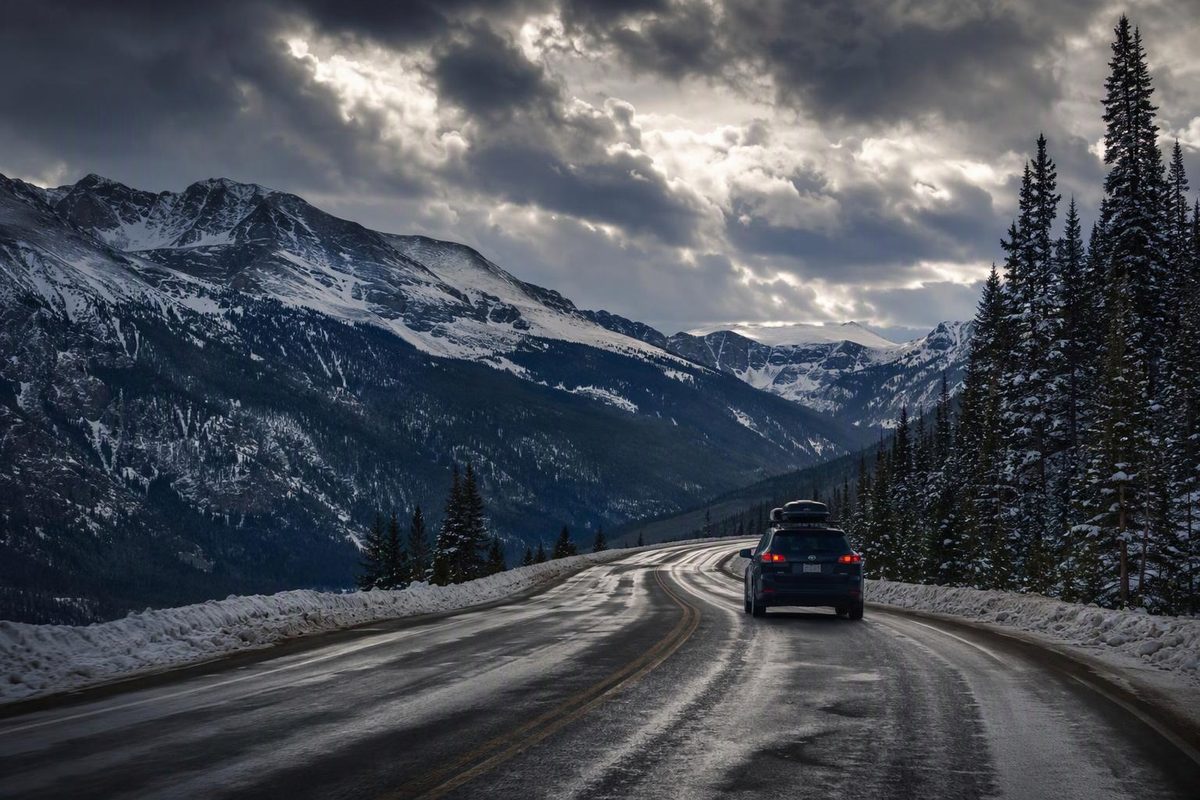
Vail is about 100 miles west of downtown Denver via Interstate 70. The Town of Vail describes it as a roughly 100-mile drive. Allow around two hours in clear weather and light traffic, although 2 to 2.5 hours each way is a more useful planning range before food, fuel or sightseeing stops.
From Denver International Airport (DEN), Vail is approximately 118 miles via I-70, according to Discover Vail. Budget roughly 2.5 hours in favorable conditions, plus the time needed to collect luggage and a rental car. Traffic, snow, crashes and temporary closures can make either trip substantially longer.
Choose your starting point and trip type; the planner shows the supported mileage and driving-time allowance.
Denver–Vail Drive Planner
Downtown Denver → Vail
Favorable-condition allowance before stops.
Source: Town of Vail and Discover Vail one-way figures cited above; round-trip values double those distances.
Denver and DEN Have Different Baselines
The answer depends on whether “Denver” means the city center or the airport. These are the useful planning figures:
| Starting Point | One-Way Distance | Favorable Drive Time | Round-Trip Distance |
|---|---|---|---|
| Downtown Denver | About 100 miles | 2–2.5 hours | Roughly 200 miles |
| Denver airport | About 118 miles | Roughly 2.5 hours | Roughly 236 miles |
The airport round-trip mileage is the two-way total derived from the cited 118-mile one-way distance. It does not include driving around Denver to collect passengers, reach a hotel or return a rental car.
A downtown round trip represents roughly four to five hours of baseline driving before congestion, weather, stops or time spent finding parking. That makes Vail possible as a Denver day trip, but it is not a quick side excursion. A delay in either direction can materially reduce the time available in Vail.
The mileage itself is relatively stable because I-70 is the standard route. Travel time is not. Mountain weather, weekend traffic, crashes, road work and temporary safety closures all affect the same corridor, so adding a few minutes to a navigation app’s initial estimate does not create a dependable deadline.
I-70 West Is the Standard Route
From Denver, take I-70 west through Golden and Idaho Springs. The highway then climbs toward the Eisenhower-Johnson Memorial Tunnels before continuing past Silverthorne, Frisco and Copper Mountain. The final major climb is Vail Pass, followed by the descent toward East Vail and the central Vail exits.
The directions are straightforward, but the drive is not equivalent to a flat 100-mile freeway trip. It crosses the Continental Divide and includes sustained grades, mountain curves, changing weather and busy merge areas. CDOT describes the I-70 Mountain Corridor as a challenging drive and collects current conditions, alerts and camera links on its I-70 travel page.
The tunnels and Vail Pass are useful mental checkpoints. Reaching the Eisenhower-Johnson tunnels means the first major high-country climb is largely complete, but Vail is still beyond the Summit County communities and another significant pass. Drivers going only as far as Silverthorne, Frisco or Breckenridge do not complete the Vail Pass portion of the trip.
Most gasoline vehicles will not need fuel during a one-way drive if they leave Denver with adequate range. Services are available in Idaho Springs, Georgetown, Silverthorne and Frisco. Silverthorne and Frisco are practical stopping areas before Vail Pass, particularly if passengers need food or a break before the final mountain section.
A stop changes the usefulness of the two-hour nonstop baseline. Even in clear weather, pulling off the interstate, parking and returning to the highway can push the trip toward or beyond the more practical 2-to-2.5-hour allowance. Airport travelers should keep baggage collection and rental-car procedures separate from that driving estimate.
Traffic Can Matter More Than the Mileage
Friday westbound and Sunday eastbound are the recurring peak directions identified by Discover Vail. Ski weekends, holidays, summer events and fall-color weekends can also add traffic. Weather and crashes are less predictable and may produce delays outside the usual weekend pattern.
For a weekend trip, review the GoI70 travel forecast, which covers the Golden-to-Vail corridor and is normally updated on Thursdays. The forecast is useful for choosing a departure window, but it is not a substitute for checking CDOT’s live conditions immediately before leaving.
A navigation estimate generated before traffic builds should not be treated as a guaranteed arrival time. The same applies to an early estimate for the return drive. Conditions may change while you are in Vail, particularly on a Sunday afternoon or when weather reaches the passes.
As of September 2026, drivers should also account for the final construction season between the Vail Pass Rest Area and East Vail. CDOT says daily single-lane closures are possible before the project’s scheduled substantial completion in December 2026. Review the West Vail Pass project update close to the travel date rather than assuming an earlier construction pattern still applies.
If arrival time matters—for a lodging check-in, bus connection, reservation or airport return—the practical response is to leave margin outside the stated driving range. The draft sources do not provide one universal delay allowance, and no single added figure would cover ordinary traffic, a crash and a mountain closure equally well.
For a same-day visit, the return direction deserves as much attention as the outbound trip. A smooth morning run from Denver does not establish that eastbound conditions will remain clear later. Check the corridor again before leaving Vail rather than relying on the conditions observed hours earlier.
Winter Equipment Rules Apply From September Through May
From September 1 through May 31, passenger vehicles using I-70 between Morrison and Dotsero face seasonal equipment requirements. Under current Colorado State Patrol guidance, the requirements depend on the vehicle, its tires and which law has been activated.
For two-wheel-drive vehicles, correctly sized chains or an approved alternative traction device must be carried throughout that period. When the Passenger Vehicle Traction Law is activated, those devices must be installed on at least two drive tires. Under the updated rule, winter-rated tires alone do not satisfy the requirement for a two-wheel-drive vehicle.
For four-wheel-drive and all-wheel-drive vehicles, qualifying all-weather, mud-and-snow or mountain-snowflake tires with at least 3/16 inch of tread may satisfy the requirement while the traction law is active. Approved traction devices are another compliance option.
Under the more restrictive Passenger Vehicle Chain Law, every passenger vehicle must install chains or an approved alternative traction device on at least two drive tires. Four-wheel drive or all-wheel drive does not create an exemption from that activated chain requirement.
These distinctions matter with rental cars. Confirm the drivetrain, tire markings, tread condition and supplied traction equipment on the actual vehicle rather than assuming the reservation category settles compliance. “AWD” addresses only part of the rule, and a rental counter description does not verify tire tread or the presence of an approved device.
The seasonal dates also extend well beyond the core ski months. A dry day in Denver during autumn or spring does not remove the corridor requirement between Morrison and Dotsero. Conditions at the tunnels and Vail Pass can differ from conditions at the starting point.
If I-70 closes, do not automatically divert over Loveland Pass. US 6 is higher and more exposed, and it may also be restricted or closed. Waiting for I-70 to reopen is often the workable choice. A mapping app may display an alternate line without accounting for whether that route is suitable, open or sensible under the conditions causing the interstate closure.
A closure also makes the normal distance-and-time figures temporarily unusable. The planner’s mileage remains the standard-route distance, but there is no supported fixed travel-time estimate for a storm, crash or closure. Check official conditions before committing to the drive and again before the return leg.
Vail Works as a Day Trip Only With Enough Margin
Vail is practical as a day trip from Denver in dry, light-traffic conditions. The baseline round trip from central Denver is roughly 200 miles and four to five hours of driving before delays. An early departure can leave meaningful time in town, but the driving commitment still occupies a large part of the day.
A winter storm, a westbound queue or a Sunday eastbound backup can erase that margin. The trip becomes less suitable for a tightly scheduled day when the visitor must return for a fixed evening event or flight. The available sources do not establish a reliable worst-case travel time, so the decision should turn on current corridor conditions and how costly a late return would be.
Travelers starting at DEN have a longer baseline: approximately 118 miles and 2.5 hours one way in favorable conditions. A same-day airport-to-Vail round trip therefore starts at roughly 236 miles and about five hours behind the wheel, before rental-car procedures, stops or delays. That can work for a long layover or tightly planned visit only when the available time comfortably exceeds the favorable-condition estimate.
Drivers comparing nearby mountain destinations can use the Denver-to-Breckenridge route guide. Vail is farther west and requires crossing Vail Pass after the Summit County portion of the drive. That additional mountain section is the key route difference, not merely a small change in mileage.
Parking and the Return Trip Belong in the Schedule
Vail Village and Lionshead have close-in parking structures, while some outlying lots connect with the villages by bus. Rates and availability vary by season and event, so consult the Town of Vail parking page for the trip date.
Parking time is separate from highway driving time. Reaching a Vail exit does not mean the vehicle is parked or that passengers have reached their destination. On a day trip, the usable visit begins after parking and ends early enough to retrieve the vehicle and recheck eastbound I-70 conditions.
Once parked, Vail provides free year-round bus service. Using the local bus can reduce the need to move the car between Vail Village, Lionshead and other served areas. Confirm the relevant route and stop rather than assuming every parking area has the same service pattern.
If driving conditions or parking are the main constraint, CDOT’s Bustang West Line serves Denver Union Station and the Vail Transportation Center. Confirm the current outbound and return timetable before building a day visit around it. A one-way schedule that works is not enough if the final return departure leaves too little time in Vail.
For most drivers, the sound planning answer remains simple: count on about 100 miles from downtown Denver or 118 miles from DEN, use I-70 west, and treat two to 2.5 hours as a favorable-condition range rather than a promise. Check traffic, construction, weather and traction requirements close to departure, then repeat the condition check before driving back.