
Build These 14 Historic Stops Into Your Route 66 Drive
Follow 14 Route 66 stops from Illinois to California, with realistic visit times, access limits, historic context, and Mojave road-closure advice.
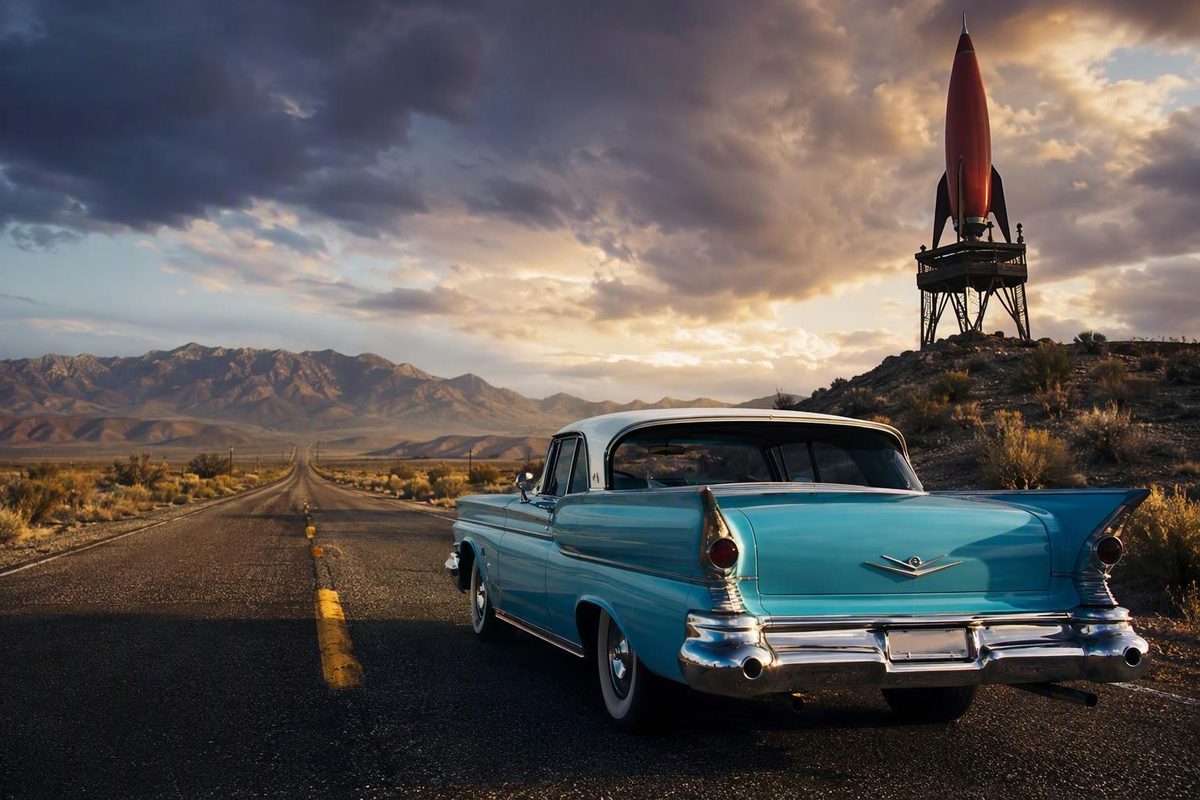
The best historic Route 66 attraction plan is a selective 14-stop drive from Chicago to Santa Monica, centered on places that explain how the highway worked: filling stations, motor courts, bridges, commercial districts and surviving pavement. Allow two major stops or three short stops per day rather than trying to visit every roadside landmark.
Route 66 is not one continuously signed highway. It was decommissioned in 1985, and its alignments now survive as local roads, frontage roads, preserved pavement and closed sections. The National Park Service identifies more than 250 Route 66 buildings, bridges, road alignments and other resources on the National Register of Historic Places (National Park Service).
Select the stops you want to visit; the planner totals their realistic visit times.
Route 66 Stop-Time Planner
Check any combination of stops to total the on-site time. Driving, parking, meals, overnights and full park visits are not included.
*Exterior-stop allowance; an overnight is excluded. †Route 66 pullout only, not a longer park visit. Source: sensible visit allowances and access caveats in this guide.
Illinois And Missouri Preserve The Early Road
1. Ambler’s Texaco Gas Station, Dwight
Allow 20–30 minutes. This restored cottage-style station opened in 1933 and served motorists for 66 years. It now operates as Dwight’s visitor center.
The pumps and canopy make its purpose immediately recognizable, while the domestic-looking office illustrates how early oil companies tried to fit filling stations into residential surroundings (National Park Service). Check current hours if seeing the interior matters.
2. Old Chain Of Rocks Bridge, St. Louis
Allow 45–90 minutes. Route 66 used this mile-long Mississippi River crossing beginning in 1936. Its unusual mid-river bend remains, but cars cannot drive across it: the bridge is open to pedestrians and cyclists.
The National Park Service lists parking at the Illinois entrance and on the Missouri side and says the bridge is open daily (National Park Service). Allow enough time to walk toward the bend rather than treating it as a roadside photograph.
3. Wagon Wheel Motel, Cuba
Allow 15 minutes for an exterior stop, or stay overnight. Operating since 1936, the Wagon Wheel preserves Ozark-sandstone lodging buildings and its later neon sign.
It remains a working motel rather than an open-air exhibit. Reserve a room if you want more than an exterior look. Its location makes it a practical overnight between St. Louis and Springfield.
Kansas And Oklahoma Reveal Different Route 66 Histories
4. Brush Creek Rainbow Bridge, Near Baxter Springs
Allow 15–20 minutes. This 1923 concrete bridge makes the short Kansas section worth leaving I-44 to see. Also called Rainbow Bridge, it is the only fixed Marsh Rainbow Arch bridge remaining on Kansas Route 66.
Local traffic uses a newer crossing, while visitors can walk or drive across the old bridge. Its short visit time makes it easy to combine with Baxter Springs or the Oklahoma border section.
5. Threatt Filling Station, East Of Luther
Allow 10 minutes. The Threatt family’s sandstone station was one of very few Route 66 businesses where people of color were welcome during segregation. It provides a necessary counterweight to purely nostalgic accounts of the highway.
The property is closed to the public and may be viewed only from the road. Do not enter the site (National Park Service).
6. Arcadia Round Barn
Allow 30–45 minutes. Built in 1898, the barn predates Route 66, but the highway’s 1928 Arcadia alignment turned it into a roadside landmark.
Volunteers reconstructed its collapsed roof using many original methods, and the barn remains a public community space and rest stop. Pair it with the Threatt station rather than treating each attraction as a separate half-day outing.
Texas And New Mexico Combine Art Deco, Neon And Pueblo Deco
7. Tower Station And U-Drop Inn, Shamrock
Allow 20–40 minutes. This restored 1936 complex combines a Conoco station, café and dramatic tower at the US 83–Route 66 intersection.
It now houses a visitor center and chamber of commerce office, so a daytime arrival gives you the best chance of seeing the interior. Verify current hours before relying on access (National Park Service).
8. Blue Swallow Motel, Tucumcari
Allow 15 minutes for an exterior stop, or stay overnight. Opened in 1942, the Blue Swallow retains its L-shaped court, garages between rooms, Southwest Vernacular styling and restored neon.
The motel still accepts overnight guests (National Park Service). Book ahead rather than assuming a historic property with a small room count will have same-day space.
9. KiMo Theatre, Albuquerque
Allow 15–60 minutes. The 1927 KiMo was the first theater built in the Pueblo Deco style, combining Art Deco with Indigenous design motifs.
It remains an operating performance venue, not a museum with guaranteed drop-in access. Check the City of Albuquerque event calendar if you want to see the auditorium. Otherwise, treat it as a short Central Avenue architecture stop.
Arizona Includes Surviving Pavement And Motor-Court History
10. Historic Route 66 In Petrified Forest National Park
Allow 20 minutes for the Route 66 pullout within a longer park visit. Weathered telephone poles and traces of roadbed identify the old alignment inside the park, the only National Park System unit containing a section of historic Route 66 (National Park Service).
The roadside exhibit is brief, but the park road is not. Allow several hours if you plan to continue through Petrified Forest rather than stopping only at the northern pullout.
11. Wigwam Village Motel No. 6, Holbrook
Allow 10–20 minutes for an exterior stop, or stay overnight. Fifteen concrete-and-steel, tipi-shaped rooms form this 1950 motor court.
The name is culturally inaccurate: the designer preferred “wigwam” despite using tipi forms, a distinction the National Park Service history explicitly notes. The motel still operates, and its office contains a small museum (National Park Service). Confirm access and respect guest space when photographing the property.
12. Seligman Commercial Historic District
Allow 45–90 minutes. Seligman works better as a walk than as a single map pin. Railroad-era buildings, early Route 66 businesses, motels and service stations show how the town changed before and after the highway’s 1933 realignment.
For the oldest road trace, follow the 1926 alignment along Railroad Avenue and Main Street. Chino Street carries the later alignment.
California Requires A Road Check Before The Finish
13. Roy’s Motel And Café, Amboy
Allow 15–30 minutes. Roy’s began as a service station in 1938 and later expanded with a café, garage and motel. Its Googie sign became the defining image of this isolated Mojave stop.
Treat Roy’s as a short historical stop, not as your only fuel plan. Check access before leaving I-40: San Bernardino County says National Trails Highway is vulnerable to flash-flood damage and bridge closures, and some sections have vehicle-weight restrictions. The county closure page currently reports the Cadiz Road–Mountain Springs Road section closed (San Bernardino County Public Works). Do not assume an online map will route around every closed bridge correctly.
14. Santa Monica’s Two Terminus Markers
Allow 30–60 minutes. The photographed “End of the Trail” sign on Santa Monica Pier is symbolic and was installed in 2009. The official western terminus was at Lincoln and Olympic Boulevards, where small BEGIN and END markers now stand on traffic-light poles.
The local tourism authority cautions that the intersection does not offer a practical photo opportunity (Santa Monica Travel & Tourism). Use the pier for a finish-line photograph, but visit Lincoln and Olympic if the historical endpoint matters. Our Route 66 endpoint guide explains the distinction.
Plan Two Major Stops Or Three Short Stops Per Day
On a full-length drive, plan for two major stops or three short stops per day. A nominal 15-minute exterior visit commonly consumes 30 minutes after parking, walking and rejoining the alignment. A bridge walk, operating museum or historic district can consume 60–90 minutes.
A 12-day trip requires firm choices. Use the realistic 12-day Route 66 plan and select one priority attraction for each driving block. With 16 days, the slower Route 66 itinerary leaves more room for operating museums, historic-motel overnights and older alignments.
Confirm same-day hours for visitor centers and private businesses. In the Mojave, check county road conditions before committing to an older alignment, carry a separate fuel plan and be prepared to remain on I-40 when a historic section is closed.